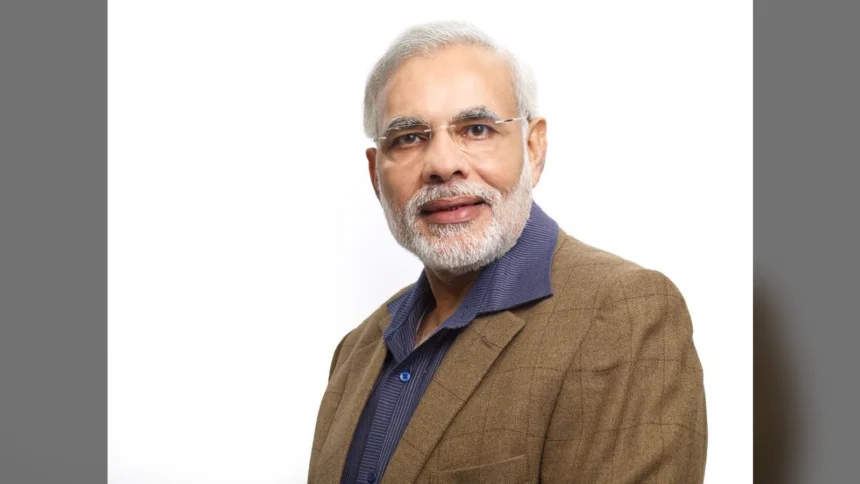
Prime Minister Narendra Modi on Saturday told a hall full of young skill graduates in Lucknow that artificial intelligence cannot take away the livelihood of a person who has a real skill. His message, delivered at the fifth National Skill Convocation Ceremony, came as AI dominates every conversation about jobs.
“There is a lot of discussion about AI, but remember that no one can take away the livelihood of a person who possesses skills,” the Prime Minister said, addressing the Kaushal Dikshant Samaroh 2026 at the Indira Gandhi Pratishthan. He added that the times are changing, and skilled individuals will command greater respect than those who merely hold certificates.
What PM Modi said in Lucknow
The Prime Minister was direct about where he thinks the future of work lies. “Today, I am going to say something else. Mark my words: Times are changing and people with skills will be valued more than those who go around with paper certificates, wearing suits and ties. Demand for those with skills, those with talent, will increase,” he said.
He also looked back at India’s long tradition of craftsmanship. Invaders damaged India’s traditional skill infrastructure, he said, and the British later introduced an education system focused on producing clerks. From fine muslin and Banarasi silk to Kashmiri pashmina, kalamkari and bronze sculptures, India once had countless crafts that the world admired. Modi said India can progress in the 21st century only by giving respect to skilled workers, and pointed to the Shramev Jayate initiative and the separate Ministry of Skill Development.
ITI students deserve the same respect as IIT students
One of the strongest lines of the speech was aimed at the status gap between two kinds of students. The Prime Minister said students of Industrial Training Institutes (ITIs) should receive the same respect as those studying at IITs, a point that drew loud applause from the young graduates in the hall.
It is a comparison that matters. For years, vocational training has been treated as the fallback option, something students pick when they miss out on a degree course. The convocation itself is an attempt to change that. The Kaushal Dikshant Samaroh is the national graduation ceremony for skill trainees, modelled on a university convocation, and this was its fifth edition.
He also lauded the Yogi Adityanath government in Uttar Pradesh for creating a safe environment for women in the state.
India to host WorldSkills 2027 in Greater Noida
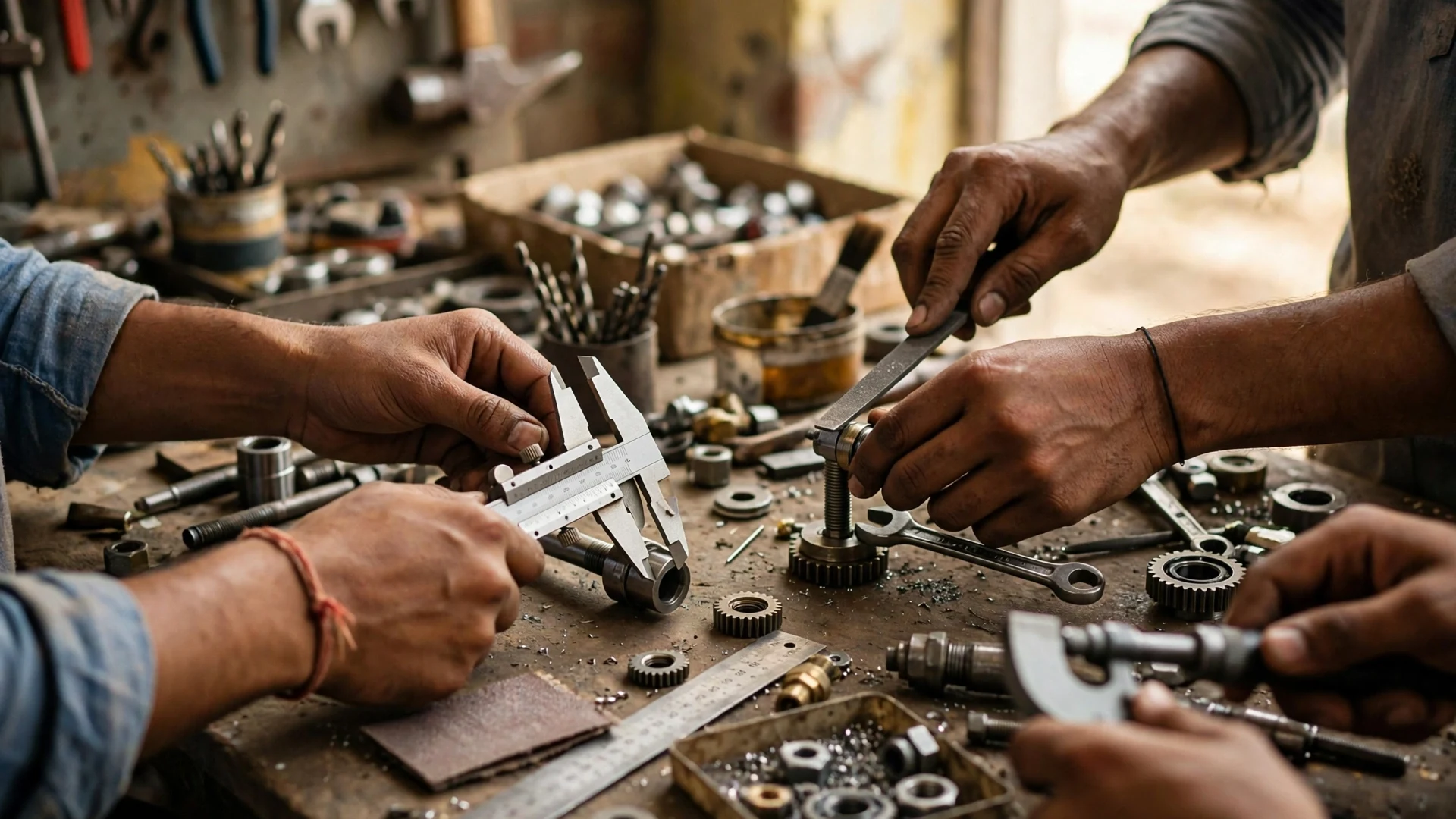
The Prime Minister also announced that India will host the 2027 WorldSkills Competition in Greater Noida, Uttar Pradesh. WorldSkills is the largest international competition for vocational skills, where young professionals from dozens of countries compete in trades ranging from welding and robotics to cooking and web design.
Hosting the event puts India’s skill ecosystem on the world stage and signals that the government wants vocational training seen as a first-choice career path, not a second-best option.
Why it matters
The speech lands at a moment of genuine anxiety. AI tools are now writing code, drafting documents and answering customer queries, and young job seekers are asking a fair question: what is left for me to do? Modi’s answer is that the work which needs hands, judgement and craft does not disappear when software gets smarter. A plumber, an electrician, a welder, a nurse or a chef cannot be replaced by a chatbot, and the demand for those skills only grows as the economy expands.
There is also a practical message hidden in the speech. A degree alone no longer guarantees a job, and employers are increasingly testing what a candidate can actually do rather than what their certificate says. For students and parents, that changes the maths: a short skill course, an apprenticeship or an ITI programme can lead to work faster than a generic degree.
The WorldSkills 2027 announcement adds a deadline to that shift. With the competition coming to Greater Noida, training institutes across the country have a clear target to aim for. The convocation was a celebration, but it was also a recruitment pitch: skills are the safer bet in an AI-shaped job market.
FAQs
What did PM Modi say about AI and jobs?
Speaking at the National Skill Convocation in Lucknow on November 21, he said that while there is a lot of discussion about AI, no one can take away the livelihood of a person who possesses skills.
Where did the Prime Minister make the remarks?
At the fifth National Skill Convocation Ceremony, or Kaushal Dikshant Samaroh 2026, held at the Indira Gandhi Pratishthan in Lucknow, Uttar Pradesh.
What is WorldSkills 2027?
It is the world’s largest vocational skills competition. PM Modi announced that India will host the 2027 edition in Greater Noida, Uttar Pradesh.
What did he say about ITI and IIT students?
He said students of Industrial Training Institutes should receive the same respect as those studying at IITs, and that skilled individuals will command greater respect than those who merely hold certificates.
How can students build job-ready skills?
Through ITI courses, short-term skill programmes and apprenticeships under the Skill India mission.
The message from Lucknow was simple: certificates open doors, but skills keep them open.