New Delhi, Sunday: The Congress has called off its planned Chalo Delhi programme for Constitution Day and will instead take its campaign to the streets of every state capital on November 26. Party sources told news agency ANI on Sunday that the Delhi march, scheduled for November 25 and 26, has been postponed, and a Samvidhan Raksha March will be held in state capitals across the country on the same day.
The change of plan comes two weeks after the INDIA bloc’s rally at Delhi’s Ramlila Maidan, where opposition leaders raised the pitch against the Election Commission’s voter roll revision. The Congress says the Special Intensive Revision, or SIR, risks deleting genuine voters. The Election Commission has rejected the charge and says the exercise cleans the rolls of duplicate and ineligible entries.
What has changed
The Chalo Delhi programme was planned to coincide with Constitution Day, which is observed every year on November 26, the day the Constitution was adopted in 1949. The idea was to bring workers and supporters to the national capital for a show of strength on the day itself. That plan now stands postponed, with no fresh date announced for the Delhi gathering.
In its place, the party will organise Samvidhan Raksha Marches, literally marches to protect the Constitution, in the capitals of all states on November 26. The format spreads the protest across the country instead of concentrating it in Delhi, and lets state units lead the marches in their own capitals.
How the campaign built up
The voter roll row has been the opposition’s sharpest line of attack for more than a month. The Election Commission began the Special Intensive Revision of rolls, first in Bihar in 2025, and then extended the exercise. Opposition parties say the revision has led to large-scale deletions and that the burden of proving citizenship falls hardest on the poor. The Commission says voters wrongly deleted can re-register and that the exercise only removes duplicates and ineligible names.
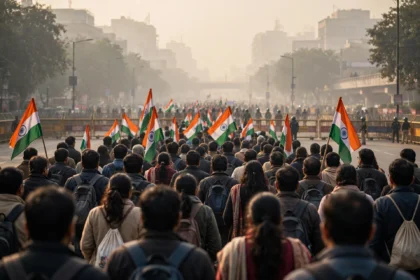
On October 31, the INDIA bloc held a public “impeachment” programme against Chief Election Commissioner Gyanesh Kumar in the capital. The next day, on November 1, thousands of opposition supporters marched from the Minto Road-Connaught Place junction to Ramlila Maidan in Delhi, demanding the election chief’s resignation.
Addressing the gathering, Rahul Gandhi said the protest was the voice of the country and not the programme of any single party or leader. He accused the Chief Election Commissioner of trying to silence the people’s voice and said the opposition would keep fighting to protect the Constitution through peaceful and democratic means. He also accused Gyanesh Kumar of facilitating alleged vote theft and said he would be removed from the post and jailed. The BJP has hit back hard, accusing Rahul Gandhi of undermining constitutional institutions and, in a separate row this weekend, of inviting foreign interference in Indian politics.
Why November 26 matters
Constitution Day carries a special weight in this campaign. The opposition has framed its entire protest as a defence of the Constitution, and holding marches on the day the Constitution was adopted is meant to underline that message. The Samvidhan Raksha March name itself ties the protest to the document the opposition says is under threat.
The state-capital format also fits the bloc’s plan to take the campaign beyond Delhi. Opposition leaders are considering a fresh meeting with President Droupadi Murmu to submit documents supporting their claims on the voter rolls, and they plan to raise the SIR issue in Parliament’s winter session, which is expected to begin in the first week of December.
What happens next
All eyes will now be on how the November 26 marches play out in the states and whether the Congress sets a new date for the Delhi programme. The winter session of Parliament, likely to begin in the first week of December, is expected to become the next big stage for the confrontation, with the opposition preparing to press the government and the Election Commission on the voter roll revision.
For now, the message from the Congress is clear: the Delhi march is off, the campaign is not. The fight over the voter rolls has moved from the capital’s streets to state capitals across India, and the opposition intends to keep it in the public eye right through Constitution Day and into the winter session.
FAQs
What is the Chalo Delhi programme?
It was the Congress plan to bring supporters to Delhi on November 25 and 26, around Constitution Day, to protest against alleged irregularities in the Election Commission’s voter roll revision.
Why was it postponed?
Party sources announced the postponement on Sunday, November 15, without giving a public reason. The party will instead hold Samvidhan Raksha Marches in all state capitals on November 26.
What is the SIR exercise?
The Special Intensive Revision is the Election Commission’s intensive revision of electoral rolls, first carried out in Bihar in 2025. The opposition says it risks removing genuine voters, while the Commission says it cleans the rolls of duplicate and ineligible entries.
The Congress’s state-capital marches on Constitution Day will show whether the opposition can carry its voter roll campaign beyond Delhi. Informeia will track the November 26 marches and the winter session debate as they unfold.