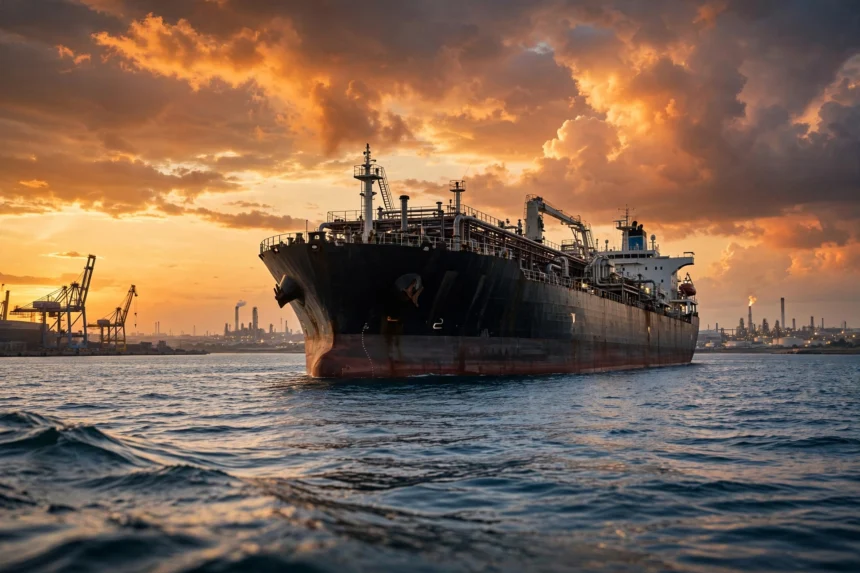
India imports more than 85 percent of the crude oil it uses, so when the global oil price spikes, the ripple travels straight from a tanker in the Persian Gulf to the petrol pump down your street. This Monday morning, that ripple arrived: Brent crude is hovering near $109 a barrel after two tankers came under attack off the Saudi coast on Friday, and Indian markets opened the week on a flat, nervous note.
The benchmark Sensex opened at 74,849.30, up just 120 points, while the Nifty started at 23,150.85, almost unchanged from Friday. Traders who celebrated last week’s 2.8 percent Nifty surge suddenly have a new headache: oil at its highest levels since May, geopolitical tension flaring in the Strait of Hormuz, and Ukraine resuming strikes on Russian energy facilities over the weekend.
What happened: two tankers hit off Saudi Arabia
According to incident reports from the United Kingdom Maritime Trade Operations Centre, two tankers were attacked in the Persian Gulf on Friday, northeast of Al Jubayl in Saudi Arabia. A small boat fired a rocket-propelled grenade at one unidentified tanker about 78 nautical miles from the coast, while another tanker, the ST3, was hit by an unknown projectile.
The attacks were the latest in a string of hits on shipping in the region. The broadening conflict in the Middle East, with Iran-backed Houthis pelting Saudi Arabia with missiles and drones and Tehran causing ongoing trouble in the Strait of Hormuz, has put traders on edge. The Strait of Hormuz is the world’s most important oil artery, and even the threat of disruption sends prices higher.
Brent crude rose 3.7 percent on Friday to top $110 a barrel before easing slightly. On Monday morning it was trading around $108.82, still firmly above the long-term average that India’s economy is comfortable with. As Rebecca Babin, senior energy trader at CIBC Private Wealth Group, put it: “After a brief reprieve, the oil market is having to price risk back in.”
Ukraine strikes add to the pressure
Oil is also getting a push from the Russia-Ukraine front. Ukraine briefly paused strikes on Russian energy facilities after President Donald Trump declared on October 11 that Kyiv and Moscow had agreed to a truce, but Moscow kept hitting Ukrainian energy infrastructure. In retaliation, Ukraine launched a massive wave of drone strikes on Sunday, setting off fires at an oil terminal and depot in St. Petersburg.
That terminal exports about 120,000 barrels per day of refined products, mostly fuel oil, according to data from Kpler. The damage is still being assessed, but the message is clear: the truce is over and energy infrastructure is back in the crosshairs on both sides.
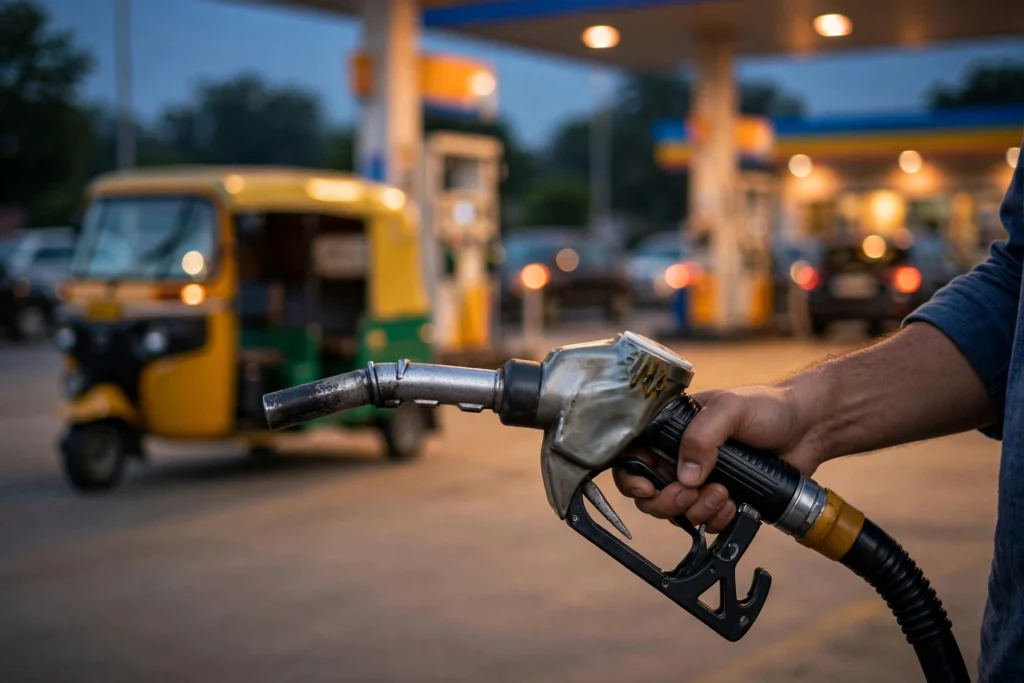
Why Indian markets are nervous
For Dalal Street, expensive oil is a triple blow. Here is how it filters through:
- Inflation: Costlier crude pushes up transport and input costs across the economy. Higher inflation limits how far the Reserve Bank of India can go with rate support for growth.
- The rupee: India pays for oil in dollars, so a price spike widens the import bill and puts pressure on the rupee, which is already trading near record lows around 94.88 to the dollar.
- Corporate margins: Companies in aviation, paints, chemicals, and logistics feel higher fuel costs first, and that shows up in quarterly earnings, many of which are due this week.
V K Vijayakumar, chief investment strategist at Geojit Investments, summed up the mood: last week’s rally and strong results from IT majors and big banks could keep the market resilient, but the escalation in Hormuz and Brent crude at $109 “will act as a strong headwind to the market.”
Will petrol and diesel prices rise in India?
This is the question every vehicle owner is asking. Fuel prices in India are technically linked to international benchmarks, but retail prices rarely move day to day; the government and oil marketing companies tend to absorb short spikes, especially when elections are near.
If crude stays above $105 to $110 for several weeks, the pressure to pass some of it on will grow. For now, though, the official rates have not changed, and there has been no announcement of a hike. The diesel squeeze globally is real, with diesel futures at their highest levels for this time of year, so fleet operators and transporters should keep a close eye on costs.
What investors should watch this week
This week is packed with company results: UltraTech Cement, Bajaj Finance, Hindustan Zinc, L&T Technology Services, and Union Bank of India all report today, and management commentary on margins and demand will matter more than usual. Beyond earnings, keep an eye on three things:
- The Strait of Hormuz: More than 100 million barrels passed through the waterway this week, volumes close to pre-conflict levels. If that holds, the oil fear premium could fade.
- Russia-Ukraine: Any sign the energy truce is back on would take pressure off crude and refined-product prices.
- Foreign investors: FIIs pulled out Rs 1.64 lakh crore from secondary markets in the first half of FY27. High crude makes their return less likely in the short term.
The bottom line: oil at $109 does not automatically mean a market crash or a petrol price hike tomorrow, but it caps the upside. Until the geopolitical smoke clears, expect markets to stay stock-specific and choppy, with crude as the number that decides the mood of the week.
FAQs
Why is crude oil price rising now?
Two tankers were attacked off Saudi Arabia on October 17, Ukraine resumed strikes on Russian energy facilities over the weekend, and the Strait of Hormuz remains tense. Brent crude is near $109 a barrel, its highest since May.
Will petrol prices increase in India?
Not immediately. Indian fuel prices are adjusted with a lag, and the government and oil companies absorb short spikes. But if crude stays above $105 to $110 for weeks, the pressure to pass costs on will build.
How does high crude oil affect Indian stock markets?
It raises inflation, pressures the rupee, and squeezes company margins in fuel-intensive sectors. Markets tend to turn cautious when oil is high, as seen in Monday’s flat opening.
How much crude oil does India import?
India imports over 85 percent of its crude oil needs, which makes it one of the world’s most oil-sensitive major economies. Every $10 rise in crude adds roughly billions of dollars to the import bill.
What is the current Brent crude price?
Brent crude is trading around $108 to $109 a barrel on October 19, 2026, after crossing $110 on Friday for the first time since May.
Stay updated with the latest business and market news on Informeia. We track the numbers so you do not have to.