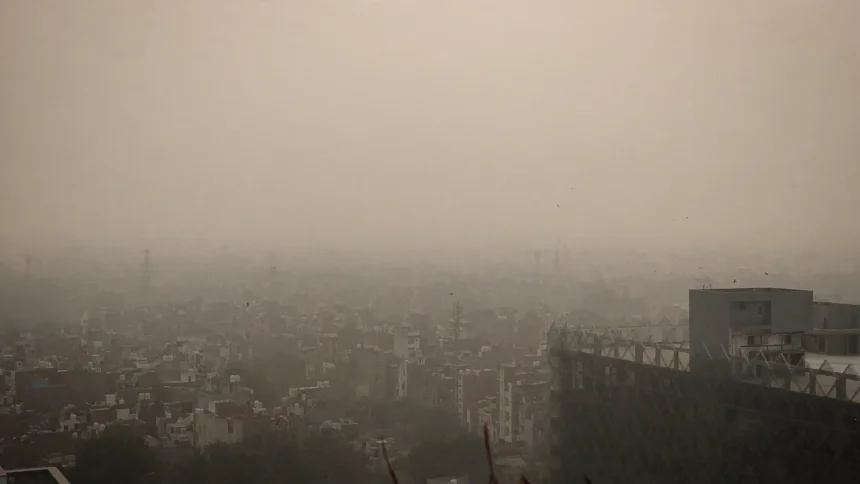
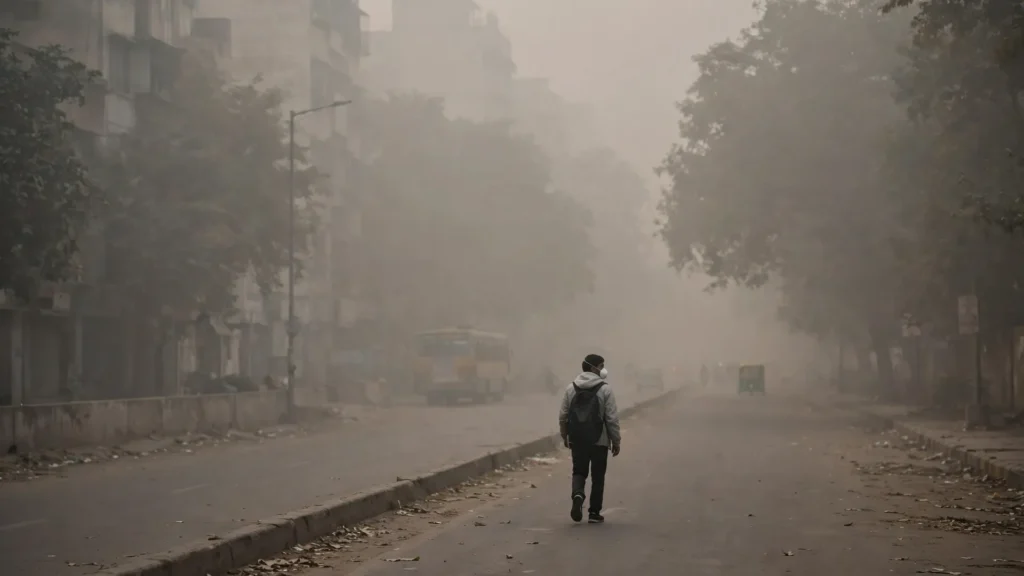
Delhi woke up to a grey, choking Diwali morning on Sunday, with the city’s overall air quality index (AQI) at 384 at 6 am, deep in very poor territory. Eleven of the 23 monitoring stations recorded severe air, above 400, and the worst reading came from Punjabi Bagh at 450. With fireworks due tonight, doctors warn the air is likely to get worse before it gets better.
The city’s average AQI has hovered in the very poor band for days, and the early warning system expects it to stay severe through November 9.
What the numbers say this morning
Central Pollution Control Board (CPCB) data showed 11 of the 23 stations in the 6 am update above 400, which the board classifies as severe. The other 12 were between 301 and 400, or very poor. Punjabi Bagh was worst at 450, while Rohini recorded 444 and Jawaharlal Nehru Stadium 431.
For scale, the CPCB classes an AQI of 301 to 400 as very poor and 401 to 500 as severe. On Friday, the city’s average AQI was 382, and 26 of the 58 stations that reported data were already in the severe band.
The Air Quality Early Warning System has forecast that Delhi’s air is likely to remain severe from November 7 to November 9, and to fluctuate between very poor and severe for the six days after that.
GRAP Stage III: what is restricted
The Commission for Air Quality Management (CAQM) invoked Stage III of the Graded Response Action Plan (GRAP) across Delhi-NCR on Friday, November 6, as a precaution ahead of Diwali. Stage III is normally linked to severe air, but the panel moved early because forecasts showed the season’s first severe day arriving on Friday itself.
Under Stage III, non-essential construction and demolition work is banned, and BS-III petrol and BS-IV diesel light motor vehicles face restrictions, on top of the measures already in force under Stages I and II. The curbs stay in force while pollution remains elevated.
Farm fires in Punjab and Haryana, calm winter winds and the festival season have combined to push the city’s air down this week, with burning in the neighbouring states peaking in early to mid-November.
Hospitals are already seeing more patients
Hospitals in East Delhi, including Guru Teg Bahadur, Swami Dayanand, Rajiv Gandhi Super Speciality and Jag Pravesh Chandra hospitals, are reporting more patients with coughs, colds, viral fever and respiratory complaints as temperatures fall and the smog thickens.
Dr Randeep Guleria, chairman of respiratory medicine at Medanta in Gurugram, has warned that air in the severe and very severe categories poses a significant health risk, and that hospitals generally see more emergency visits during such spells, particularly from people with breathing difficulty and persistent cough.
Doctors flag the same groups as most vulnerable: children, older adults, pregnant women, people with asthma or heart and lung disease, and outdoor workers. Studies have consistently shown a rise in heart attacks and strokes in the days after a severe AQI spike, and the fine PM2.5 particles in Delhi’s air can penetrate deep into the lungs.
How to protect yourself this Diwali
With fireworks expected tonight, doctors’ practical advice is straightforward:
- Stay indoors as much as possible, especially in the evening and early morning when pollution peaks, and keep windows shut.
- Wear a well-fitting N95 mask if you must go out, and avoid morning walks and outdoor exercise while the AQI is severe.
- Keep inhalers and prescribed medicines handy if you have asthma or COPD, and do not skip doses.
- Watch children and older family members closely, and seek medical care promptly for breathlessness, chest pain or a cough that will not settle.
- Skip or limit fireworks, and prefer green crackers if you celebrate with them, since the smoke adds directly to tonight’s load.
Delhi’s schools have already moved to hybrid classes in several areas, and the air is expected to stay very poor to severe for days. For now, the morning’s reading is the clearest signal yet: step out only if you must, and mask up when you do.
FAQs
What is Delhi’s AQI today on Diwali?
Delhi’s overall AQI was 384 at 6 am on Sunday, November 8, in the very poor category, with 11 of 23 stations severe and Punjabi Bagh worst at 450.
What is GRAP Stage III and why is it in force?
Stage III of the Graded Response Action Plan is an emergency set of curbs invoked by the CAQM when air turns severe, banning non-essential construction and restricting older, more polluting vehicles. It was invoked on November 6 as a precaution ahead of Diwali.
Who is most at risk from Delhi’s air pollution?
Children, older adults, pregnant women, people with asthma, COPD or heart disease, and outdoor workers face the highest risk. Doctors advise staying indoors and seeking care quickly for breathing trouble.
Will Delhi’s air improve after Diwali?
Not immediately. The early warning system expects the AQI to stay severe through November 9, then fluctuate between very poor and severe for six more days.
Should I wear a mask in Delhi today?
Yes, if you go outdoors. Doctors recommend a well-fitting N95 mask and advise avoiding outdoor exercise and morning walks while the AQI is severe.
Delhi’s air is forecast to stay severe through November 9. If you are in the capital this Diwali, stay indoors where you can, mask up outside, and keep an eye on elderly relatives and children.