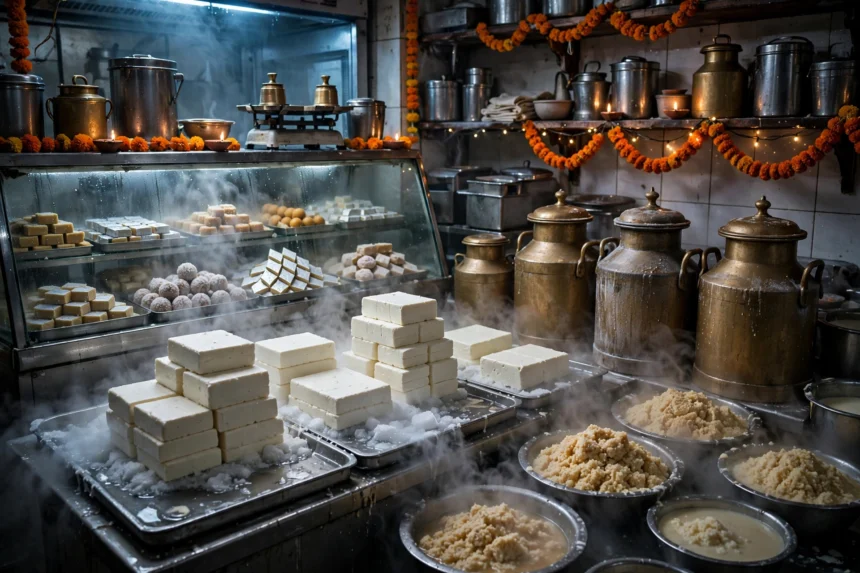
With Diwali just days away and sweet shops across the country working overtime, India’s food safety regulator has stepped in with a strict warning for the businesses handling the season’s most in-demand perishables. The Food Safety and Standards Authority of India (FSSAI) has directed all food business operators to store, handle and transport items like khoa, paneer, meat and fish under proper temperature control, from the moment they are sourced to the moment they reach the consumer.
The advisory, dated October 15 and shared publicly on Sunday, says the regulator has been alerted that these perishable commodities are “at times not handled, stored or transported under appropriate temperature conditions”. For foods that spoil quickly, that is a serious problem: without the right temperatures, they become breeding grounds for microbes, and the result can be food poisoning at exactly the time when millions of families are buying and gifting sweets.
Non-compliance, FSSAI has warned, can lead to seizure and even destruction of the products involved.
Why the timing matters
Festival demand transforms the food supply chain. Demand for sweets, savouries, edible oils and milk products such as ghee, khoa and paneer shoots up across the country during Navratri and Diwali. To meet it, businesses move far larger volumes than usual, often over longer distances and with tighter turnaround times. When the cold chain breaks under that pressure, the spoiled product still looks edible, which is what makes it dangerous.
FSSAI has flagged exactly this risk. Its advisory notes that because of their perishable nature, khoa, paneer, meat and fish are “highly susceptible to microbial growth and spoilage” when temperature conditions are not maintained. For consumers, the takeaway is simple: buy from trusted, clean sources, and keep an eye on freshness cues this season.
What the advisory requires businesses to do
The regulator has laid out the full chain of responsibilities. Food business operators involved in manufacture, packing, storage, transportation, distribution and sale must maintain the prescribed temperatures at every stage: chilling, transportation, storage and distribution. The requirement comes from Schedule 4 of the Food Safety and Standards (Licensing and Registration of Food Businesses) Regulations, 2011, which the advisory specifically cites.
Beyond temperature control, the advisory sets several operational rules:
- Transport perishables only in clean, covered and hygienic vehicles that are suitable for carrying food.
- Use food-grade packaging and secondary packaging materials; gunny sacks and other non-food-grade coverings that could compromise safety must be avoided.
- Protect products from dust, moisture, pests, physical damage and cross-contamination during storage, loading, unloading and transportation.
- Maintain records and traceability of consignments, and be ready to produce invoices and documents when food safety officers demand them.
- Protect products during loading and unloading, the stages where temperature abuse most often happens.
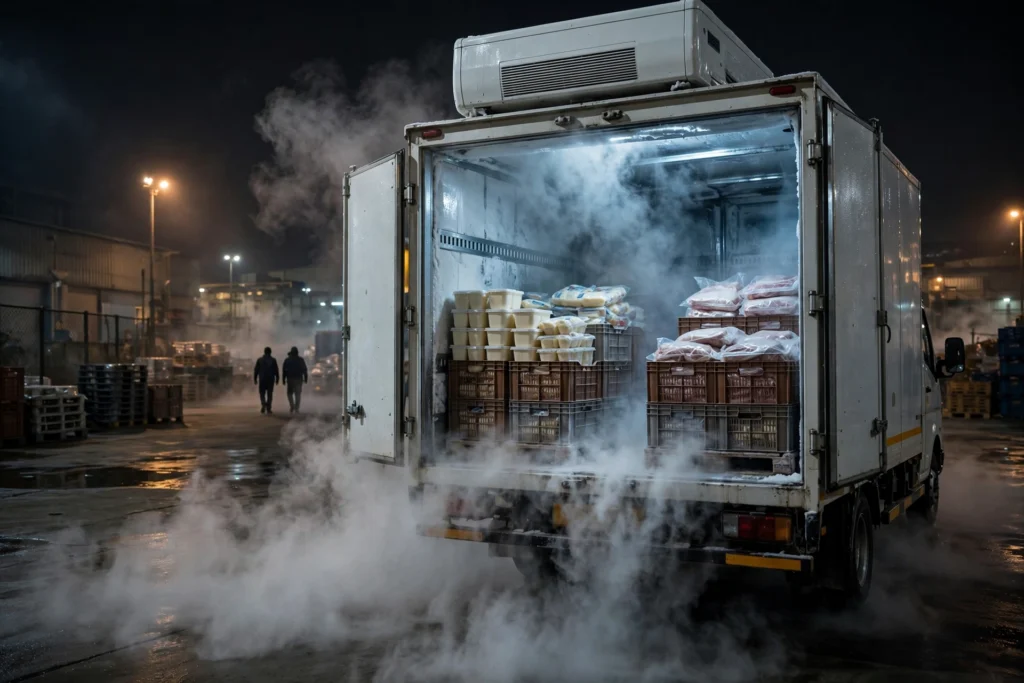
State machinery told to stay alert
FSSAI has not left enforcement to chance. The advisory asks state food safety commissioners, Indian Railways and FSSAI’s regional directors to direct licensing authorities and food safety officers to exercise strict vigilance through inspections and transportation checks. The aim is compliance at every stage of the supply chain, and officers have been told they can initiate action, including seizure and destruction of non-compliant items, under the Food Safety and Standards Act, 2006 and related regulations.
The advisory’s language is deliberately firm: subjecting these products to “temperature abuse may adversely affect public health and constitute non-compliance with the hygiene and sanitary requirements”. In plain terms, a distributor who lets a paneer consignment travel in an open truck in the October heat is not cutting corners on logistics. He is breaking the law.
What shoppers should watch for
The advisory is aimed at businesses, but there is something in it for consumers too. Festive sweets made from khoa and paneer are exactly the products most vulnerable to adulteration and spoilage, and this is the week when unorganised operators flood the market. Shoppers can protect themselves with a few simple habits:
- Buy sweets and dairy products from established shops with FSSAI licence numbers displayed on their premises or packaging.
- Check the look, smell and packaging date of paneer, khoa and milk sweets. Anything with an off smell, slimy texture or damaged packing should be rejected.
- Store sweets properly at home and do not keep dairy-based mithai at room temperature for long.
- If something tastes off, throw it away. The cost of a sweet is never worth the cost of a foodborne illness.
- Consumers can report suspected unsafe food to their state food safety department or through FSSAI’s own grievance channels.
FAQs
What did FSSAI’s October advisory actually say?
It requires food business operators to handle, store and transport perishable items like khoa, paneer, meat and fish under controlled temperatures throughout the supply chain, in line with Schedule 4 of the 2011 licensing regulations.
Which products does the advisory cover?
Khoa, paneer, meat, fish and similar perishable food commodities that are susceptible to microbial growth and spoilage without proper temperature control.
What happens if businesses do not comply?
FSSAI has warned that violations can invite action under the Food Safety and Standards Act, 2006, including seizure and destruction of the non-compliant products.
Who is expected to enforce these rules?
State food safety commissioners, Indian Railways, FSSAI regional directors, and the licensing authorities and food safety officers under them, through inspections and transportation checks.
How can consumers stay safe this festive season?
Buy from licensed, reputable sellers, check freshness cues on packaging, store dairy sweets properly, and report anything suspicious to the food safety authorities.
This Diwali, the sweets on your thali will pass through more hands than you imagine. FSSAI’s message is that every one of those hands must keep the food cold, clean and traceable. For India’s festive food industry, this is now a compliance issue, not a choice. And for families buying mithai for the season, a little extra care at the counter is the cheapest insurance there is. Informeia will keep tracking the festive food safety drive as enforcement plays out across the states.