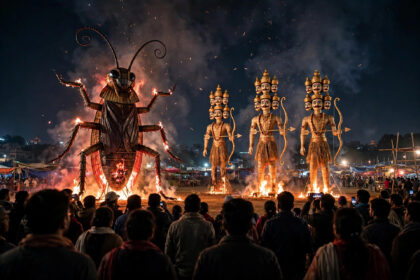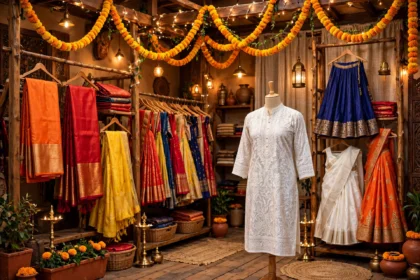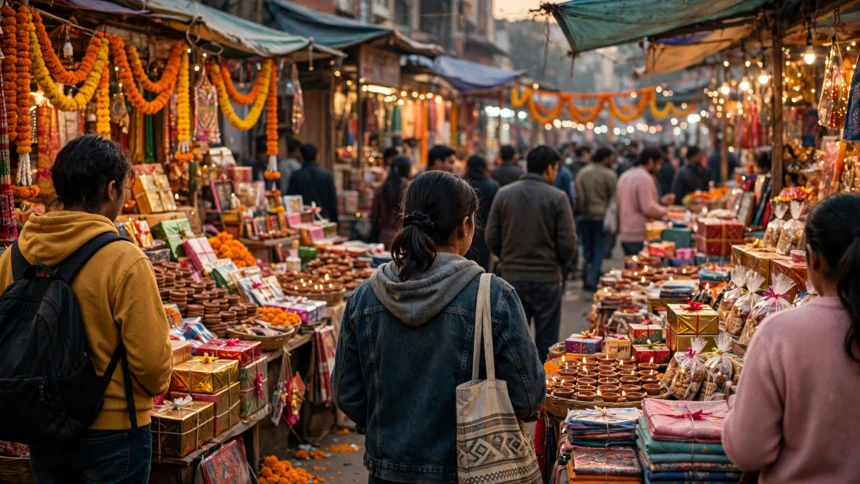
Festival season has a familiar pull in India. The lights go up, the family group chat fills with gift ideas, and budgets that looked firm in October start to stretch. A new study of young shoppers puts a number on that feeling: 60% of Gen Z respondents said they spend more during major festivals than they usually do.
The findings come from a joint study by Rukam Capital and YouGov, titled Gen Z: A Deep Dive into India’s Most Influential Consumer Cohort. It surveyed 4,002 people aged 18 to 29 across 18 states, and its festive shopping results were reported widely on 1 November, just as Diwali shopping entered its final week. Diwali falls on 8 November this year, with Dhanteras on 6 November.
What the study found
Among the respondents, 25% said they spend significantly more during festivals, while 35% said they spend somewhat more. Together, that makes the headline 60%. Another striking figure is that 40% said they went in for unplanned shopping during festivals.
The urge to spend more was strongest in the north. In Delhi and Punjab, 65% of young shoppers reported higher festive spending, followed closely by Rajasthan at 63%. Festival spending, the study suggests, is shaped as much by local customs and family expectations as by sales and offers.
Family first, then a treat for yourself
Despite all the talk about self-care, family still comes first. The study found that 74% of young shoppers buy gifts for parents and family. That fits how most Indian festivals work in practice: the gift list starts at home.
At the same time, self-gifting is no longer a side note. Nearly three in ten respondents said they buy gifts for themselves during festivals. Rukam Capital founder and managing partner Archana Jahagirdar described this as personal indulgence becoming part of festive consumption alongside gifting for family and friends.
Why budgets stretch
When respondents were asked what pushes them beyond their usual budget, family expectations came out on top at 34%. Discounts were close behind at 29%, followed by emotional connections at 28%.
In other words, extra spending is rarely about one flash sale alone. A family expectation sets the occasion, a discount makes the purchase feel sensible, and an emotional link seals the choice.
AI has entered the gift hunt
One of the most talked-about findings is how young shoppers now look for ideas. Online search leads the way at 41%, just ahead of personal judgement at 39%. A newer route has moved into the mainstream: 25% of respondents said they use AI tools for gift recommendations, ahead of marketplace recommendations at 21%.
AI is not replacing human judgement yet. Three in four respondents do not use AI for gift ideas at all. What AI is doing is shortening the first step: shoppers get a shortlist, then apply their own taste before buying.
Where the money actually goes
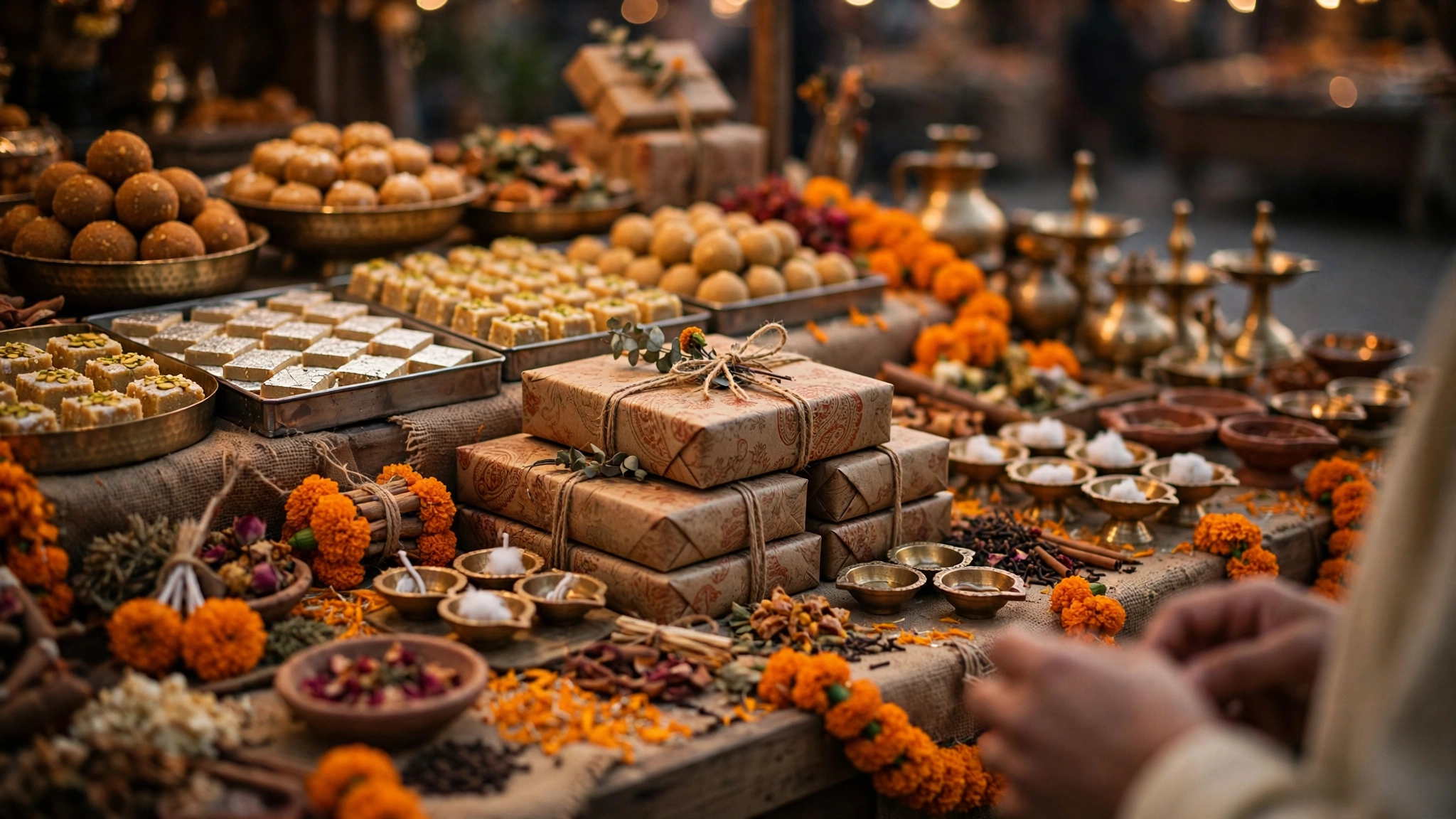
Clothing and food lead festive spending, each accounting for 49% nationally. Gifts came next at 36%, followed by religious items at 35% and home decor at 33%. The study also points to food, sweets and dry fruits as a popular choice for 44% of respondents, while 39% choose cash as a gift.
- Clothing and food: 49% each, the two biggest festive categories.
- Gifts: 36%, with family the main recipients.
- Religious items: 35%, showing tradition still anchors the season.
- Home decor: 33%, as homes are refreshed before Diwali.
- Healthier choices: 47% planned healthy-snack purchases during festivals.
How to shop smarter this Diwali
The study does not suggest festive spending is a problem in itself. The risk is mainly the unplanned part, the 40% who shop without a plan and then wonder where the budget went.
A simple approach helps. Fix a total festival budget first, list the people who matter most, and set a rough limit per person before opening any shopping app. Keep one small allowance for self-gifting, so it does not quietly eat into the rest of the list.
FAQs
What is the Gen Z festive spending study?
It is a Rukam Capital and YouGov study based on a survey of 4,002 people aged 18 to 29 across 18 states.
How many Gen Z shoppers spend more during festivals?
60% said they spend more, including 25% who spend significantly more and 35% who spend somewhat more.
What causes Gen Z shoppers to overspend?
Family expectations were the leading reason at 34%, followed by discounts at 29% and emotional connections at 28%.
Do young Indians use AI to choose gifts?
Yes, 25% use AI tools for gift ideas, ahead of marketplace recommendations at 21%, though online search at 41% and personal judgement at 39% remain more common.
When is Diwali in 2026?
Diwali falls on Sunday, 8 November 2026, with Dhanteras on Friday, 6 November 2026.
Festive spending will always have an emotional side, and that is part of its charm. The study simply shows how that emotion now mixes with family duty, smart discounts and a quick AI shortlist. For this Diwali, the wisest cart may be the one that starts with people, not offers.