November has turned into the month Indian markets finally stopped lagging behind. After spending most of 2026 trailing their emerging-market peers, Indian equities, the rupee and government bonds have all rallied together this month, according to a new note from HSBC Global Investment Research published on Saturday. The Sensex has gained around 13 per cent so far in November and the rupee has strengthened to its highest level in eight months, marking a broad shift in mood from caution to risk-taking.
The brokerage described the change plainly: India has moved from risk-off to risk-on.
A three-way rally, not just a stock market bounce
What makes this month different is that the recovery has not been confined to shares. The Sensex is up about 13 per cent month to date, the rupee has firmed to below 92.50 against the US dollar, its strongest in eight months, and the yield on the benchmark 10-year government bond has fallen by around 20 basis points, which means bond prices have risen.
HSBC said the simultaneous improvement across equities, currency and bonds points to a broad improvement in risk appetite rather than a one-off spike in shares.
What drove the turnaround
Three forces came together in November. First, crude oil prices fell, easing worries about India’s import bill. Second, global investors trimmed exposure to artificial intelligence stocks after a sharp run, and some of that money moved to India. Third, foreign fund inflows into Indian markets picked up again after months of selling.
The rupee, interestingly, moved first. HSBC’s analysis found that currencies are the biggest net transmitter of shocks across Indian financial markets, and the rupee began strengthening around mid-October, ahead of the broader rally in shares and bonds. Currency moves, in other words, were the early signal of the shift.
Domestic investors also played their part, buying steadily while overseas funds sold in recent years. HSBC noted, though, that sharp rises in returns are typically led by foreign investor participation, and November was no exception.
Why it matters
For ordinary readers, this rally touches three everyday things: savings, borrowing and prices. A stronger rupee and lower bond yields, if they hold, ease pressure on import costs, which feeds into fuel and food prices over time. A rising stock market lifts the value of mutual funds and pension savings that crores of Indians now hold.
The timing matters too. GDP growth for the July to September quarter is due on November 30, and the Reserve Bank of India holds its December policy meeting soon after. Retail inflation rose to 6.09 per cent in October, above the central bank’s 6 per cent tolerance ceiling, and the repo rate already stands at 5.50 per cent after a hike in October. If growth disappoints or inflation stays high, the mood can turn quickly.
HSBC’s own model adds a useful check. It suggests Indian equities remain undervalued relative to model-implied returns, while the rupee and government bonds look broadly fairly valued. That implies shares have more room to catch up if conditions stay favourable, but further gains will then depend on real improvements in growth and liquidity, not just sentiment.
What could still go wrong in 2027
HSBC was clear the rally is not guaranteed to last, naming banking-system liquidity and expectations of economic growth as the two domestic factors that must improve for the gains to carry into 2027. Liquidity could stay tight as the Reserve Bank tightens policy to tackle elevated inflation, which would limit the funds available in the banking system.
That puts the weight on growth. The brokerage sees two possible catalysts: improving export competitiveness and stronger foreign direct investment inflows. India’s goods exports rose 25 per cent year on year in the previous quarter, helped by a more competitive currency and exporters finding new markets.
The risks are familiar. A fresh escalation in geopolitical tensions could push oil prices higher, which would hurt the rupee and widen the import bill. Renewed volatility in global technology stocks could also spill over. HSBC remains positive on the artificial intelligence theme for 2027 despite the recent correction, and its equity strategists stay overweight on Indian stocks, citing resilient corporate earnings and more reasonable valuations. It has also lowered its dollar-rupee forecasts for the end of 2026 and 2027, signalling a more favourable outlook for the rupee.
Frequently asked questions
How much has the Sensex gained in November?
About 13 per cent month to date, according to HSBC Global Investment Research.
How strong is the rupee now?
The rupee has strengthened to below 92.50 against the US dollar, its highest level in eight months, after it began firming around mid-October.
Why did Indian markets rebound in November?
HSBC cites three drivers: falling crude oil prices, global investors cutting exposure to AI stocks and redirecting funds, and renewed foreign fund inflows into India.
Will the rally last into 2027?
It depends on two domestic factors, HSBC says: stronger growth expectations and better banking-system liquidity. It stays overweight on Indian equities but warns tight RBI policy could limit gains.
What should small investors watch next?
The GDP data on November 30 and the RBI’s December policy meeting are the next big tests. November’s gains were driven largely by foreign flows, which can reverse quickly if growth or inflation disappoints.
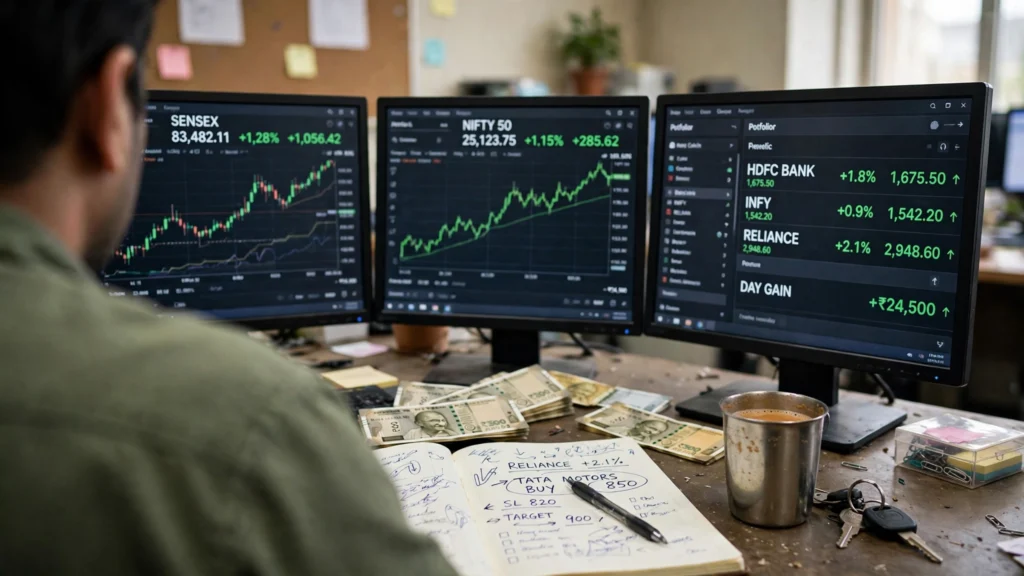
Markets move fast, and this picture reflects data available on November 28. Check live prices before making any investment decision.