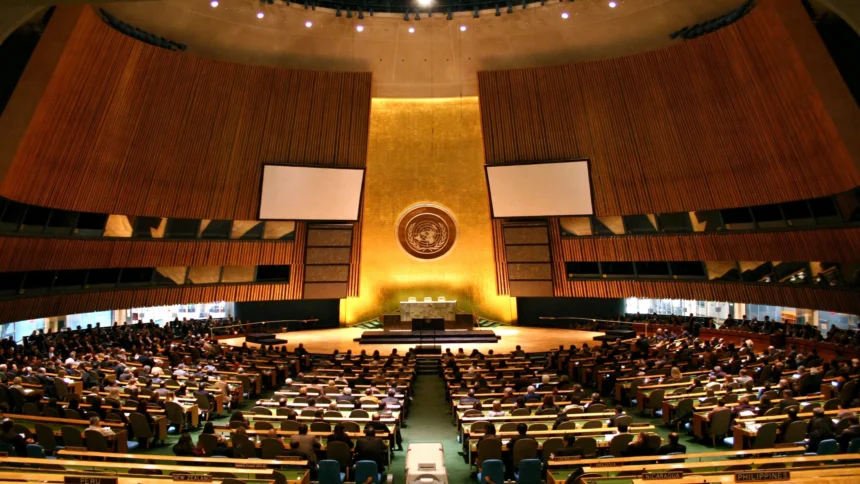
New York, October 29: The numbers told two stories at once on Wednesday. The United Nations General Assembly voted, for the 34th time, to call for an end to the United States embargo on Cuba. India voted with the majority. Yet the majority itself was smaller than it has been in two decades, and that shift may matter as much as the result.
The resolution passed with 130 votes in favour, 17 against and 25 abstentions. A year ago, the same call had drawn 165 votes in favour, with seven against and 12 abstentions. The fall of 35 votes in favour, in a single year, gave Washington something it could point to as progress, even as it lost the vote itself.
For New Delhi, the vote was in line with a position it has held for years. India has consistently opposed laws that reach beyond the borders of the country that makes them, and it has repeatedly backed the Assembly’s call for the embargo to end. This time, India put the human argument first.
What India said in New York
Soumya Nair, a counsellor at India’s Permanent Mission, spoke before the vote. She said New Delhi supported the Assembly’s appeal to reject laws with extraterritorial effects that adversely affect the sovereignty of other states and their peoples’ progress and prosperity.
She set out what India said the embargo was doing on the ground in Cuba: shortages of more than 60 per cent of essential medicines, a fall of more than 50 per cent in food production over five years, and fuel restrictions disrupting healthcare, education, water, food distribution and transport.
India, she said, hoped the embargo would be lifted at the earliest, so Cubans could take fuller part in international cooperation. It was measured, without sharp language about Washington, but its meaning was plain.
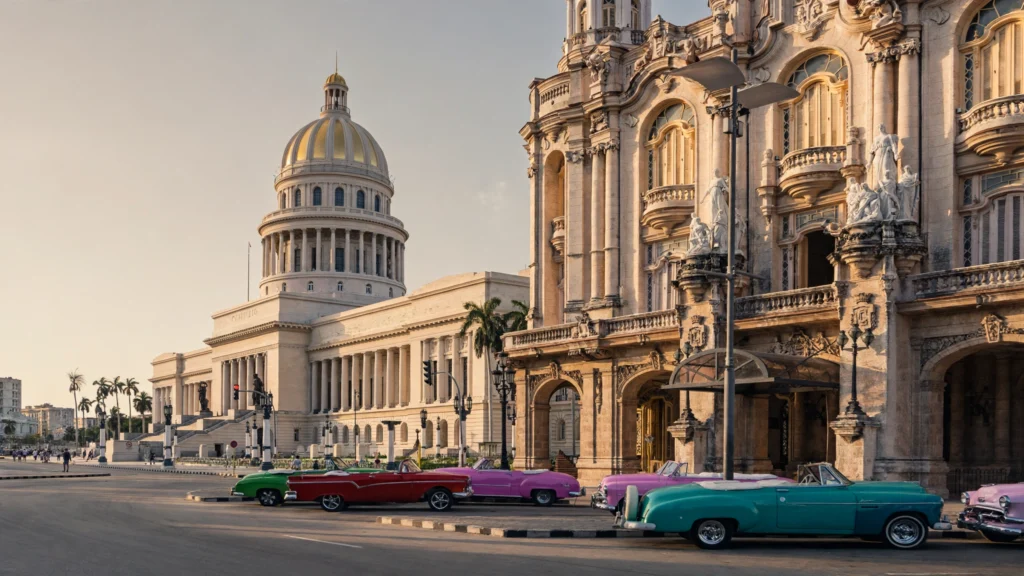
A vote that has run for more than three decades
The Assembly has voted almost every year since 1992. Support peaked at 191 votes in 2015 and 2017, during and just after the thaw under then US President Barack Obama. In 2016, the United States abstained for the first time.
The resolution presented by Cuba cites UN Charter principles of sovereign equality, non-interference and freedom of trade and navigation. It names the US Helms-Burton Act of 1996, whose extraterritorial reach affects companies and people in other countries, and urges states with similar laws to repeal them
The vote is not binding. Only the US Congress can lift the embargo, which has lasted for more than six decades. The Assembly vote is, instead, a public measure of world opinion, and this year that opinion looked more divided than it has for a long time.
Why support fell this year
Several countries that had backed the resolution in the past either voted against it or abstained this time. Germany and Italy were among those that abstained after previously voting in favour. The United States and Israel were among the 17 countries that voted against the resolution.
US Ambassador Mike Waltz welcomed the shift, saying he was satisfied that countries including South Korea and Germany had changed position, and expected the trend to continue.
Cuba had accused Washington, before the vote, of pressuring countries to peel away support, including threats linked to tariffs, visas and cooperation programmes. Waltz rejected the premise of the debate, saying there was no blockade and pointing to more than 876 million dollars in US exports to the island in the first eight months of 2026. Cuba’s troubles, he argued, came from its own government.
Rodriguez said after the vote that the US was once again isolated in its attempt to continue strangling the Cuban people. He blamed the embargo for straining Cuba’s health system, saying infant mortality had doubled and tens of thousands of surgeries had been delayed or cancelled.
Confrontation on the Assembly floor
The debate turned tense a day before the vote, when Rodriguez approached the dais to challenge Waltz as he spoke about alleged corruption among Cuba’s leaders. Assembly President Khalilur Rahman briefly suspended proceedings to restore order.
The friction continued on Wednesday, when the US expelled Richard Tur de la Concepcion, First Secretary of Cuba’s UN mission, over allegations he had physically engaged with an American diplomat the previous day.
It was an unusually public clash for a chamber that usually keeps its disagreements in the language of resolutions, and it underlined how much the Cuba question has sharpened this year, as Cuba struggles with a severe energy crisis.
What happens next
Nothing in Wednesday’s vote changes US law. What has changed is the diplomatic map around it. For India, the vote keeps a familiar balance: support for multilateral rules and sovereignty, and concern for the humanitarian impact on ordinary Cubans. For Cuba, the resolution is still a win on paper, but a narrower one.
FAQs
How did India vote?
India voted in favour of the resolution calling for an end to the US embargo on Cuba.
What was the final count?
130 in favour, 17 against and 25 abstentions, down from 165 in favour last year.
Is the vote binding?
No. Only the US Congress can lift the embargo.
Why did support fall?
Several past supporters abstained or voted against it this year, including Germany and Italy abstaining. The US credited its diplomatic push; Cuba accused Washington of pressuring states.
How long has the embargo lasted?
More than six decades.