
Scroll through your feed this week and you will notice the mood of fitness has quietly changed. The videos promising to “destroy” you at 6 am are giving way to something softer: morning walks filmed in golden light, slow Pilates flows, captions that talk about calming your nervous system instead of punishing it. The phrase behind the shift is low-cortisol workouts, and it has gone from niche wellness chatter to a full-blown trend in a matter of weeks.
The pitch is simple. Intense exercise spikes cortisol, the body’s main stress hormone. So why not choose movement that keeps you calm instead? Millions of likes later, a question is worth asking: is this a real idea with science behind it, or just another aesthetic trend with a lab coat on?
What cortisol actually does when you exercise
To understand the trend, you need to know what cortisol is actually doing during a workout. Cortisol is not a villain. It is the hormone that helps your body mobilise energy, sharpen focus and respond to physical demand. When you run, lift or sprint, cortisol rises. That is a normal, healthy response.
The problem starts when the stress never stops piling up. Hard training on top of bad sleep, long work hours and constant mental pressure can leave the body in a state where it feels wired and tired at the same time. Physiotherapists describe this pattern often: it is not one brutal workout that causes trouble, it is excessive training combined with poor recovery, broken sleep and prolonged psychological stress. People in that state start feeling flat, their sleep worsens and their performance slides instead of improving.
That is the soil in which low-cortisol workouts grew. The term itself is not a medical category. Experts describe it loosely as low to moderate intensity activity that places less stress on the body. But new research is giving the trend something real to stand on.
What the research says
A wide review of 44 clinical trials, covering more than 3,000 adults dealing with stress, anxiety or low mood, compared how different types of exercise affected cortisol. The result was striking: gentle yoga produced the most consistent drop in cortisol of all exercise types tested. Qigong, the slow, flowing movement practice, came second. High-intensity interval training showed no meaningful cortisol reduction, and in some cases a temporary rise.
Separate long-term research backs the same message from a different angle. In a year-long trial, adults who walked briskly or cycled for around 150 minutes a week showed a significant drop in long-term cortisol levels. The takeaway researchers keep returning to is that the sweet spot for stress reduction appears to be 90 to 150 minutes of moderate, gentle exercise per week, and consistency matters far more than intensity.
Which exercises actually count
There is no official list, but the workouts most experts place in the low-cortisol bracket share one quality: they leave you feeling better than before you started, not flattened. The usual suspects are:
- Brisk walking, especially outdoors, for 30 to 45 minutes
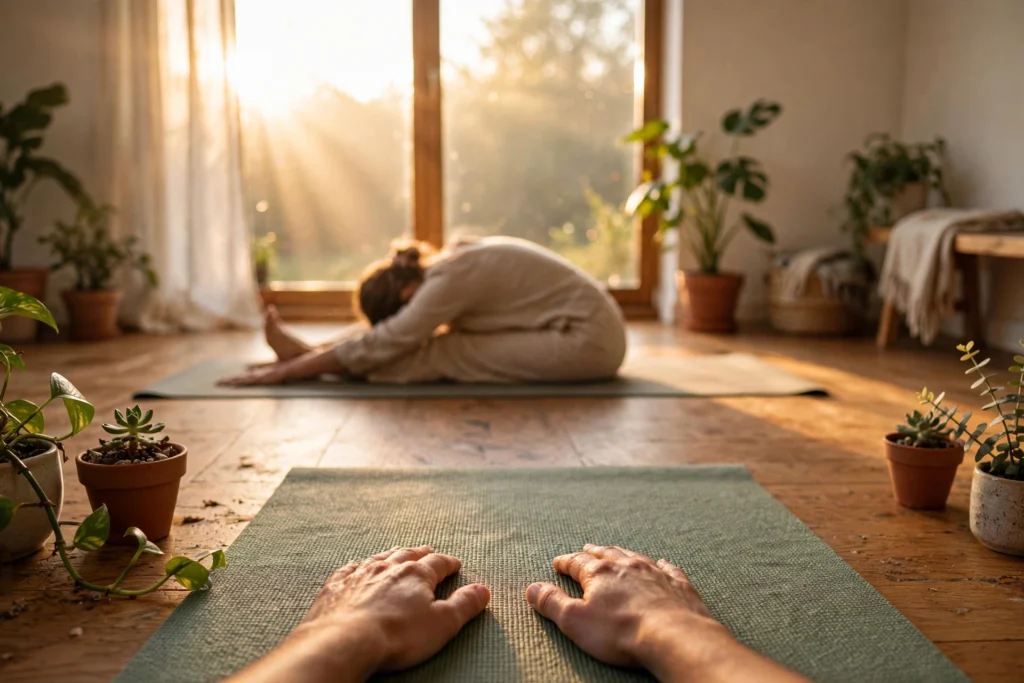
- Gentle yoga, with slow, breathing-focused sequences rather than power flows
- Pilates and mobility work, controlled, deliberate and joint-friendly
- Easy cycling or swimming at a conversational pace
- Moderate strength training, short sessions with comfortable weights
- Stretching and breathwork, which directly signal the body to relax
Notice what is missing: all-out sprints, heavy max-effort lifting, back-to-back HIIT classes and anything that leaves you dreading the next session. The defining feature is not the exercise itself but the effort level and the state you are in afterwards.
When to swap intensity for calm
Low-cortisol workouts are not only for the chronically stressed. They are particularly useful in a few situations that will sound familiar to many Indian readers: returning to exercise after months of inactivity, training through a draining work season, or realising that intense evening workouts are wrecking your sleep.
Watch for the signs that your body is asking for gentler movement. Persistent fatigue that a rest day does not fix, sleep that keeps getting worse, workouts that feel harder at the same effort, or a growing urge to skip the gym entirely. These are classic signals of overtraining, and swapping two or three hard sessions for walks, yoga or mobility work is exactly the kind of reset the research supports.
How to build a low-cortisol week
You do not need to abandon intensity forever. Most experts suggest a blend: one or two harder sessions a week, surrounded by gentler movement. A practical starting week could look like this:
- Monday: 40-minute brisk walk
- Tuesday: moderate strength session, 30 minutes
- Wednesday: gentle yoga or stretching, 30 minutes
- Thursday: rest or an easy evening walk
- Friday: Pilates or mobility work, 30 minutes
- Saturday: outdoor activity you enjoy, cycling or swimming
- Sunday: full rest, or slow breathwork and stretching
That adds up to roughly two and a half hours of gentle movement, right in the sweet spot the research points to. Pair it with 7 to 8 hours of sleep and regular meals, and you have covered the recovery side that makes the whole thing work.
FAQs
Does this mean HIIT is bad for me?
No. High-intensity training builds fitness efficiently, and a temporary cortisol spike during exercise is normal. Problems arise only when intense sessions are frequent, sleep is poor and recovery is skipped. Most people do well with one or two hard sessions a week balanced by gentler days.
Can I still lose weight with gentle workouts?
Yes. Fat loss comes mainly from sustained activity and consistent eating habits, not from how destroyed you feel after a session. Brisk walking, yoga and moderate strength training all burn calories, and you are more likely to stay consistent with movement you actually enjoy.
Is cortisol the reason for my belly fat?
Chronically high cortisol is linked with fat storage around the abdomen, but it is rarely the only factor. Sleep, diet, alcohol and overall stress levels all play a role. Gentle exercise helps, but it works best alongside better sleep and regular meals.
Should beginners start with low-cortisol workouts?
They are an excellent starting point. Walking, yoga and mobility work build a base of consistency without the soreness and dread that make so many beginners quit within a month. Intensity can be layered on later, once the habit is solid.
How long before I feel a difference?
Many people report sleeping better and feeling calmer within two to three weeks of consistent gentle movement. Hormonal shifts measured in studies took longer, typically eight to twelve weeks. Give it time, and keep the routine enjoyable enough to sustain.
The low-cortisol trend, for all its pastel aesthetics, is really about something old-fashioned: listening to your body. Some days call for a hard session. Many more days just need a good walk, a deep stretch and an early night. Your stress hormones, and your sleep, will notice the difference long before your mirror does.