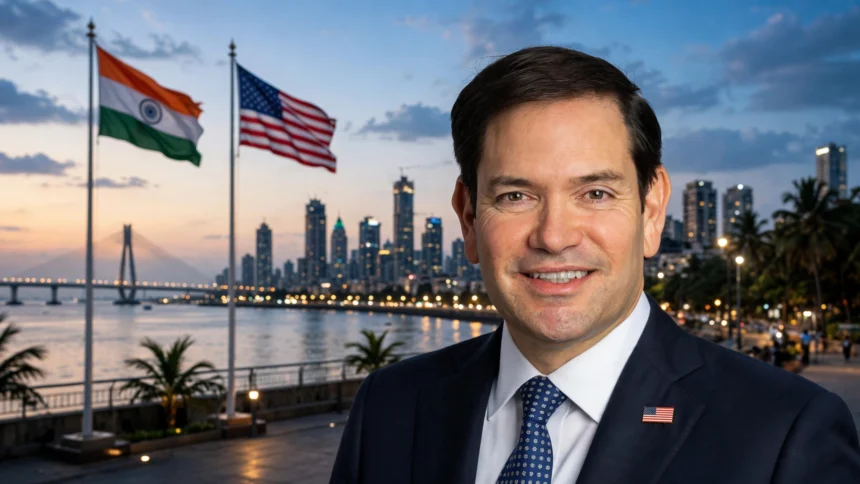
US Secretary of State Marco Rubio lands in India today, and his itinerary is raising eyebrows in diplomatic circles. Instead of the usual New Delhi visit, the top American diplomat is headed straight to Mumbai and Jamnagar, a business-first trip that puts energy cooperation at the heart of India-US ties.
Rubio reaches Mumbai today, October 18, as the India leg of a two-nation tour that began in Samarkand, Uzbekistan. The visit runs through October 22 and will be his second trip to India this year, after attending the Quad foreign ministers’ meeting in New Delhi in May.
Why Mumbai and Jamnagar, not Delhi
The choice of destinations is unusual. Visits by a US secretary of state normally centre on the national capital, where the foreign ministry and the political leadership sit. This time the action is in India’s financial capital and Gujarat’s refining hub.
The Ministry of External Affairs has confirmed that External Affairs Minister S Jaishankar will travel to Mumbai to meet Rubio on October 20, rather than receive him in Delhi. US Ambassador to India Sergio Gor said at the Bloomberg New Economy Forum this week that the trip is “a little more business-focused” than usual.
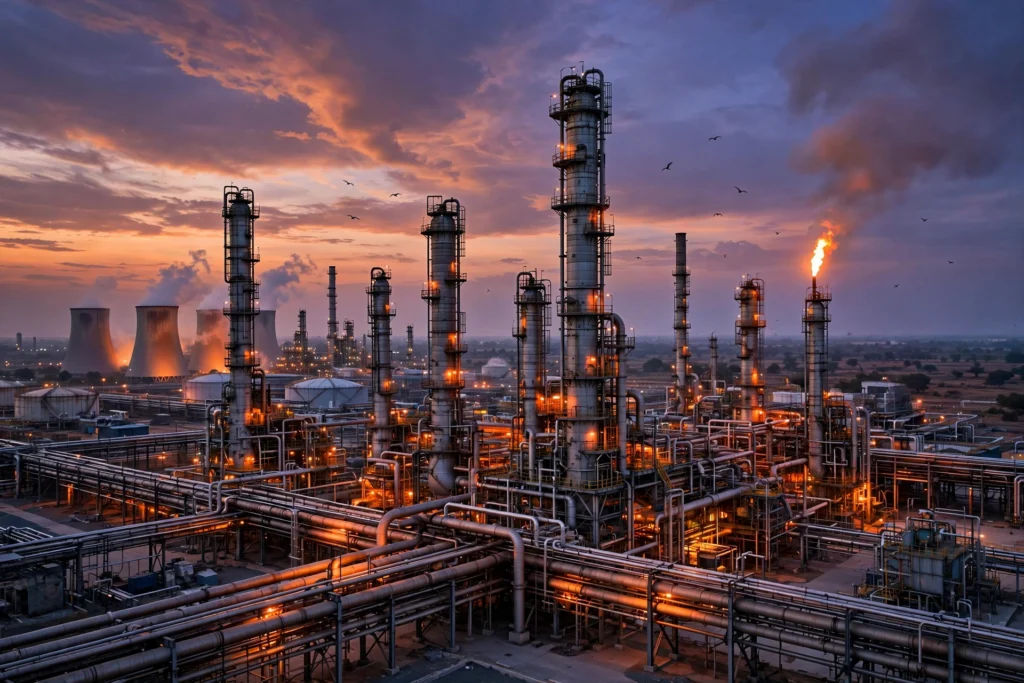
The message is deliberate. Mumbai gives Rubio access to corporate boardrooms and financial institutions, while Jamnagar, home to Reliance Industries’ massive refining complex, is where the energy story plays out on the ground.
Energy is the centrepiece
The US State Department has said the visit will focus on “enhanced energy cooperation”, and the Jamnagar leg makes that concrete. US envoy Sergio Gor confirmed that Rubio will meet “some of the folks” at Reliance during his Gujarat stop.
Reliance is one of the largest buyers of Venezuelan crude outside the United States, and Washington has been keen to deepen refinery linkages with the Indian giant. Earlier this year, President Donald Trump announced on Truth Social that Reliance would invest in a new refinery in Brownsville, Texas, describing it as America’s first new refinery in five decades, with a reported investment of $300 billion.
Energy has become the fastest-moving part of the relationship. With global crude markets volatile and India importing more than 88 per cent of its oil needs, both sides see commercial opportunity in refining partnerships.
Trade talks near a ‘landing point’
The visit comes days after Jaishankar said on Tuesday that negotiations on the long-pending India-US bilateral trade agreement were heading towards a “landing point”, though a few issues still remained unresolved.
Rubio is travelling with a commercial delegation of more than 200 business leaders, and a business event is planned in Mumbai. The US State Department said he will “meet with senior government officials to strengthen the US-India strategic partnership, exchange views on regional and global dynamics, and discuss prospects for enhanced energy cooperation”, along with meetings with business leaders to promote commercial investment.
Sources quoted in the Indian press, however, caution that a full breakthrough before the US mid-term elections in November may not be on the cards. Tariffs and market-access issues could take longer to settle.
The backdrop: a tense but improving year
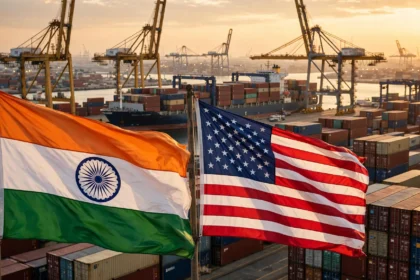
The visit follows a turbulent stretch in the relationship. Last year, Trump imposed an additional 25 per cent tariff on Indian imports over New Delhi’s Russian crude purchases, alongside a 25 per cent reciprocal tariff. The extra duties were removed in February 2026, and the reciprocal tariff was cut to 18 per cent under a bilateral framework.
This week brought more relief. On Friday, Trump signed an executive order pausing the Graham sanctions law that would have allowed tariffs of up to 100 per cent on India and China over Russian oil trade. The waiver followed an agreement with Russian President Vladimir Putin for diesel shipments aimed at cooling global energy prices.
Rubio’s arrival, then, is the diplomatic follow-through: moving from tariff threats to deal tables.
Key facts about the visit
- Dates: October 18 to 22, 2026, after Samarkand, Uzbekistan
- Cities: Mumbai and Jamnagar, with Jaishankar travelling to Mumbai for the October 20 meeting
- Delegation: More than 200 US business leaders accompanying the secretary
- Agenda: Energy cooperation, investment, strategic partnership, regional and global dynamics
- Jamnagar stop: Reliance Industries’ refining complex, with a meeting with Reliance representatives
FAQs
When does Marco Rubio arrive in India?
Rubio is scheduled to reach Mumbai today, October 18, 2026. He will stay in India until October 22.
Why is Rubio visiting Mumbai and Jamnagar instead of Delhi?
The visit is deliberately business-focused. Mumbai offers access to corporate leaders and financial institutions, while Jamnagar is home to Reliance’s giant refinery, the anchor of US-India energy cooperation.
Will Rubio meet S Jaishankar?
Yes. The MEA has confirmed that Jaishankar will meet Rubio in Mumbai on October 20.
What is on the agenda?
Energy cooperation, commercial investment, the stalled bilateral trade agreement, and regional and global strategic issues.
Is a trade deal breakthrough expected?
Jaishankar said talks are near a “landing point”, but sources say a full breakthrough before the November US mid-terms is unlikely.
Rubio’s second India visit in six months, and the decision to keep it out of Delhi, signals a shift in how Washington wants to do business with New Delhi. Watch the Mumbai boardrooms and the Jamnagar refinery this week. That is where the next chapter of the India-US story will be written.