
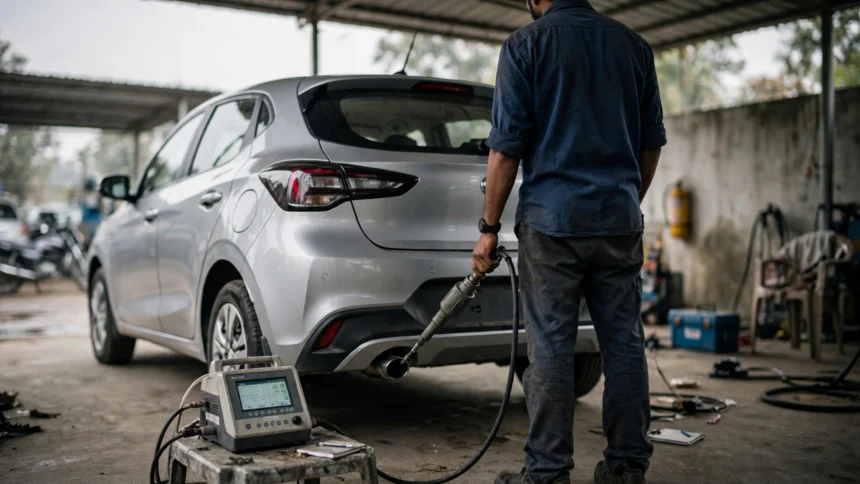
Good news for lakhs of vehicle owners across India: the Pollution Under Control (PUC) certificate will now last much longer for newer vehicles. The government has notified new rules that stretch the validity of PUC certificates to three years for BS-VI private vehicles in their first six years, a big change from the annual renewal most owners are used to.
The Ministry of Road Transport and Highways notified the changes under the Central Motor Vehicles (Sixteenth Amendment) Rules, 2026, amending Rule 115 of the Central Motor Vehicles Rules, 1989. The new schedule came into force on Gazette publication and was widely reported on November 19.
What has changed
Until now, most vehicle owners had to get their PUC certificate renewed every year, with older vehicles on even shorter cycles. The new rules link the validity period to two things: the emission standard of the vehicle and its age from the date of first registration.
For BS-VI compliant private vehicles, which covers nearly every car and two-wheeler sold in India since April 2020, the certificate will now be valid for three years at a time for vehicles up to six years old. Once the vehicle crosses six years, the renewal becomes annual, and after ten years it moves to every six months. Commercial and transport vehicles get a slightly shorter leash: BS-VI transport vehicles up to six years old will need renewal once every two years, annually between six and ten years, and every six months after that.
The new PUC validity schedule
- BS-VI private vehicles, up to 6 years old: once every 3 years
- BS-VI private vehicles, 6 to 10 years old: once every year
- BS-VI private vehicles, older than 10 years: once every 6 months
- BS-VI transport vehicles, up to 6 years old: once every 2 years
- BS-VI transport vehicles, 6 to 10 years old: once every year
- BS-VI transport vehicles, older than 10 years: once every 6 months
- BS-IV vehicles: once every 6 months
- BS-I, BS-II and BS-III vehicles: once every 3 months
Vehicles meeting older emission norms face the shortest validity periods. BS-IV vehicles will need a fresh certificate every six months, while BS-I, BS-II and BS-III vehicles must renew every three months.
What vehicle owners must remember
The new validity periods do not change certificates that are already in force. If your current PUC certificate is still valid, it stays valid till its expiry date. The revised schedule will apply only when you go for your first renewal after the new rules come into force.
The notification also settles a common confusion about renewal dates. If you apply for renewal within ten days before your existing certificate expires, the renewed certificate will take effect from the date of expiry of the old one, so you lose no days. If you renew after expiry, the new certificate counts from the day you renew.
One thing has not changed at all: every vehicle must still carry a valid PUC certificate issued or renewed by an agency authorised by the state government. The longer validity only reduces how often you need to visit a testing centre, it does not remove the requirement.
Why it matters
For owners of BS-VI cars and bikes bought in the last few years, the annual PUC queue and the risk of forgetting a renewal date disappear for three years at a stretch. The logic is simple: BS-VI vehicles run far cleaner, so they can be checked less often, while older, more polluting vehicles are checked more often instead. The timing fits the winter pollution season too: Delhi has already barred below BS-VI vehicles registered outside the capital from entering the city between November 1, 2026 and January 31, 2027.
What to do now
Check the date of first registration on your registration certificate. If your BS-VI car or bike is under six years old, your next PUC certificate will be valid for three years. Note the expiry date of your current certificate and plan the renewal inside the ten-day window before it ends, so the new certificate starts exactly when the old one expires.
Owners of older vehicles should mark the shorter cycle in advance: a BS-IV vehicle now needs renewal every six months and BS-I to BS-III vehicles every three months. Driving without a valid PUC can draw a challan of up to Rs 10,000 under the Motor Vehicles Act.
FAQs
Does my current PUC certificate change?
No. Existing certificates keep their validity; the new schedule applies only at your first renewal after the rules take effect.
My car is a 2023 BS-VI model. How often must I renew now?
Once every three years while it is under six years old, then annually, and every six months after ten years.
Do commercial vehicles get the same three-year validity?
No. BS-VI transport vehicles up to six years old get a two-year certificate, not three years.
What if I renew my PUC a few days before expiry?
If you renew within ten days before expiry, the new certificate takes effect from the old expiry date, so you lose nothing.
Is the PUC certificate still compulsory?
Yes. Every motor vehicle must carry a valid PUC certificate from an authorised testing centre. Only the validity period has changed.
The new rules are a rare piece of paperwork that actually gets lighter: for owners of newer vehicles, the PUC certificate is now a once-in-three-years job.