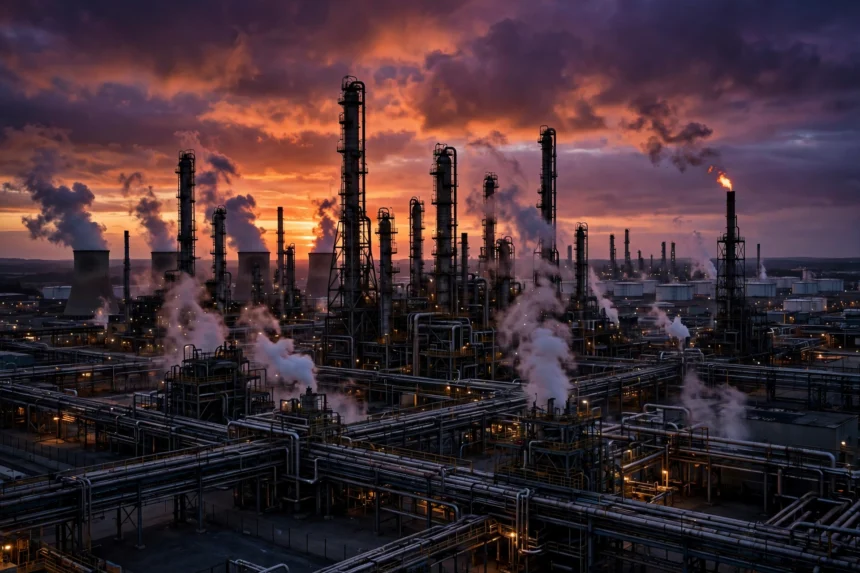
Petrol prices at the pump have barely moved in months, yet India’s crude oil import bill has exploded. A new Axis Bank Research report puts a number on the quiet cost of that calm: roughly 1.7 per cent of the country’s GDP is now being absorbed by the public sector to shield consumers from expensive oil. The question nobody wants to answer for long is who ultimately pays that bill.
The report, dated October 23, estimates the combined support from the Centre, state governments, public sector undertakings and the Reserve Bank of India at around 1.7 per cent of GDP, assuming average crude oil prices of about $100 per barrel this financial year. If crude climbs further, every additional $10 per barrel would add roughly 20 basis points of GDP to the support burden, as long as retail fuel prices stay frozen.
The 1.7 per cent question
India imports nearly nine-tenths of the crude it consumes, so when oil rallies, the arithmetic turns ugly fast. The report breaks the hidden support into three parts.
The biggest share sits with the Centre, estimated at about 0.8 per cent of GDP. It comes through excise duty cuts on auto fuels, higher fertiliser subsidies and deliberately modest increases in domestic LPG prices. Fertiliser subsidies rose 21 per cent year-on-year between April and August, while LPG under-recoveries for FY27 are pegged at around Rs 57,000 crore. That is money the government never collects, or pays out, to keep fuel and fertiliser bills in check.
Oil marketing companies and state governments together account for roughly another 0.7 per cent of GDP. The OMCs absorb marketing losses on petrol and diesel, selling fuel below what the market price would justify, while states lose revenue through lower VAT collections on fuel. The RBI chips in the remaining 0.2 per cent of GDP through the subsidy embedded in concessional foreign exchange swaps and the cost of its foreign exchange intervention.
Why the bill is surging now
The numbers behind the strain are stark. India’s crude oil import bill jumped 46 per cent year-on-year in September to $15.4 billion, up from $10.5 billion, even though volumes grew just 7 per cent. The Indian crude basket averaged $116.09 per barrel in September, compared with $114.48 in April. Between April and September, the import bill soared to $90.6 billion from $61.9 billion a year earlier, driven almost entirely by higher prices.
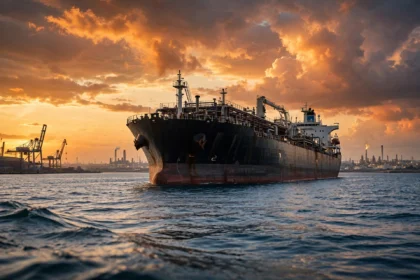
The driver is familiar: renewed tensions in the Middle East, with shipping risks around the Strait of Hormuz pushing freight and insurance costs higher. Axis Bank Research noted that Brent crude had crossed $110 per barrel, while dated Brent touched $140 per barrel. The RBI’s own October State of the Economy report flagged the spillover: headline CPI inflation hit a 23-month high of 5.5 per cent in September, while wholesale inflation climbed to 11.4 per cent.
How long can the cushion last?
The report does not argue the cushion should end tomorrow, but it questions how much longer the public sector can carry it. It estimates that higher gold duties, export duties designed to capture windfall gains on petroleum products and the Economic Stabilisation Fund could create fiscal room of about 0.6 per cent of GDP. That would help limit the Centre’s fiscal slippage to around 20 to 30 basis points of GDP in FY27.
If elevated prices become the new normal, the report argues the optimal level of government support should decline, which means letting more of the cost reach consumers. For households, that could translate into less protection from fuel price increases. For public finances, it is the familiar trade-off between short-term relief and fiscal stability.
FAQs
Why are petrol prices not rising if crude is so expensive?
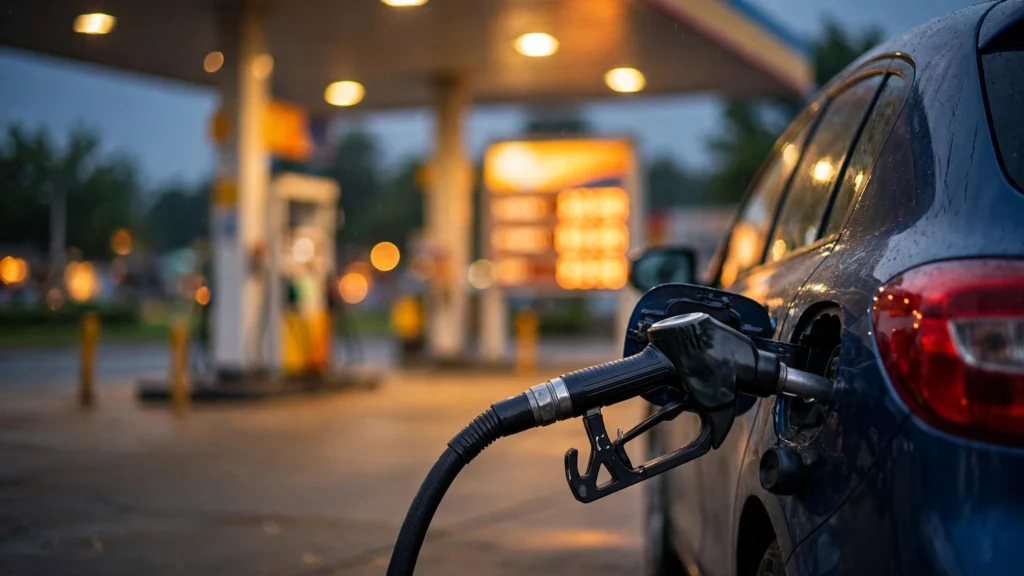
Because the Centre, states, OMCs and the RBI are absorbing the difference through excise cuts, fuel subsidies, OMC marketing losses and forex support, keeping retail prices stable while import costs surge.
What is an under-recovery on LPG?
It is the gap between the market cost of an LPG cylinder and its retail price. The report estimates LPG under-recoveries at about Rs 57,000 crore for FY27, borne largely by OMCs and the government.
What happens if crude stays above $100 for long?
Axis Bank Research argues the public sector’s support should taper, so fuel prices would gradually reflect market costs. That would protect the fiscal deficit but raise inflation and household fuel bills.
How does the oil shock affect the rupee?
A bigger import bill widens the current account deficit and raises demand for dollars, which pressures the rupee. The RBI has been intervening in forex markets to smooth the move, at a cost the report pegs as part of its 0.2 per cent of GDP share.
What does this mean for the common consumer?
For now, pump prices are protected. But the protection is financed by the exchequer and public sector companies, which eventually shows up as a higher fiscal deficit or, later, higher fuel prices.
Crude at $100-plus is no longer a blip, and the era of silently absorbing the bill is running into arithmetic. Whether the adjustment comes through the budget, the fuel pump or the rupee, expensive oil is a tax someone has to pay.