Bengaluru startup Sarvam has put a number on India’s most ambitious homegrown AI project. Its upcoming trillion-parameter model will cost between $150 million and $200 million to build, co-founder Pratyush Kumar said on Saturday, November 28, at the Groww Next ’26 event in Bengaluru.
The figure covers data, computing and research, the three big bills behind any frontier-scale model. It is the first time Sarvam has publicly priced the project since announcing it in July.
“A single model takes about $200 million,” Kumar said, describing model building as extremely capital intensive. The remark frames the scale of the bet Sarvam is making.
What the $150-200 million covers
The estimate spans three areas. First, data: collecting, cleaning and preparing the vast amounts of text, code and other material a model learns from. Second, computing: the graphics processing units, or GPUs, and the infrastructure needed to run months of training. Third, research: the scientists and engineers who design the model, test it and improve it.
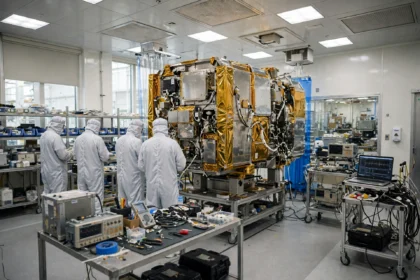
Sarvam is still setting up the GPU cluster the training run needs. Once the cluster is ready, Kumar said training itself should take three to four months. The company said in July that it had access to about 2,000 NVIDIA Blackwell GPUs and wanted to reach 10,000.
The model was first announced at Epoch, Sarvam’s developer conference, on July 30. In October, Kumar said it should be ready by February 2027, a target the company is still holding to, though that depends on the cluster coming online and training going to plan.

A 10x jump from Sarvam 105B
The new model will be nearly 10 times the size of Sarvam’s current flagship, the 105-billion-parameter Sarvam 105B, which the company open-sourced in March. That model scored 45.0 on SWE-Bench Verified, a widely used test of software engineering ability.
Sarvam says the trillion-parameter model is being built from scratch in India and is aimed at coding, cybersecurity, scientific research and simulation. When it was announced in July, the company also claimed its pricing was 5.5 times cheaper than leading global rivals.
The project is backed by serious money. In June, Sarvam raised $234 million in the first close of a $300 million Series B round led by HCLTech, at a $1.5 billion valuation. The new model’s cost is roughly two-thirds to four-fifths of that first close.
Sarvam is selling tokens while it builds
Sarvam is not waiting for the big model to start earning. On November 16, it opened Token Factory, a service that runs AI models on GPUs in India through a single API. The catalogue includes Sarvam 105B alongside Google’s Gemma and open-weight models from DeepSeek, Moonshot AI and Zhipu AI.
The company also plans to launch an enterprise AI stack next month, for companies to build applications on its infrastructure. Kumar said enterprises across sectors, including banking, are showing interest in customised models and internal AI stacks rather than relying entirely on outside frontier models.
Why it matters
The $150-200 million figure matters because it turns an abstract ambition into a budget line. India has talked for years about sovereign AI, but a frontier model is not a policy announcement. It is a multi-year engineering project with a nine-figure price tag, and Sarvam has now said openly what it will cost to try.
For readers, the stakes are practical. A model built and hosted in India means Indian-language AI for the country’s 22 scheduled languages, business data that can stay on Indian servers, and products that do not stop working if a foreign provider changes its rules or prices.
There is also a reality check in the number. At $150-200 million a model, very few Indian companies can afford to build at the frontier, which is why the IndiaAI Mission’s subsidised GPU support matters. The government is now weighing whether to extend that support from training to inference, a shift that would help models like Sarvam’s actually reach users at scale.
What happens next
- Training cluster: Sarvam finishes setting up the GPU cluster and confirms training has begun.
- Enterprise stack: the company launches its enterprise AI offering in December 2026.
- February 2027: the target release window for the trillion-parameter model, with coding and cybersecurity among its first uses.
- IndiaAI inference support: MeitY decides whether to extend compute subsidies beyond training.
FAQs
How much will Sarvam’s trillion-parameter model cost?
Between $150 million and $200 million, covering data, computing and research, according to co-founder Pratyush Kumar.
When will the model be ready?
Sarvam has targeted February 2027. Training takes three to four months once the GPU cluster is ready, and the cluster is still being set up.
What is a trillion-parameter model?
An AI model with about one trillion adjustable settings learned during training. More parameters generally mean a more capable model, but also much higher training costs.
How big is it compared to Sarvam’s current model?
Nearly 10 times the size of Sarvam 105B, the company’s 105-billion-parameter flagship released in March 2026.
Why does India need its own frontier model?
So Indian businesses and government are not fully dependent on foreign providers for their most capable AI, and so models can be built for Indian languages and hosted in India.
Sarvam’s price tag is now public, and the countdown to February 2027 has a number attached to it. The cluster, the training run and the first test results will tell whether India’s biggest AI bet lands on time.