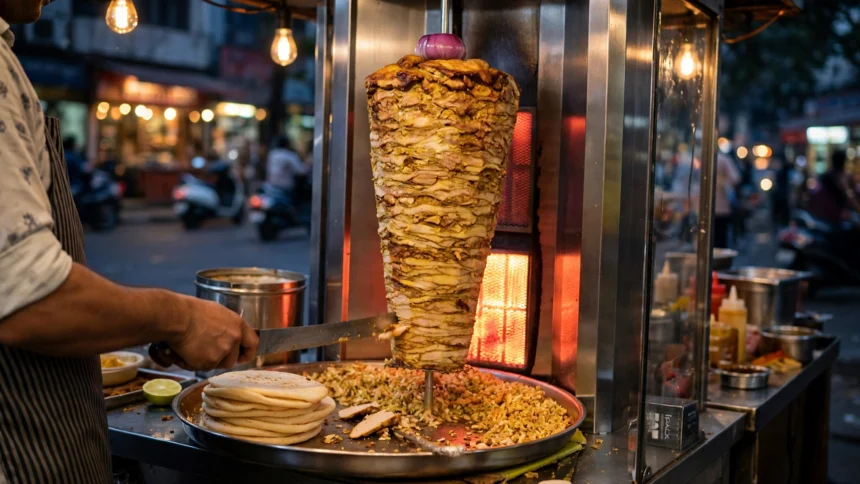
Less than a week after 130 people fell ill eating shawarma in Bhiwandi, the queues outside Mumbai’s shawarma stalls have barely shortened. From Carter Road in Bandra to Kurla, Jogeshwari and Bhendi Bazaar, the smell of meat turning on spits still draws crowds every evening. The scare has dented trust in roadside stalls, but not the city’s appetite for its favourite late-night roll.
What happened in Bhiwandi
The trouble began on the night of Monday, November 23, when people ate chicken shawarma at AK Shawarma, a stall near Vanjarpatti Naka in Bhiwandi. Within hours, customers reported vomiting, diarrhoea and fever. The count climbed from 11 on Tuesday to 53 by Wednesday, and eventually to 130 people, according to the Free Press Journal. As of Friday, November 27, 107 patients were still in hospital and 23 had been discharged.
The response was swift. The Food and Drug Administration suspended three Bhiwandi hotels, Rizwan Hotel, Hotel Moonlight and Anand Hotel, after inspections found hygiene lapses. The municipal corporation launched a bulldozer drive against unauthorised stalls and acted against 54 street food vendors, including 15 shawarma stalls. The AK Shawarma stall was demolished, and police registered a case against its owner, who is absconding. The stall had been selling chicken shawarma for as little as Rs 10.
Why Mumbai still loves shawarma
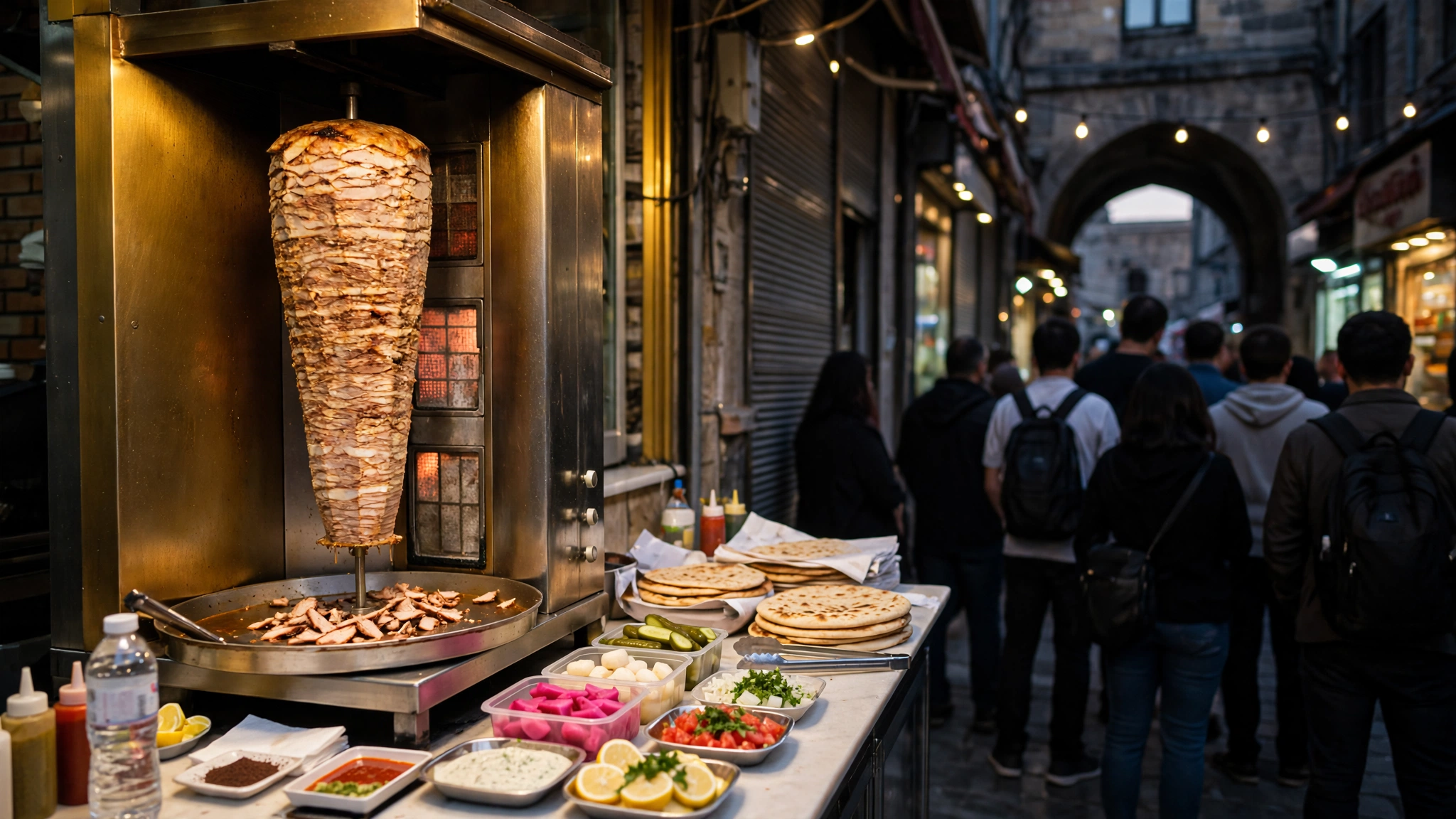
Shawarma traces its roots to the Ottoman Empire and is closely related to Turkey’s doner kebab. Marinated meat is stacked on a vertical spit, roasted slowly, shaved off and wrapped in pita bread with garlic sauce, fries and pickles. It is cheap, filling and easy to eat on the move, which is why it works so well for commuters and late-night crowds.
Food critic Kunal Vijayakar told The Times of India that shawarma has become a popular street food in Mumbai. Bhendi Bazaar restaurateur Nasir Jamal calls it essentially a Lebanese dish that sells because of its taste and convenience. Their shared message: do not blame the dish, blame the people who cut corners while making it.
Why shawarma can turn risky
The same cooking method that makes shawarma delicious is also what makes it risky when handled badly. Meat is stacked on a vertical spit and cooked from the outside in. If it is shaved off before it is properly cooked, raw meat and its juices can reach the cooked portions. Chicken must stay refrigerated and sauces must be fresh. At a busy roadside stall with no refrigeration and a long queue, every one of those rules is easy to break.
A pattern, not a one-off
This is not the first time shawarma has made headlines for the wrong reasons. In April 2024, 12 people were hospitalised after eating chicken shawarma from a roadside stall in Goregaon East. A month later, 19-year-old Prathamesh Bhokse died after eating shawarma from a stall in Trombay. In June 2026, over 100 people fell ill after eating at a shawarma outlet in Bhiwandi’s Khandu Pada area. The November outbreak, at 130 cases, is the largest of the four. Each incident brought inspections and promises of daily checks. Each time, enforcement faded and the stalls returned. That cycle is the real story behind this week’s numbers.
Why it matters
The outbreak matters beyond the hospital count because it exposes the gap between Mumbai’s street food economy and the rules meant to keep it safe. Shawarma is a mass-market meal sold at every price point, from Rs 10 at an unlicensed cart to several hundred rupees at a restaurant. The cheaper end of that market is where the danger sits, and it is also where the most vulnerable customers eat.
The timing adds weight. Just three days before the Bhiwandi count peaked, the Supreme Court directed the food regulator FSSAI to introduce mandatory front-of-pack warning labels on packaged food, with separate red hexagons for high sugar, high salt and high fat. Street food, which feeds far more people than any packaged brand, cannot stay outside that conversation. The lesson is not to give up shawarma. It is to choose where you eat it: a busy, licensed outlet with visible refrigeration and fresh sauces is a different proposition from a cart selling Rs 10 rolls with no licence.
FAQs
Is shawarma safe to eat in Mumbai right now?
Yes, from a reputed and licensed outlet that follows hygiene rules. The risk sits with unlicensed roadside stalls. Choose busy, established sellers and eat the roll fresh.
What happened in Bhiwandi?
More than 130 people fell ill after eating chicken shawarma at AK Shawarma near Vanjarpatti Naka on the night of November 23. The stall was demolished and its owner is absconding.
Why does shawarma cause food poisoning?
The meat cooks from the outside in on a vertical spit. If it is sliced before it is fully cooked, or raw juices touch cooked meat, bacteria survive. Poor refrigeration and stale sauces add to the risk.
Has this happened before?
Yes. A 19-year-old died in Trombay in 2024 after eating shawarma, 12 people were hospitalised in Goregaon East the same year, and over 100 fell ill in Bhiwandi in June 2026.
Mumbai’s shawarma habit is not going anywhere. The question is whether food safety enforcement can finally keep up with it.