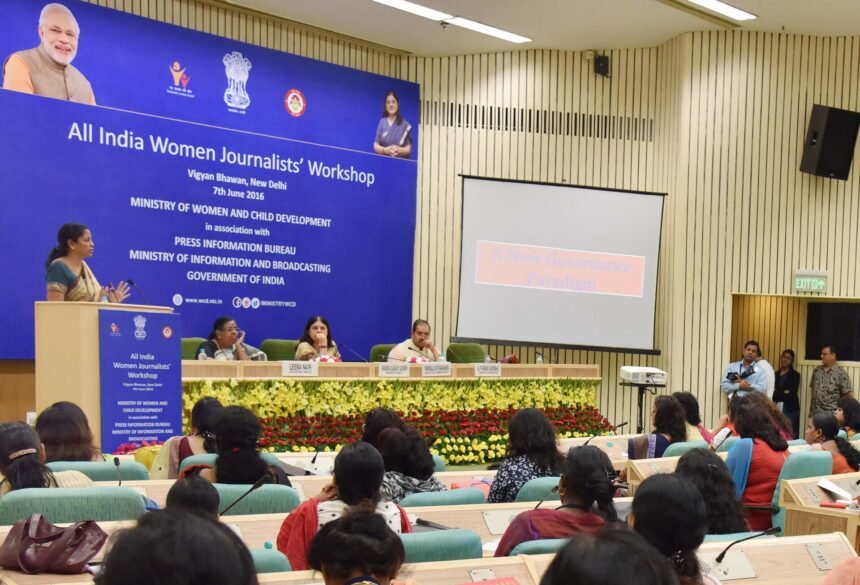
Union Finance Minister Nirmala Sitharaman on Monday restated the Centre’s fiscal roadmap in clear terms: India will keep bringing its debt down and limit national debt to 50 per cent of gross domestic product (GDP) by 2030. Speaking to reporters in Tiruchirappalli, Tamil Nadu, she said the annual budgets themselves show the government’s commitment to reducing the fiscal deficit, and that the debt target is part of a steady, publicly stated plan rather than a sudden change of course.
“We are committed to reducing the fiscal deficit, as evidenced by our annual budgets. We have openly stated our goal that by 2030, the national debt will be limited to 50 per cent of the GDP. We are consistently putting in place measures to reduce the Union Government’s debt, and international organisations have acknowledged India’s disciplined approach to debt management,” Sitharaman told reporters.
What the 50% target actually means
The headline number needs one careful clarification. Sitharaman spoke of “national debt” being limited to 50 per cent of GDP by 2030. The government’s published budget framework expresses the same goal more precisely as Central Government debt of 50 per cent, plus or minus one percentage point, by 2030-31. In other words, the official corridor runs from 49 per cent to 51 per cent, and the deadline in the budget documents is the end of 2030-31.
The direction of travel is already visible in the budget estimates. Central Government debt is estimated at 55.6 per cent of GDP in the current financial year, 2026-27, compared with 56.1 per cent in 2025-26. The fiscal deficit target for 2026-27 is 4.3 per cent of GDP, giving the government an annual checkpoint inside the longer debt-reduction plan.
- The goal: national debt limited to 50 per cent of GDP by 2030, with the budget framework setting Central Government debt at 50 per cent, plus or minus one point, by 2030-31.
- Where India stands: Central Government debt estimated at 55.6 per cent of GDP in 2026-27, down from 56.1 per cent in 2025-26.
- The annual anchor: a fiscal deficit target of 4.3 per cent of GDP for 2026-27, inside a deficit path that has been narrowing year after year.

Why the 50% mark matters for households
For ordinary readers, the debt-to-GDP ratio is simply a way of judging whether borrowing is growing faster than the economy that must repay it. When the ratio falls, interest costs take a smaller bite over time, leaving more room for priority spending and for responding to global shocks. When it rises sharply, as it did in many countries after the pandemic, that room shrinks.
Sitharaman framed the target against that post-Covid experience. She said every nation has faced debt challenges since the pandemic, acknowledged that concerns about India’s debt levels are understandable, and argued that the burden has been steadily declining rather than drifting.
She linked the debt plan to price stability. A dedicated group of ministers has been working since 2014 to keep prices stable through better supply chain management, she said, pointing to steps such as restrictions on rice exports, which insulated domestic consumers from price rises while farmers still received the minimum support price (MSP).
What she said on the rupee
The rupee opened on Monday at 94.93 against the US dollar, almost flat against Friday’s close of 94.94. Asked about the currency, Sitharaman drew a line the Reserve Bank of India (RBI) itself draws. She said the RBI’s efforts are aimed at preventing abrupt movements in the rupee rather than fixing its exchange rate. In plain terms, the central bank steps in to smooth sharp swings, not to defend a particular level of the rupee against the dollar. A sudden slide can feed into import costs and inflation, especially through fuel, while an orderly market lets businesses and households plan.
On state finances, she was asked about concerns over Tamil Nadu’s debt. Sitharaman said such matters should be debated in the State Assembly so that the truth can reach the public.
What to watch next
The 50 per cent goal will be tested in the most ordinary way: through the next few budgets. Each year’s deficit outcome and debt estimate will show whether the glide path is holding. Markets will watch those numbers alongside inflation, oil prices and the RBI’s policy stance.
FAQs
What did Nirmala Sitharaman say on October 26?
She said the Centre is committed to reducing the fiscal deficit and that national debt will be limited to 50 per cent of GDP by 2030.
Is the 50 per cent target new?
Not as a framework. Sitharaman restated it on Monday in Tiruchirappalli. The budget framework already sets Central Government debt at 50 per cent, plus or minus one percentage point, by 2030-31.
Where does India’s debt ratio stand now?
Central Government debt is estimated at 55.6 per cent of GDP in 2026-27, compared with 56.1 per cent in 2025-26, with a fiscal deficit target of 4.3 per cent of GDP for the current year.
What did she say about the rupee?
She said the RBI’s role is to prevent abrupt movements in the rupee rather than to fix its exchange rate.
Why does the debt-to-GDP ratio matter?
It shows whether borrowing is growing faster than the economy. A falling ratio eases interest costs and leaves more room for priority spending.
Sitharaman spoke to reporters in Tiruchirappalli on Monday, October 26, 2026.