Every year, food worth about $13 billion never reaches an Indian plate. It rots in transit, wilts in the heat at a mandi, or simply never makes it out of the farm gate. A new white paper from Delhi-based research group Climate Trends, released on November 4, puts a stark number on a problem most shoppers only feel at the vegetable stall: India is losing close to a third of its fruits and vegetables before anyone gets to eat them.
The report, titled “From Risk to Resilience: Climate Change, Ecology and the Future of Indian Agriculture”, lands at an awkward moment for household budgets. Food inflation, which makes up nearly 40% of the consumer price index, is expected to climb to 8.20% in October, up from 7.74% in September, according to a Reuters poll of 36 economists conducted between November 2 and 6. Overall consumer inflation is projected at 5.93% for October, against 5.54% in September. The official October inflation print is due on November 12.
Only 4% of fresh produce travels through a cold chain
The central finding is brutally simple. Only about 4% of India’s fresh produce is covered by cold-chain facilities. The rest moves through a system of open trucks, crowded mandis and roadside storage, where a hot afternoon can decide whether a crate of mangoes sells or spoils.
The report estimates that up to 40% of fruits and vegetables and 5 to 6% of foodgrains are lost before reaching consumers. Put together, the annual bill comes to roughly $13 billion, a figure driven largely by inadequate cold storage and transport rather than by what happens in the field.
Dr Palak Balyan, research lead at Climate Trends, summed it up plainly: India’s food losses are not just a farming problem, they are a systems problem. Close to a third of fruits and vegetables are lost before they even reach a consumer, she said, adding that extreme heat and erratic rainfall are only compounding post-harvest losses.
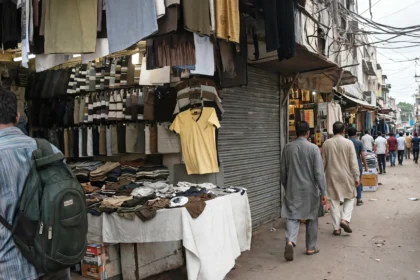
The report gives the problem a human face. It cites a fruit seller at Delhi’s Azadpur Mandi who reportedly lost more than Rs 1 lakh in a single day during the extreme summer of 2024, as mangoes spoiled faster than usual in the heat. For small traders and farmers, a loss like that is not a statistic. It is a season’s margin gone in an afternoon.

Climate change is shrinking the harvest too
The losses do not stop at the mandi. More than 20 million hectares of agricultural land, over 14% of India’s total sown area, has been affected by extreme weather events, the report notes. Around 45% of crop-producing land faces significant flood exposure.
The longer trend is just as worrying. Research cited in the paper shows that over the past five decades, a rise of 1 degree Celsius in temperature has cut national average all-crop yields by about 8%. With heatwaves, erratic rainfall and what the report calls the worst El Nino since 1950 on the horizon, those pressures are expected to intensify rather than ease.
Aarti Khosla, director of Climate Trends, warned that the shocks now travel well beyond the farm. “These shocks are evidently going beyond the farm to markets, food prices, household budgets and inflationary pressures across the country,” she said.
Milk, the quiet casualty
Dairy, often left out of the food-loss conversation, takes a heavy hit as well. Heat stress is estimated to reduce India’s annual milk production by 1.8 million tonnes, worth about Rs 2,661 crore a year, or roughly 2% of national output. Around 40% of the country’s livestock population is vulnerable to extreme weather, putting both dairy farmers’ incomes and milk availability under strain.
That matters because milk, like vegetables, is a daily purchase for most households. When supply tightens, prices follow, and the pressure lands first on the same families already paying more for onions. Onion prices have nearly doubled since the start of 2026, while meat, milk and eggs have also become more expensive, and an uneven southwest monsoon has squeezed supplies of several essential commodities.
Why your grocery bill feels it
The link between a spoiled truckload and a higher price tag is direct. When a large share of produce never reaches the market, the supply that does arrive costs more. That is one reason food inflation keeps running ahead of overall inflation, and one reason the Reserve Bank of India has had to stay cautious. The central bank has raised its inflation forecast for the current financial year to 5.2%, and economists expect another 25-basis-point repo rate increase in December.
Independent estimates point the same way. A separate Assocham report on cold chains put India’s annual post-harvest losses even higher, at nearly $18.5 billion, and noted that only around 4% of perishables move through organised cold-chain networks. The exact number varies by study, but the direction does not: a huge share of what India grows is lost between farm and fork.
What the report says must change
Climate Trends recommends expanding cold-chain infrastructure, strengthening early-warning systems for farmers, improving market access and promoting climate-resilient farming. Balyan stressed that fixing the problem needs more than better weather forecasts. It needs sustained investment in storage, extension services and market access, she said, “so farmers aren’t left absorbing these losses alone.”
The challenge is scale. India had 8,815 cold-storage facilities with a combined capacity of about 40.22 million tonnes as of June 2025, but capacity is projected to grow at just 2.2% a year to 43.7 million tonnes by 2031. The report argues the priority should shift from simply building more cold stores to connecting the whole chain, from farm-gate packhouses to refrigerated trucks to mandi storage, so produce stays cool at every step.
For now, the $13 billion figure is a reminder of how much of India’s food economy is lost before it is ever sold. Every crate saved is food on a plate, money in a farmer’s pocket and a little less pressure on the monthly grocery bill.
FAQs
How much food does India lose every year?
About $13 billion worth of food is lost annually, according to a Climate Trends white paper released on November 4, 2026. Up to 40% of fruits and vegetables and 5 to 6% of foodgrains never reach consumers.
Why is so much food wasted in India?
The main reason is weak cold-chain infrastructure. Only around 4% of fresh produce is covered by cold-chain facilities, so perishable food spoils during transport and storage, especially in extreme heat.
How does climate change add to food losses?
Rising temperatures speed up spoilage, while erratic rainfall and floods damage crops. Over 20 million hectares of farmland has been affected by extreme weather, and a 1 degree Celsius temperature rise has cut average crop yields by about 8% over five decades.
Does food loss affect inflation?
Yes. When supply shrinks because produce is lost, prices rise. Food inflation is expected to reach 8.20% in October 2026, and the RBI has raised its inflation forecast for the year to 5.2%.
What can fix the problem?
The report recommends expanding cold-chain infrastructure, better early-warning systems, improved market access for farmers and climate-resilient farming practices.
India’s food supply chain is under strain from heat, floods and weak storage. The fix starts with keeping what farmers grow cool enough to reach the market.