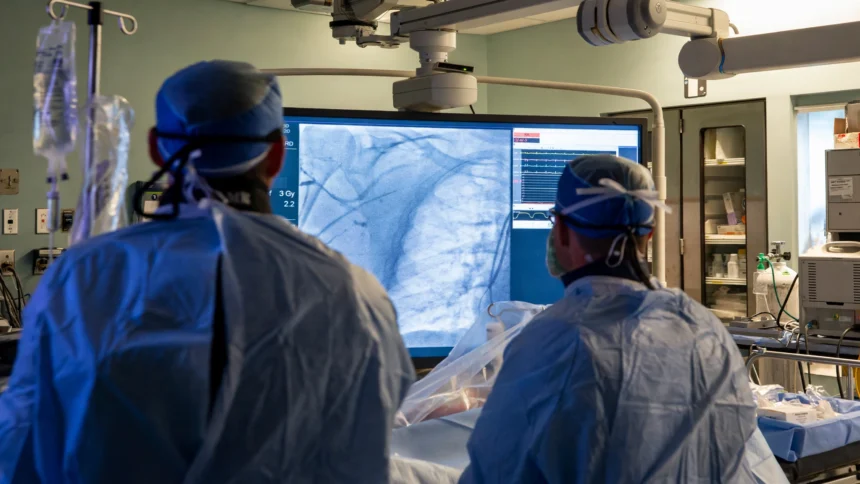
Heart specialists in Kerala have asked the country’s health regulator to take a fresh look at the rules that ban hospitals from reusing certain single-use heart devices, warning that the blanket ban could push the cost of complex angioplasty sharply higher and put advanced cardiac care out of reach for ordinary patients.
The appeal came at the annual conference of the Cardiological Society of India (CSI), Kerala chapter, in Thiruvananthapuram on Sunday. Senior cardiologists at the meet argued that a scientifically validated, tightly monitored protocol for reprocessing selected high-cost equipment, such as certain diagnostic catheters and guidewires, could cut the out-of-pocket cost of complex coronary procedures without compromising patient safety.
Why cardiologists say costs are climbing
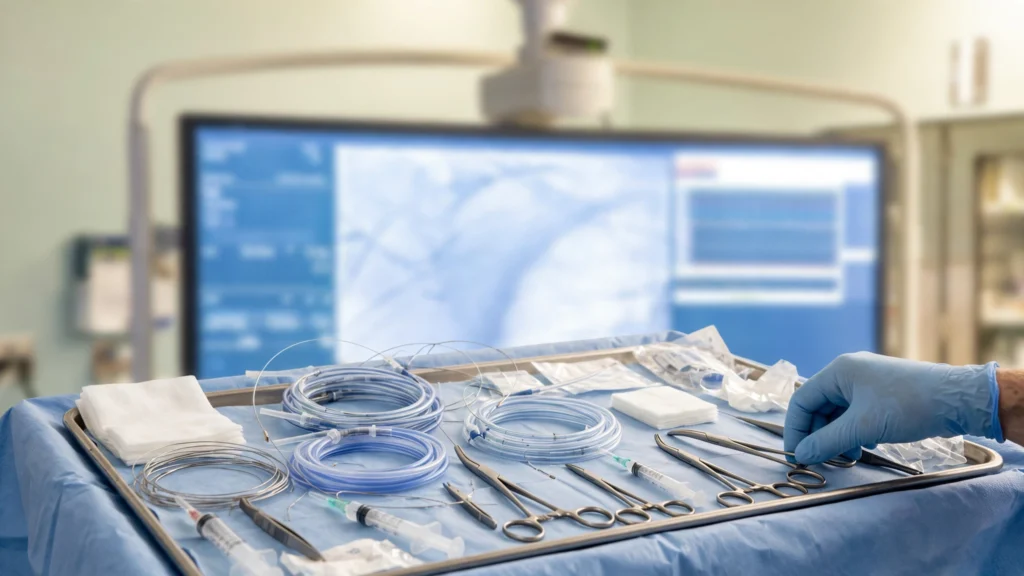
Coronary angioplasty, the procedure that clears blocked heart arteries and restores blood flow, depends on a set of specialised consumables. In complex cases, doctors may need several of these devices in a single sitting, and each one adds to the bill.
Organising chairman Dr Prathap Kumar N told the conference that the rising cost of complex angioplasty has become a major concern. Reimbursement packages under government-funded health insurance schemes often fall short of the actual cost of advanced cardiac interventions, leaving hospitals and patients to absorb the gap.
Hospital chains have put a number on the impact. In a representation to the central government, leading hospitals warned that the prohibition could push up the cost of complex procedures by 25 to 75 percent. As one example, they cited a tissue stabiliser used in coronary artery bypass grafting, priced at roughly Rs 85,000, which must now be bought new for every procedure.
The ban at the centre of the debate
The dispute traces back to an October 16 directive from the Directorate General of Health Services (DGHS), which instructed all public and private hospitals to stop reprocessing and reusing devices labelled for one-time use. The order covers cardiac and balloon catheters, guidewires, dialysis equipment, surgical staplers and several other items, and it flagged reports of disposable equipment being sterilised and reused, especially in cardiology, nephrology, oncology and neurosurgery.
The DGHS also raised a billing concern: in some cases, patients were charged the full price of a device that had already been used, and in some instances government payers reimbursed the full cost as well. The directive said reuse may contravene the Drugs and Cosmetics Act, 1940, the Medical Devices Rules, 2017, and the Clinical Establishments Act, 2010.
Central Government Health Scheme rules, reaffirmed in guidelines dated December 22, 2025, also explicitly prohibit the reuse of disposable equipment like catheters and guidewires in empanelled hospitals.
What the cardiologists are actually asking for
The doctors are not asking for a free hand. CSI Kerala chapter president Dr Asokan P K and his colleagues want a scientific review to determine whether selected catheters, guidewires and other equipment can be safely reprocessed.
Any relaxation, they said, should rest on scientific evidence, validated sterilisation procedures, functional testing and strict regulatory supervision, with patient safety remaining paramount. The proposal echoes a 2017 Indian consensus document published in the Indian Heart Journal, which endorsed reuse only for clearly defined devices, with meticulous disinfection and sterilisation, checks on functionality, informed patient consent, and a rule that the cost saving must be passed directly to the patient.
Recent research gives the argument some backing. A systematic review published in June 2025 evaluated 10 international studies covering 2,657 participants and found no statistically significant difference in infection rates between factory-new devices and those reprocessed once. One health-economic model in the same review noted procedural savings averaging around CAN$129 per patient for balloon catheterisation hardware.
The wider stakes beyond heart care
The debate reaches well beyond the cath lab. Industry estimates indicate that over 60 percent of dialysis sessions in India use multiple-use dialysers, accounting for roughly 40 million treatments a year across about 500,000 patients. Hospital groups including Narayana Health, Manipal Hospitals, Fortis Healthcare, KIMS Hospitals and Medanta, along with the Association of Healthcare Providers (India) and NATHEALTH, have asked the government to replace the outright ban with a regulated framework.
For now, the government has yet to respond, and the ban remains in force. The cardiologists’ appeal adds a clinical voice to the industry’s push, framing the issue as a balance between two genuine risks: infection and device failure on one side, and unaffordable care on the other.
What happens next will matter to lakhs of families. If the regulator agrees to a review, the outcome could decide whether complex heart procedures stay within reach of patients who depend on government health schemes, or whether the full cost of single-use devices starts landing on their bills.
FAQs
What are cardiologists asking the government to review?
They want the Directorate General of Health Services to scientifically review its ban on reprocessing selected single-use cardiovascular devices, such as certain catheters and guidewires, so that validated reuse can lower angioplasty costs.
How much could the ban raise procedure costs?
Hospital chains have warned that the prohibition could push up the cost of complex procedures by 25 to 75 percent, with high-value consumables now needing to be bought new every time.
Is reusing heart devices safe?
A 2025 systematic review of 10 studies covering 2,657 participants found no statistically significant difference in infection rates between new and once-reprocessed devices. Cardiologists stress that any reuse must follow validated sterilisation, functional testing and strict supervision.
When did the ban come into force?
The DGHS issued its directive on October 16, 2026, instructing all public and private hospitals to stop reusing devices labelled for single use. The government has not yet responded to requests to replace the ban with a regulated framework.
Who raised the issue?
Senior cardiologists at the annual conference of the Cardiological Society of India, Kerala chapter, in Thiruvananthapuram on Sunday, November 8, led by chapter president Dr Asokan P K and organising chairman Dr Prathap Kumar N.
Costs and safety figures in this report are drawn from the conference proceedings, the DGHS directive and published research cited by the cardiologists. The reuse of single-use devices remains prohibited in India, and any change would require a formal regulatory decision.