
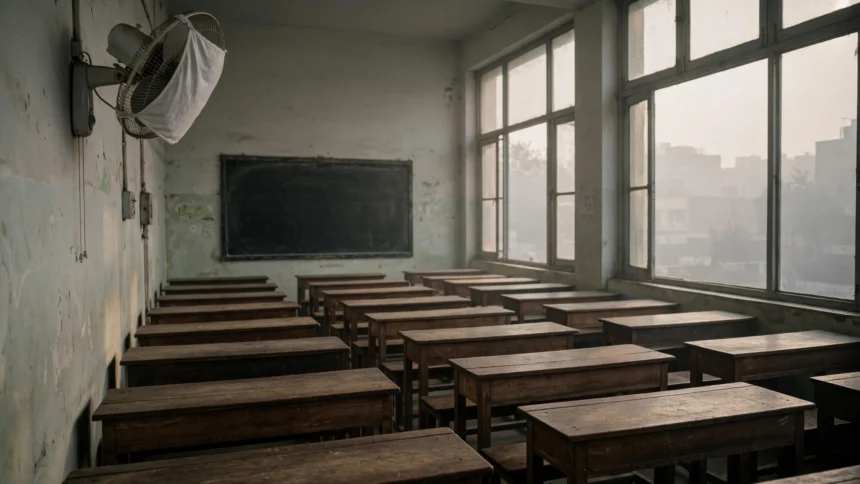
In a Delhi classroom this winter, the ceiling fan is doing a second job. Fitted with a simple white filter that costs about Rs 140 to make, it is pulling fine dust out of the air while it cools the room. The idea comes from two schoolboys, and it is already reaching more than 10,000 students across the city.
Krish Aggarwal, a Class 12 student at Sanskriti School, and Samarth Meattle, a Class 11 student at Vasant Valley School, are the founders of Project Vayu. Their filter turns an ordinary table or wall fan into a low-cost air purifier, and they give it to schools free of charge. This week, Krish was named to the 2026 Diana Award Roll of Honour for the work.
It is a small fix for a very Delhi problem. The city’s 24-hour average air quality index stood at 313 on Wednesday, deep in the very poor range, with Stage III pollution curbs in force and primary schools told to run hybrid classes. Expensive air purifiers are out of reach for most schools. A fan, on the other hand, is already hanging in almost every classroom.
How the Rs 140 filter works
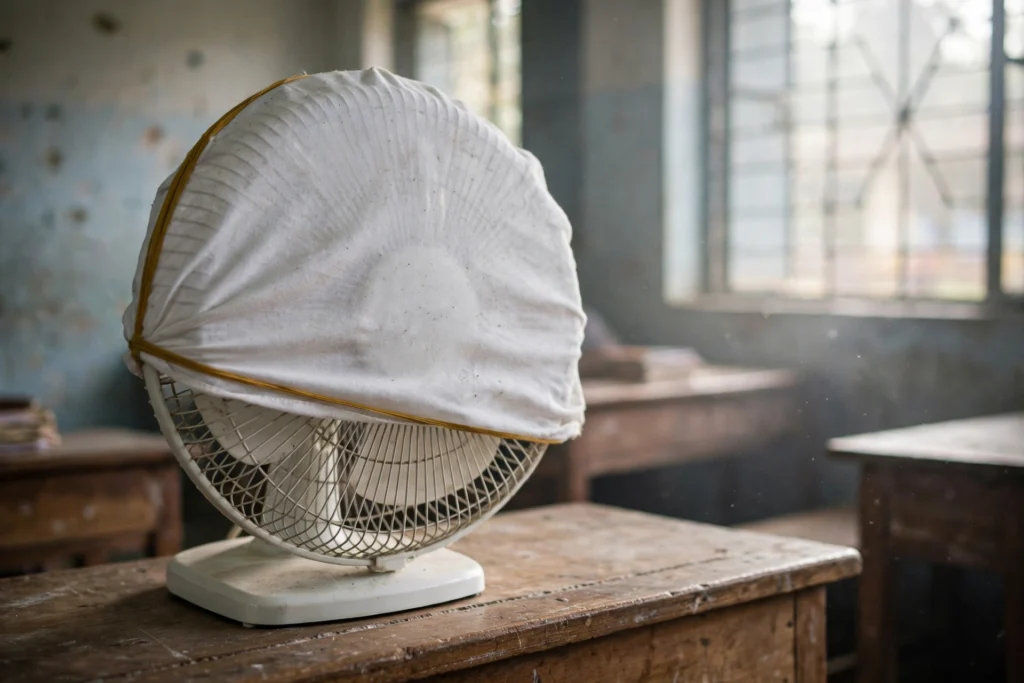
The Vayu Filter is a fabric cover that slips over a regular fan and is held in place with an elastic band. It uses electret filter media, a material made of electrostatically charged fibres that attract and trap fine airborne particles, including PM2.5, the tiny pollutant that can travel deep into the lungs.
The team developed the filter with Hollingsworth and Vose, a global filtration manufacturer, which also supplied the filter material free of charge. Each filter costs around Rs 140 to manufacture, including the material, elastic lining, stitching and transport. The filters need replacing two or three times during the winter pollution season, and the project supplies replacements as well as fans to classrooms that do not have one.
In the project’s own closed-room test, PM2.5 levels fell from 158 to 11 micrograms per cubic metre within an hour of switching the fan on, a reduction of more than 90 per cent. Those are the founders’ reported test results, and they do not guarantee the same performance in every classroom, but they explain why schools have taken the idea seriously.
From 295 classrooms to 10 schools
Project Vayu began with a pilot covering 295 classrooms, where 602 filters were installed and around 8,000 students were reached. Since then it has expanded to 10 schools and several under-resourced medical clinics, and the founders say around 20,000 students have now benefited. The Diana Award’s official website puts the figure at more than 10,000 students, all in schools serving economically disadvantaged communities.
The idea grew out of the boys’ own experience of Delhi winters, when toxic air becomes a daily reality and classrooms fill with the same haze as the streets outside. Instead of waiting for expensive equipment, they looked at what schools already had, a fan in every room, and worked out how to make it clean the air as well.
Why classrooms need it now
Children spend most of their school day indoors, and indoor air in Delhi is often little better than the air outside. Poor air quality affects concentration, attendance and health, and younger children are the most vulnerable. A filter that costs less than a school lunch, fitted to equipment schools already own, is the kind of solution that can spread fast precisely because it asks so little of the schools using it.
The model is deliberately simple. There is no device to buy, no installation and no electricity bill beyond the fan that is already running. The project runs on a social welfare model rather than a commercial one, which is why the filters go out free and why the team keeps the design focused on cost above all else.
What happens next
For now, Project Vayu is focused on Delhi, where the need is most urgent and the winter pollution season is at its peak. The recognition from the Diana Award, an international honour for young people making a positive contribution to their communities, has put the project in front of a much wider audience, and the founders say more schools have been asking for filters since the award was announced.
Whether the idea travels beyond Delhi will depend on funding and on whether other cities pick up the same low-cost approach. What the two teenagers have already shown is that a classroom does not need a Rs 20,000 machine to breathe easier. Sometimes, a fan and a Rs 140 filter will do.
FAQs
What is Project Vayu?
Project Vayu is a student-led initiative by Delhi schoolboys Krish Aggarwal and Samarth Meattle. It turns ordinary classroom fans into air purifiers using a low-cost filter, and supplies the filters to schools free of charge.
How much does the Vayu Filter cost?
Each filter costs around Rs 140 to manufacture. Schools receive the filters free, along with replacements during the winter pollution season.
How does the filter clean the air?
The filter uses electret media, electrostatically charged fibres that trap fine particles including PM2.5 as the fan pulls air through it. In the project’s closed-room test, PM2.5 fell by more than 90 per cent in an hour.
Who has the project reached so far?
The pilot covered 295 classrooms and around 8,000 students. The project has since expanded to 10 schools and several under-resourced clinics, reaching more than 10,000 students, according to the Diana Award website.
What is the Diana Award?
The Diana Award is an international recognition for young people aged 9 to 25 who are making a positive difference in their communities. Krish Aggarwal was named to its 2026 Roll of Honour for Project Vayu.
Project Vayu shows what two determined schoolboys can do with a simple idea. In a city gasping through another smoggy winter, that Rs 140 filter is doing quiet, useful work in classrooms that needed it most.