
India’s foreign exchange reserves rose by $2.49 billion to $719.55 billion in the week ended November 6, according to data released by the Reserve Bank of India on Friday. The rise, the first weekly increase after a string of declines, was driven almost entirely by a sharp jump in the value of the central bank’s gold holdings.
The reserves had slipped to $717.06 billion in the previous week, after falling from $722.3 billion in the week ended October 17 to $717.06 billion by October 30. Friday’s data breaks that slide, though the stockpile is still well below the all-time high of $785.71 billion touched in the week ended September 4.
Gold did the heavy lifting
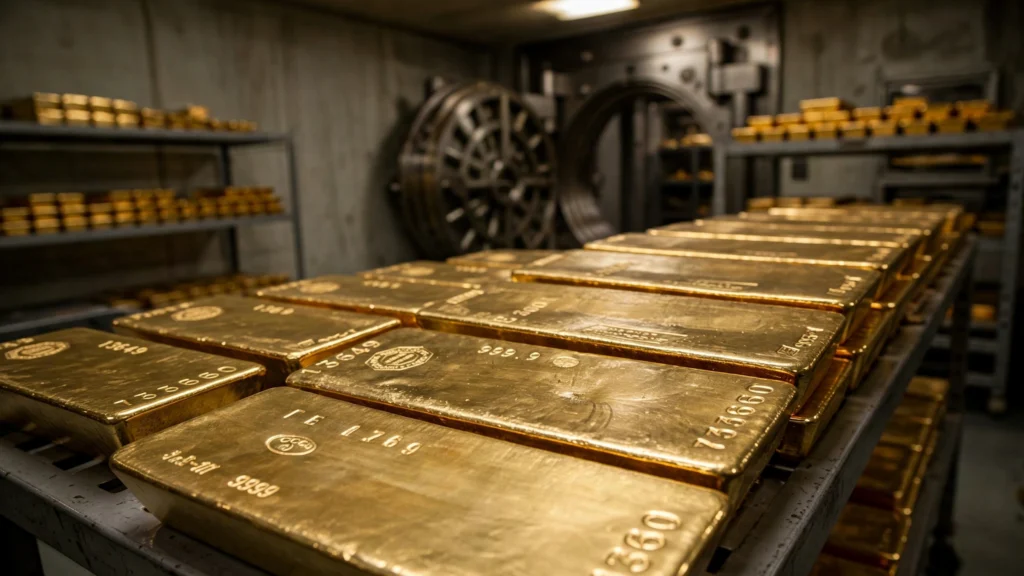
Gold was the story of the week. The value of the RBI’s gold reserves climbed by $2.21 billion to $104.80 billion, accounting for nearly nine-tenths of the overall increase. Foreign currency assets, the largest component of the reserves, rose by a much smaller $232 million to $591.35 billion. The RBI’s reserve position with the International Monetary Fund edged up by $1 million to $4.79 billion.
In rupee terms, total reserves stood at Rs 67,58,986 crore as of November 6. The gold jump reflects both higher gold prices and the RBI’s steady accumulation of the metal over the past two years, a strategy central banks around the world have followed as they diversify away from dollar-heavy portfolios.
A break after weeks of decline
The latest rise comes after a rough stretch for the reserves. From the September 4 peak of $785.71 billion, the stockpile had been drifting lower for two months. That peak itself was unusual: it followed a special concessional swap scheme for diaspora deposits through which banks raised a record $133 billion, flooding the system with foreign currency in one go.
Since then, the RBI has been dipping into the reserves to steady the rupee, which has faced pressure from a strong dollar, elevated crude prices and heavy foreign investor selling in Indian equities. The central bank does not target a level for the rupee, but it does step in to curb sharp swings, and every intervention shows up in the weekly reserves data.
Why the cushion matters
Reserves are India’s shock absorber. A large stockpile lets the RBI defend the rupee in volatile weeks, reassures foreign investors and rating agencies, and covers the import bill when trade gaps widen. That last point matters right now: India’s merchandise trade deficit widened to $39.88 billion in October, the widest in a year, even as goods exports hit a record $49.47 billion.
At $719.55 billion, the reserves still cover well over a year of imports by most estimates, which is why economists describe the position as comfortable despite the slide from the September peak. The question now is whether the turnaround holds or whether the next few weeks bring fresh pressure from oil prices and global risk sentiment.
What to watch next
- Next weekly data: The RBI publishes the reserves figures every Friday in its Weekly Statistical Supplement. The next release will show whether the recovery extended into mid-November.
- Gold prices: With gold doing most of the work this week, any sharp move in global bullion prices will show up quickly in the reserves.
- November trade data: The October deficit was driven by a surge in imports. If imports stay high, the RBI may need to keep intervening, which would eat into the reserves again.
- Foreign investor flows: Sustained buying by foreign portfolio investors would ease pressure on the rupee and let the reserves rebuild.
FAQs
What are forex reserves? They are the foreign currency assets, gold, special drawing rights and IMF reserve position held by the Reserve Bank of India. The RBI uses them to manage the rupee’s exchange rate and to meet the country’s external payment needs.
Why did reserves rise this week? Mainly because the value of the RBI’s gold holdings jumped by $2.21 billion to $104.80 billion. Foreign currency assets added only $232 million, so gold drove nearly the whole $2.49 billion increase.
What is India’s all-time high for forex reserves? $785.71 billion, reached in the week ended September 4, 2026, after a special concessional swap for diaspora deposits brought in a record $133 billion.
How much are the reserves worth in rupees? Rs 67,58,986 crore as of November 6, according to the RBI’s weekly data.
Does a rise in reserves mean the rupee will strengthen? Not directly. Reserves rise and fall with the RBI’s interventions and with valuation changes in gold and foreign currencies. A rising stockpile gives the central bank more room to steady the rupee, but the currency’s direction depends on trade flows, oil prices and global sentiment.
For now, the gold-led rebound gives the RBI a bit more breathing room. Whether it turns into a sustained rebuild will be clear in the coming Friday releases.