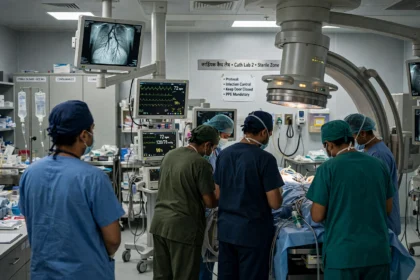

In the forested, far-flung corners of Gadchiroli, a visit to the doctor has long meant a long journey. On Sunday, 15 November 2026, Maharashtra Chief Minister Devendra Fadnavis flagged off a fleet of AI-powered mobile diagnostic units that promise to reverse that journey: instead of patients travelling to the hospital, the hospital will now travel to them.
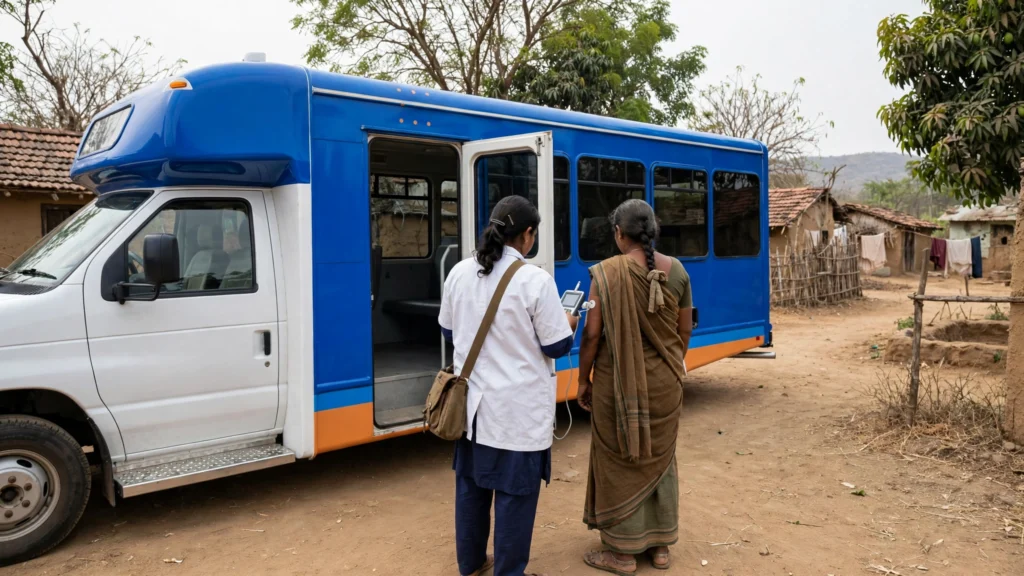
The initiative, called Arogya Seva Aapulya Dari, which means Health Service at Your Doorstep, has been branded Hospital on Wheels. The mobile units will roll into four of the district’s most isolated tribal talukas, Etapalli, Bhamragad, Aheri and Mulchera, carrying medical check-ups, primary treatment, medicines and essential health tests directly to villages that have waited years for such access.
Four talukas, one rolling clinic
Gadchiroli, in eastern Maharashtra, is one of the state’s most geographically difficult districts. Dense forests, broken roads and long distances separate its tribal villages from the nearest town hospital. In Etapalli, Bhamragad, Aheri and Mulchera, that distance has often meant the difference between an illness caught early and one that turns critical.
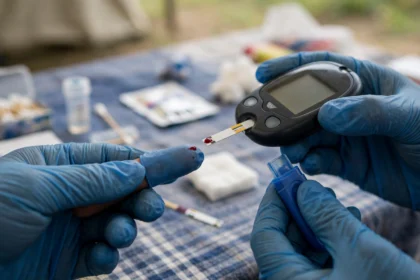
Each mobile unit brings the full stack of frontline medicine to the village: a medical examination, primary treatment, medicines and basic diagnostic tests, all without the patient having to leave home. For elderly residents, pregnant women and families without transport, that removes the single biggest barrier to care.
What the units will screen for
The Hospital on Wheels units are built around early detection. Their focus is on the conditions that weigh heaviest on Gadchiroli’s tribal communities:
- Malaria, which spreads fast in the district’s forested terrain and needs quick diagnosis to treat well.
- Tuberculosis, where finding cases early stops the disease spreading through families and villages.
- Malnutrition, especially among children, which needs regular screening rather than one-off camps.
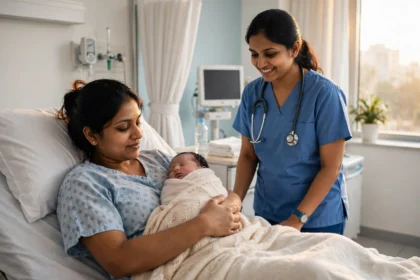
- Maternal and child health, including check-ups for pregnant women and newborns in villages far from any clinic.
In districts affected by left-wing extremism, where a clinic within reachable distance has often simply not existed, treatable illnesses have turned serious before help arrived. Early detection is the entire point of this programme.
Paid for by the district’s own mineral wealth
The initiative is funded through the District Mineral Foundation (DMF) of Gadchiroli. The DMF is a statutory body set up under the Mines and Minerals (Development and Regulation) Amendment Act, 2015, which routes a share of mining royalties back into development in mining-affected communities.
Gadchiroli is one of Maharashtra’s most mineral-rich districts, and the programme is a direct reinvestment of that wealth into the people who live on top of those resources. It also fits the National Health Mission’s push to take diagnostic services into India’s most underserved districts.
A launch with political weight
Union Minister of Tribal Affairs Jual Oram was present at the launch, alongside state ministers Dr Ashok Uike and Narhari Zirwal and MLA Dr Milind Narote. Chief Minister Fadnavis personally inspected the diagnostic equipment aboard the mobile units during the event, the Chief Minister’s Office confirmed.
The timing was deliberate. The launch coincided with Janjatiya Gaurav Diwas, observed every year on 15 November to mark the birth anniversary of tribal freedom fighter Birsa Munda. It also came as the country began observing National Newborn Week, from 15 to 21 November, focused on the first 28 days of a baby’s life.
What to watch next
A launch is the easy part. The real test for Hospital on Wheels will be whether the units keep up regular rounds through Gadchiroli’s forests and broken roads month after month, and whether disease detection rates in the four talukas actually move in the right direction. Mobile clinics have been tried in various forms across India before, and the ones that last are the ones with steady funding, staff who stay, and routes that do not quietly shrink.
For families in four of Maharashtra’s remotest talukas, though, the promise made on Sunday is simple and immediate: the next time someone falls ill, the clinic may come to their door.
FAQs
What is the Hospital on Wheels scheme in Gadchiroli?
Hospital on Wheels, formally Arogya Seva Aapulya Dari, is an AI-powered mobile diagnostic initiative launched by Chief Minister Devendra Fadnavis in Gadchiroli on 15 November 2026. The units bring medical check-ups, primary treatment, medicines and health tests directly to remote villages.
Which talukas will the mobile health units serve?
The units will operate in Etapalli, Bhamragad, Aheri and Mulchera, four remote, tribal talukas in Gadchiroli with limited access to conventional healthcare facilities.
Who is funding the Hospital on Wheels initiative?
The programme is funded by the District Mineral Foundation (DMF), Gadchiroli, a statutory body that directs a share of mining royalties toward development in mining-affected communities under the MMDR Amendment Act, 2015.
What diseases will the mobile clinics screen for?
The units are designed to detect and treat malaria, tuberculosis, malnutrition, and maternal and child health conditions, illnesses that disproportionately affect remote tribal populations in Gadchiroli.
Why was the launch held on 15 November?
The launch coincided with Janjatiya Gaurav Diwas, observed every year on 15 November to mark the birth anniversary of tribal freedom fighter Birsa Munda.
Source: Launch details from the Chief Minister’s Office as reported on 15 November 2026; District Mineral Foundation framework under the MMDR Amendment Act, 2015.