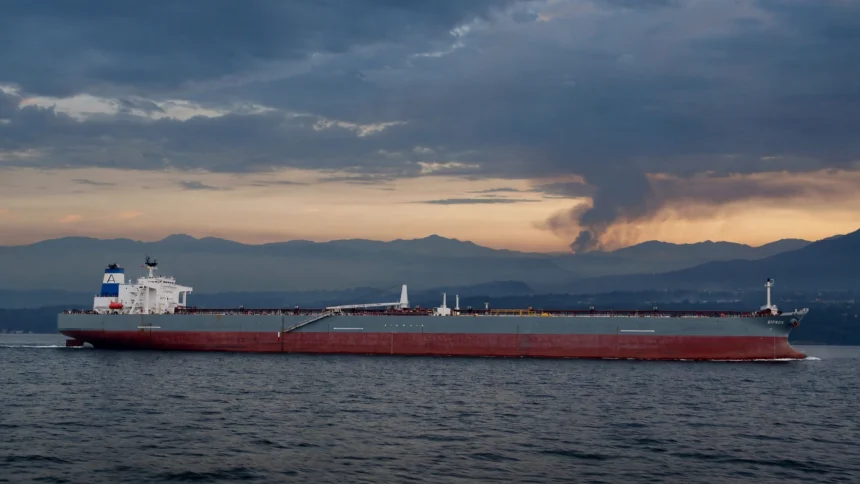
The Gulf woke on Wednesday to its most dangerous night in weeks. Before dawn, Iranian drones were reported over Kuwait, air defences were firing over Bahrain, and a burning oil tanker was drifting in the Strait of Hormuz with one crew member missing and 11 injured. Within hours, American jets had hit back at an Iranian missile site.
Drones over Kuwait
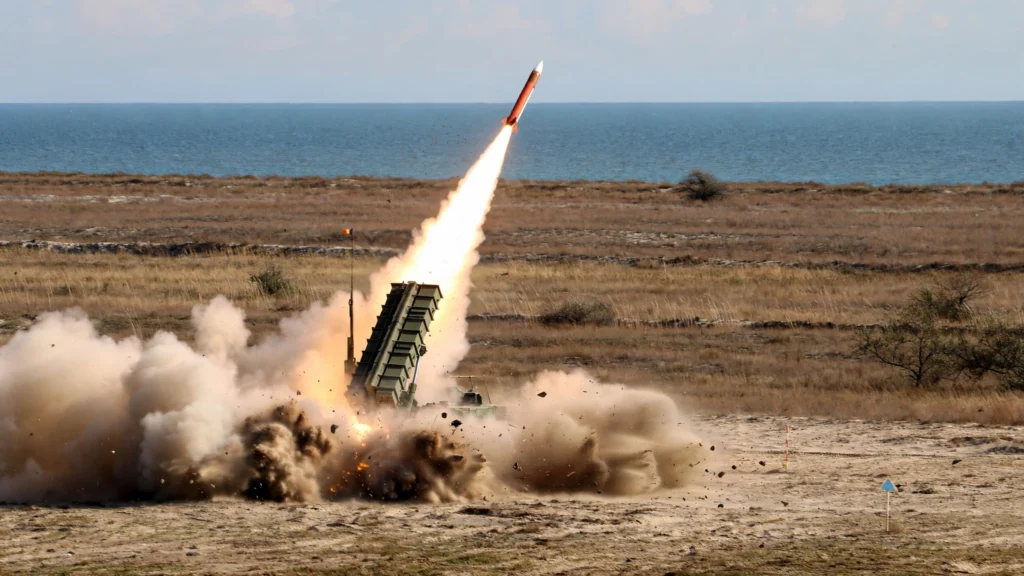
Iran’s army said early on Wednesday that its combat and kamikaze drones had targeted Patriot air defence systems and drone and missile launch platforms at Ali Al-Salem Air Base in Kuwait, in a statement carried by state television IRIB.
Kuwait’s military said its air defences were responding to hostile drone threats and urged the public to follow security advice. It said the explosions residents heard came from air defence systems intercepting the attacks.
Hours later, Kuwait’s Foreign Ministry condemned what it called repeated Iranian attacks, describing them as a violation of its sovereignty and a breach of international law, the UN Charter and UN Security Council Resolution 2817. It reaffirmed Kuwait’s right to self-defence under Article 51 of the UN Charter. The UAE condemned the attack, and the Gulf Cooperation Council said any attack on one member state touched the security of all of them.
Bahrain and the burning tanker
The Kuwait attack followed a strike a day earlier in Bahrain. On Tuesday, Iran’s Revolutionary Guards said their drones had targeted a radar system operated by US forces at Sheikh Isa Air Base. US Central Command said the drones were intercepted, with no damage to US equipment and no injuries to American personnel. Early on Wednesday, Bahrain’s Defence Force said its air defences had intercepted several more Iranian air strikes.
The most serious incident of the night happened at sea. ADNOC Logistics and Services said one of its vessels was attacked on Tuesday evening while transiting the Strait of Hormuz. One crew member is still missing, 11 were injured, and all other crew were evacuated safely. Oman’s emergency authorities said they had evacuated 24 people from a burning tanker off Musandam. ADNOC did not name the vessel or say who was behind the attack.
The American answer
The United States responded within hours. US fighter jets used precision munitions to strike a Revolutionary Guards missile launch site on Qeshm Island in the Strait of Hormuz on Tuesday, an American official said, describing the strike as self-defence in response to Iranian aggression against US personnel and assets. An Iranian provincial official said the attack caused no damage to residential or commercial areas or vital infrastructure.
The US build-up in the region is now the largest of the war. The aircraft carrier USS Theodore Roosevelt has moved in, bringing the number of American carrier strike groups there to three, alongside the George H W Bush and the George Washington, with more than a dozen destroyers in support. Elsewhere on Wednesday, the Saudi-led coalition said it had intercepted a cruise missile launched by Yemen’s Houthis towards the Riyadh area, and destroyed 60 Houthi military targets in four Yemeni cities.
Why it matters
Three things make this round different, and each reaches far beyond the Gulf. First, the geography. The Strait of Hormuz is the world’s most important oil chokepoint, with roughly a fifth of global oil shipments passing through its narrow waters. Every attack on a vessel there raises shipping and insurance costs, and the bill eventually lands on fuel prices everywhere. Britain’s inflation figures, released on Wednesday, already tell that story: UK inflation climbed to 3.6 percent in October, with the Middle East conflict pushing up motor fuel costs. For India, which buys most of its crude from the Gulf, a prolonged threat to Hormuz feeds straight into petrol and diesel prices and the import bill.
Second, the targets. Iran is no longer aiming only at American forces in its own neighbourhood. By striking at bases in Kuwait and Bahrain, it is testing whether Washington’s Gulf allies will stay in the fight, and whether their air defences can absorb repeated drone attacks. The cost is already visible in the skies: flydubai has extended cancellations to Riyadh and Abha until November 27, and Etihad to November 30.
FAQs
What happened at the Kuwait air base?
Iran’s army said early on Wednesday that its drones targeted Patriot air defence systems and drone and missile launch platforms belonging to the US military at Ali Al-Salem Air Base. Kuwait’s military said its air defences were countering hostile drone attacks. Neither side has reported casualties or confirmed damage so far.
What happened to the ADNOC vessel?
The vessel was attacked on Tuesday evening while transiting the Strait of Hormuz. One crew member is missing, 11 were injured, and the rest were evacuated safely. Oman’s emergency authorities evacuated 24 people from the burning tanker off Musandam. ADNOC has not named the vessel or blamed any party.
What happens next?
All eyes are on Shenzhen on Thursday, where Trump, Xi and Putin are due to meet and discuss the Iran war. Whether the summit produces a pause or the fighting escalates further will shape the Gulf, oil prices and air travel in the days ahead.
The Gulf states spent Wednesday on high alert, and the night’s events showed how quickly a local war can become a regional one. What happens in Shenzhen may decide whether this round ends here, or grows larger still.