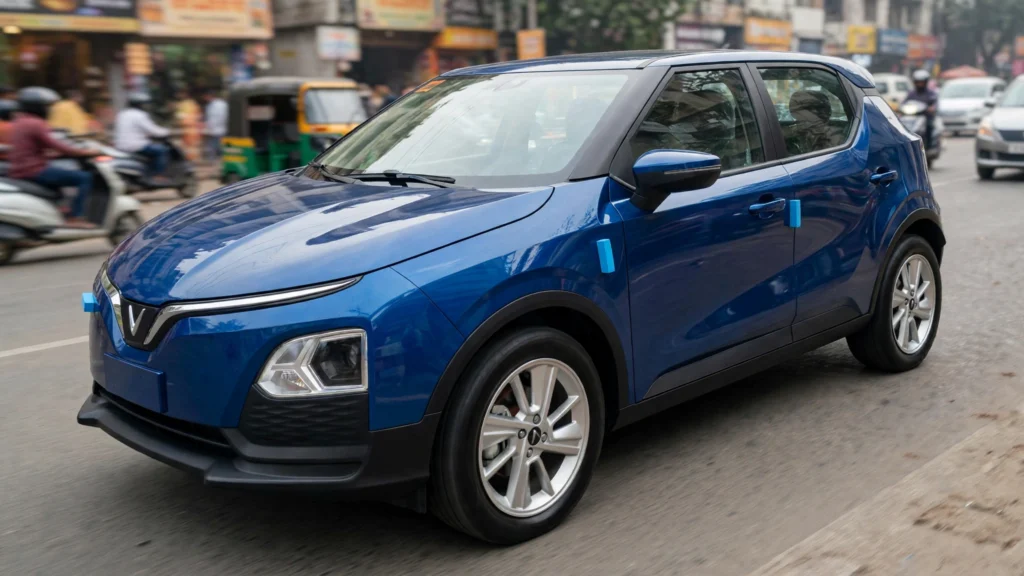
VinFast has redrawn its India plan. The Vietnamese electric carmaker is putting its electric bus ambitions on hold, and will instead push harder into the cars and scooters that are already selling. The compact VF5 SUV is confirmed for 2027, electric scooters will follow early next year, and the company’s Tamil Nadu factory is being readied to grow from 50,000 cars a year to as many as 1.5 lakh.
The shift was spelt out by Tapan Ghosh, CEO of VinFast Asia, in a media interaction on Saturday. It is a clear change of pace for a company that entered India only in September last year and has spent its first year learning the market the hard way: by selling cars, not by announcing them.
Buses wait, cars and scooters come first
VinFast had planned to enter India’s electric bus market in the second half of 2026, alongside its two-wheeler debut. That plan is now postponed. “We would not like to rush too many things because we cannot do justice to so many products. That is the reason why we would not be focusing on the e-buses right now,” Ghosh said. “We have postponed it. We will be focusing on four-wheelers as well as two-wheelers.”
The decision follows a big commitment. In December 2025, VinFast signed an agreement with the Tamil Nadu government to expand its Thoothukudi facility, with about 500 acres of additional land and a proposed $500 million investment in production lines for electric buses and scooters. Ghosh gave no revised timeline for buses, or any word on how the postponement affects that investment.
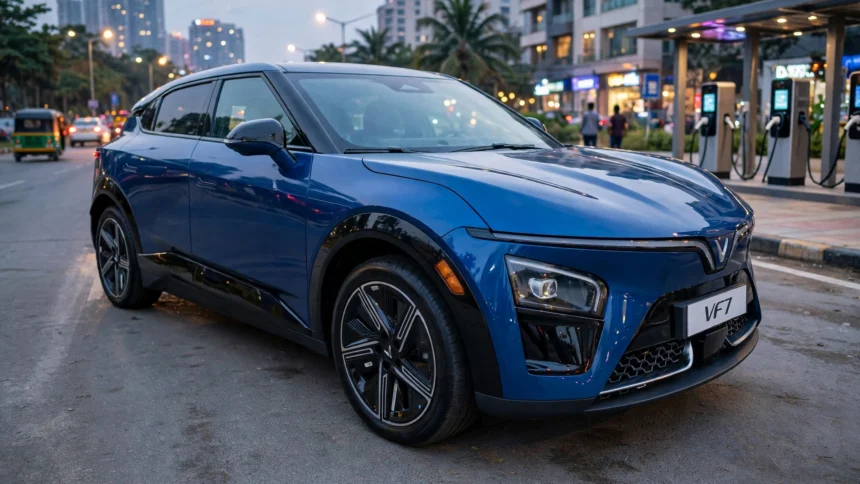
For now, the company’s energy goes into the four models it already sells in India: the VF6 and VF7 electric SUVs, the seven-seat MPV7, and the Limo Green, which targets commercial fleet operators.
VF5: the affordable push for 2027
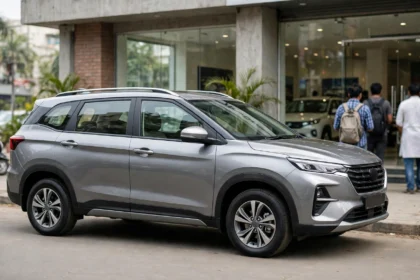
The next car on the list is the VF5, a compact SUV that sits below the VF6 in VinFast’s global line-up. “We will be coming in with VF5 next year,” Ghosh said, adding that wider EV adoption would need products across different price points of the mass market.
VinFast has not announced the launch month or the India price. In Vietnam, an updated VF5 was introduced on November 12, priced at VND 460 million (about Rs 16.5 lakh) for the Green variant and VND 540 million (about Rs 19.4 lakh) for the Premium variant. Those are direct currency conversions, not a hint of the India price, but they show the segment VinFast is aiming at: well below its current VF6 and VF7, and squarely in Tata Nexon EV territory.
Two new products are planned for next year in total, with electric scooters arriving in the first half of 2027, built at Thoothukudi, where a two-wheeler line is already installed.
From 300 to 3,000 cars a month
The numbers explain why VinFast is doubling down on what works. Monthly registrations have risen from around 300 vehicles in the company’s early months in India to approximately 2,500 to 3,000 units now.
Retail sales data from VAHAN shows VinFast registered 15,867 electric passenger vehicles in India between January 1 and November 9, 2026, giving it roughly 5 percent of the market and fourth place among electric passenger vehicle makers. That is a notable position for a brand that had no India presence before September 2025.
To suit Indian conditions, the company has already reworked its cars: suspension tuning on the VF6 and VF7 for local roads, air-conditioning changes for higher temperatures, and changes to battery and thermal management systems.
A factory ready to grow
VinFast’s plant at Thoothukudi has an installed annual capacity of 50,000 units, expandable to 150,000. Ghosh said it is running at about 70 percent utilisation, and the company is considering a phased expansion. “It is not that from 50,000 directly we will go to 150,000; probably 50,000 we will go to 75,000 or 100,000,” he said.
Localisation is the slower part of the story: about 15 percent of parts are sourced locally today, and the company had earlier spoken of raising that towards 40 percent. Ghosh gave no revised target. Exports are also on the back burner. “Right now we are not focussing on exports,” he said.
Why it matters
VinFast’s reset is a lesson in how new carmakers survive India: focus beats breadth. A year ago the company was talking about cars, buses, scooters and exports all at once. Now it is doing one thing at a time, and selling more cars every month.
For buyers, the practical outcome is a cheaper VinFast in 2027. The VF5 would give the brand a car in the Rs 15 to 20 lakh band, where most of India’s electric car sales actually happen. For Tamil Nadu, a jump from 50,000 to 75,000 or 100,000 units would mean more jobs and more local suppliers, but only if sales keep climbing at the current pace. And for rivals, the message is that the fourth-largest EV maker in India is no longer a curiosity. It is a competitor with a factory and a plan that finally looks achievable.
FAQs
When will the VinFast VF5 launch in India?
VinFast has confirmed the compact VF5 SUV for 2027. The launch month and India price are not announced yet.
Why has VinFast put its electric bus plans on hold?
The company says it does not want to take on too many product segments at once. It is prioritising passenger cars and electric scooters, and will consider buses later.
When will VinFast electric scooters arrive in India?
In the first half of 2027, built at the Thoothukudi plant in Tamil Nadu.
How many electric cars has VinFast sold in India?
VAHAN data shows 15,867 electric passenger vehicles registered between January 1 and November 9, 2026, about 5 percent of the market. Monthly registrations have grown from around 300 to about 2,500 to 3,000 units.
Where is VinFast’s India factory?
At Thoothukudi in Tamil Nadu. Installed capacity is 50,000 vehicles a year, expandable to 150,000, currently running at about 70 percent utilisation.
VinFast entered India with big promises. A year on, it is trading breadth for focus.