India on Monday announced a development package of 24,000 crore Nepali rupees, about Rs 15,000 crore, for Nepal, capping a day of diplomacy in New Delhi that also produced eight agreements, a new cross-border train and a hydropower project.
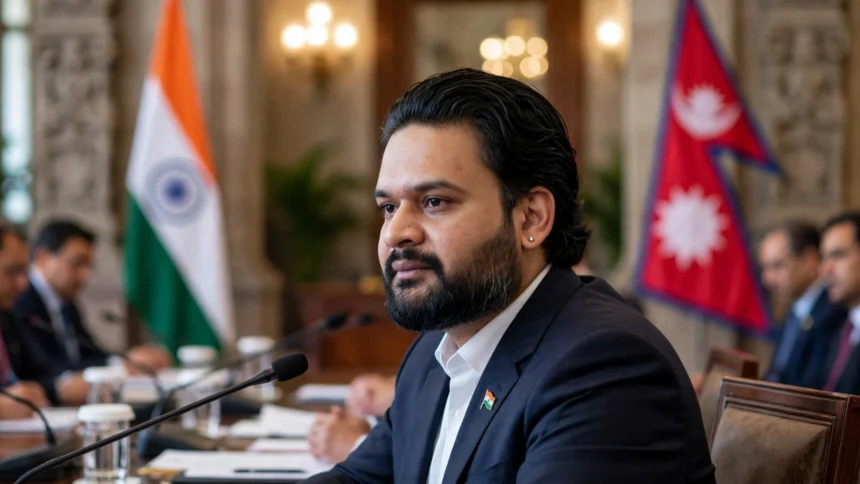
Prime Minister Narendra Modi made the announcement after talks with his Nepalese counterpart Balendra Shah at Hyderabad House. The package will support Nepal’s reconstruction after the devastating August floods and its long-term development.
“We express our deep condolences for the loss of lives caused by the devastating floods in Nepal in August,” Modi said, announcing “a development cooperation package of 24,000 crore Nepali rupees to give fresh impetus to Nepal’s reconstruction and long-term development.”
Shah, 35, is on a two-day state visit, his first bilateral visit abroad since taking office in March. He received a ceremonial welcome at Rashtrapati Bhavan and called on President Droupadi Murmu before the talks.
What the package covers
The money will help affected families rebuild their lives and damaged infrastructure, and create new opportunities. Modi said it would also strengthen Nepal’s capacity to deal with future disasters, after the August floods exposed how vulnerable its roads, homes and power lines are to extreme weather.
The figure is close to what Kathmandu had sought: reports ahead of the talks put the ask at around $2 billion, and the announced package, worth about $1.62 billion, lands in the same range. For Nepal, it is one of the largest single development commitments India has made to a neighbour in recent years.
Eight agreements, from space to farming
The two sides signed eight memorandums of understanding covering space, security, healthcare, agriculture and urban development. In space, ISRO and Nepal’s information ministry agreed to set up a satellite communication network using the South Asia Satellite.
Two cover policing and forensic sciences, including collaboration between the National Forensic Sciences University and Nepal Police’s Crime Investigation Department. The rest cover civil service training, healthcare, Ayurveda and traditional medicine, urban development, and livestock and fisheries. India will also expand scholarships for Nepalese students in law and technology.
A train, a bridge and a power project
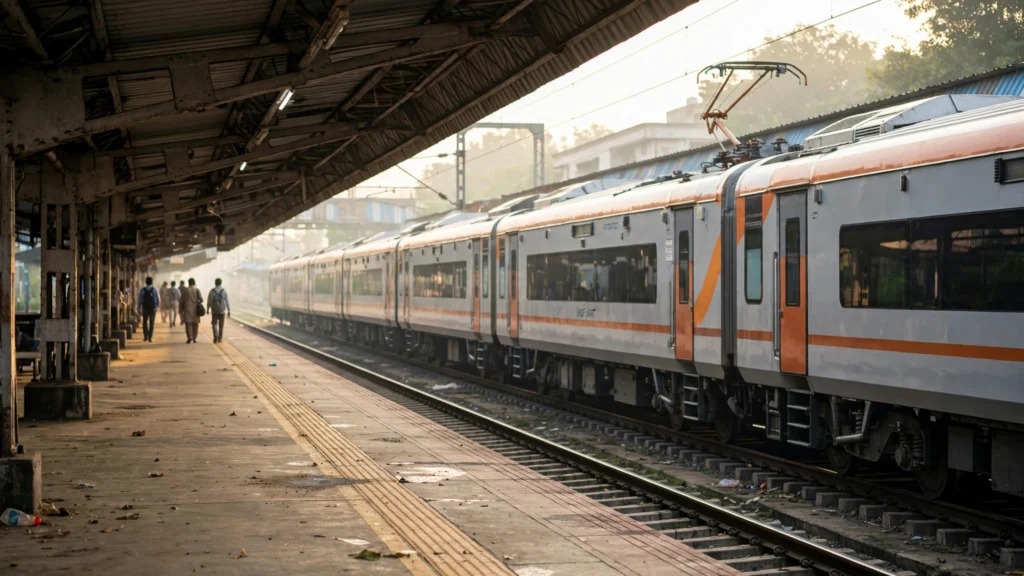
The most visible outcome was on the tracks. The two leaders virtually flagged off the Saryu-Kamala Express, a weekly service linking Ayodhya Dham in Uttar Pradesh with Janakpur Dham in Nepal. It covers about 604 km in roughly 19 hours, with regular services from November 28. The inaugural special left Ayodhya at 12.30 pm on Monday.
The leaders also inaugurated a road bridge at Dharchula and laid the foundation stone of an Integrated Check Post at Banbasa. On energy, the foundation stone of the 669 MW Lower Arun Hydroelectric Project was laid, and Modi said India was committed to completing Arun-III on time. Nepal will also get access to the Kandla and Paradip ports for transit trade, and the Motihari-Amlekhgunj petroleum pipeline will be expanded. An IIT campus in Nepal was also discussed.
Why it matters
This visit was never going to be routine. Shah leads a government that came to power after months of political churn in Kathmandu, and his first foreign engagement as prime minister is with India. That choice, and the scale of what Delhi offered in a single day, says plenty about where both sides want the relationship to go.
Three things stand out. First, the package is reconstruction money with a development tail, not a one-off grant. Tying flood rebuilding to disaster preparedness, scholarships and an IIT campus means it is meant to change Nepal’s capacity, not just repair what the floods broke. Second, the connectivity push is concrete: a train pilgrims can board from November 28, a bridge already open, and port access for a landlocked country long dependent on a narrow set of transit routes. Third, the eight pacts, from satellites to fisheries, show both governments rebuilding institutional links across the board.
There is also a recent strain to repair. Ties came under pressure in May after Shah sought the involvement of China and the United Kingdom in the long-running border dispute. Monday’s outcomes, including a joint vision document, read as a deliberate reset after that episode. For India, the visit matters practically too: smoother pilgrim travel to Janakpur, more hydropower for the shared grid, and a steadier neighbourhood.
What happens next
The Saryu-Kamala Express begins regular weekly services on November 28, and the first test will be how quickly the reconstruction money reaches flood-affected districts. Lower Arun and port access will take longer, but they could reshape Nepal’s economy over the next few years.
FAQs
How big is the package India announced for Nepal?
24,000 crore Nepali rupees, about Rs 15,000 crore, for post-flood reconstruction and long-term development.
What is the Saryu-Kamala Express?
A new weekly train linking Ayodhya Dham with Janakpur Dham, covering about 604 km in around 19 hours. Regular services start on November 28.
How many agreements did India and Nepal sign?
Eight, covering space technology, policing, forensic sciences, civil service training, healthcare, traditional medicine, urban development and agriculture.
Why is this visit significant?
It is Balendra Shah’s first bilateral visit abroad since becoming prime minister in March 2026, after a strain in ties earlier this year. The scale of the outcomes signals a reset.
The test now is delivery, and the first deadline is fixed: November 28, when the new train runs for the first time.