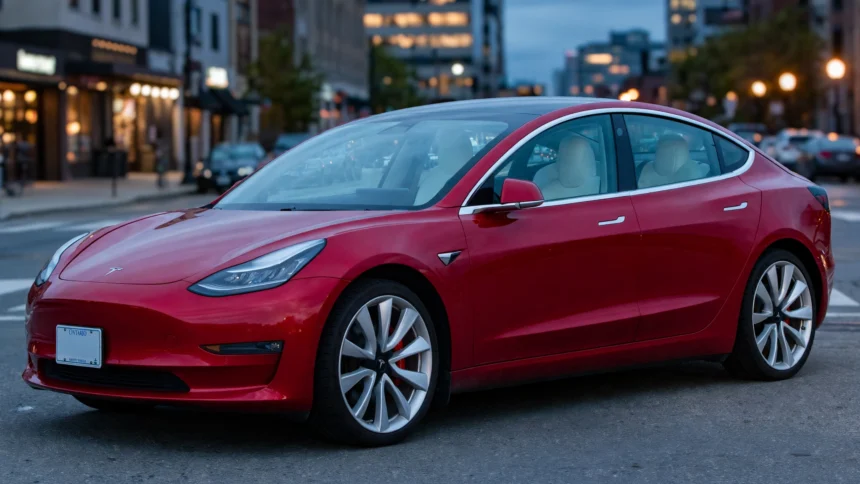
Tesla has started rolling out Full Self-Driving v15, its biggest driver-assistance update in years, and the first thing owners will notice is not under the bonnet. It is on the screen. The new software replaces the familiar object-by-object driving display with a live, video-game-like view of the road, and Tesla says the system behind it handles safety-critical moments 25 times better than before.
The rollout began on Saturday, 21 November 2026, when Tesla announced on X that FSD v15 was “now starting to roll out”. The first builds are going to Early Access Program members, and a wider release is expected in December with the 2026 Holiday Update, according to chief Elon Musk.
Reality View shows what the car plans to do
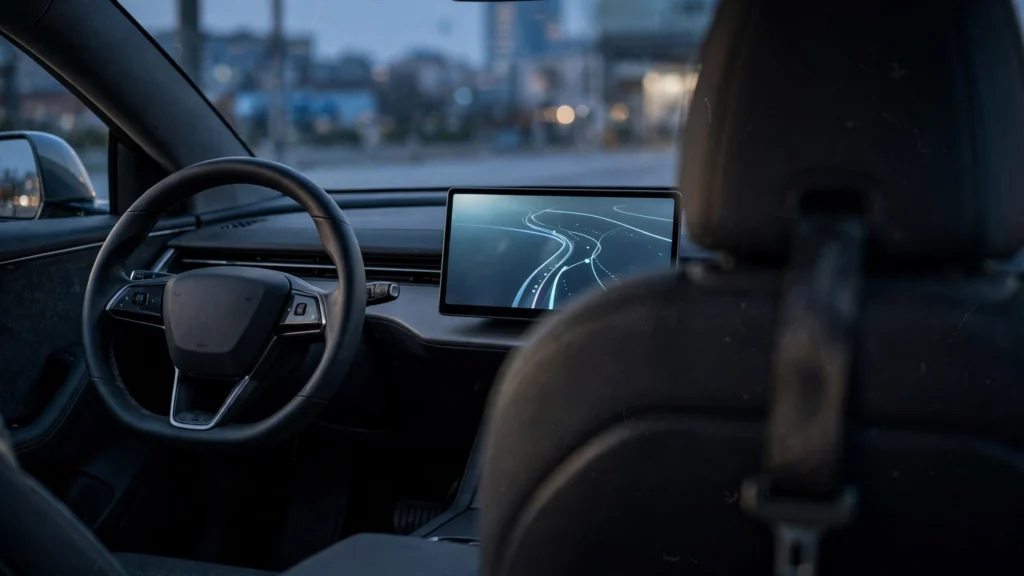
The headline change is a feature Tesla calls Reality View. Instead of drawing the road as detected objects, boxes and lane lines, the system now generates a continuous, realistic view of the car’s surroundings from a virtual camera above and behind the vehicle. The driver sees the street, the car, and the path the software intends to take, with arrows marking upcoming turns and pins showing where it plans to park.
Tesla describes it as a real-time generative visualisation that lets the driver “see and control what FSD is planning to do”. In the release notes, the same feature is called Tesla Augmented Reality. It replaces the separate model signals that used to build the old display with a single end-to-end visualisation, and Tesla says it uses lessing power.
The 25x safety claim needs a careful read
Tesla says v15 upgrades every part of its end-to-end driving network. At the centre is a new vision encoder, the part of the system that turns camera images into an understanding of the road. The encoder is shared between FSD, the Robotaxi service and the Optimus humanoid robot, and was trained on millions of internet videos.
According to the release notes, that encoder improves the “critical intervention rate by 25x”. That is a large number, and it deserves a careful read. Tesla has published only the multiplier, not the starting or resulting rate, and no independent testing has yet confirmed the claim. It is Tesla’s own measurement of its own software, and it should be treated as a company claim until outside testers can verify it.
What is clearer is the list of everyday problems v15 is meant to handle better: reading road signs, spotting potholes and debris, dealing with animals and standing water, and managing speed in school zones. The car can now also slow down for speed cameras, and a new Bike Rack Mode lets drivers use FSD with a bike rack fitted.
Smaller changes, and one thing that has not changed
Navigation is learning the start and end of trips, with full-route learning promised in later v15 releases. Parking controls have been reworked, and the turn signals have been softened.
One thing has not changed: FSD v15 is still Full Self-Driving (Supervised). The driver must keep paying attention and be ready to take over at any moment. This is not unsupervised driving, and Tesla has not described it as such.
Why it matters
Reality View is more than a prettier screen. It marks a shift in how Tesla wants drivers to relate to its software. Earlier versions showed the driver what the car could see. This version shows the driver what the car intends to do, and trust in a driver-assistance system depends on the driver understanding its next move.
There is a caution built into the design too. A generated picture of the road is itself a model output, not a photograph, so the display is a window into the car’s thinking, not proof that the thinking is right.
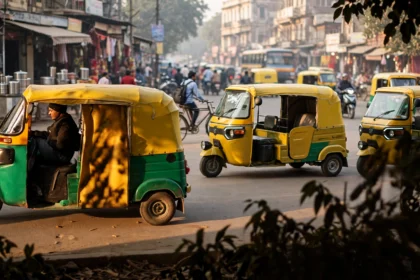
For India, the timing is worth watching. Tesla started selling cars in the country earlier this year, and Indian roads are exactly the kind of test v15 is built for: potholes, stray animals, debris and mixed traffic. The company has not announced when v15 will reach cars in India, but if the improved detection holds up in independent testing, this is the update Indian owners will care about most.
FAQs
What is Tesla FSD v15?
The latest version of Tesla’s Full Self-Driving (Supervised) software, rolled out from 21 November 2026, with a new vision encoder, a generative Reality View display, and better handling of signs, potholes, debris and school zones.
What is Tesla Reality View?
A real-time generative visualisation showing a live overhead-style view of the car’s surroundings and the path FSD plans to take, including upcoming turns and parking spots.
Who gets FSD v15 first?
Early Access Program members get the first builds. Elon Musk has said a wider release will follow in December 2026 with the Holiday Update.
Is FSD v15 fully self-driving?
No. It remains a supervised system. The driver must pay attention and be ready to take over at any time.
When will FSD v15 come to India?
Tesla has not announced a timeline for cars in India. The rollout so far covers early-access owners, with a wider release promised in December.
The race in driver assistance is now as much about communication as capability. A car that shows its intentions clearly may earn more trust than one that simply drives well in silence, but the 25x claim will only mean something once independent testers put v15 through its paces.