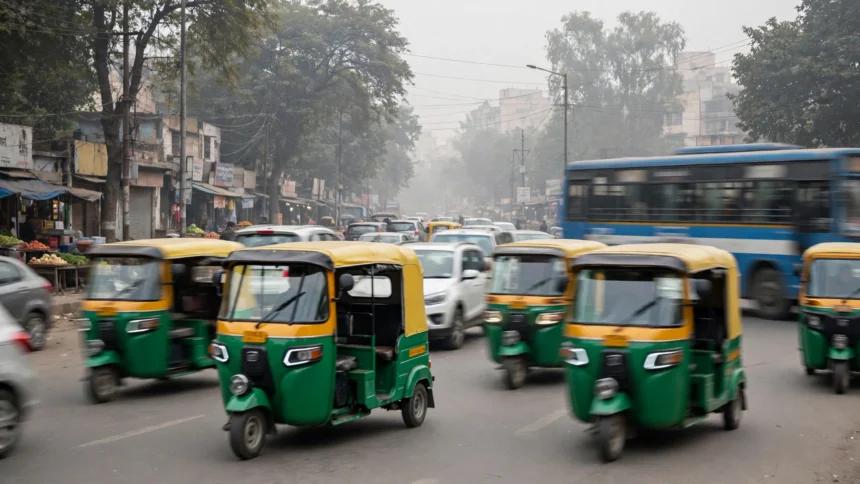
Delhi’s ambitious electric vehicle policy is running into trouble where it matters most. Nearly five months after the Electric Vehicle Policy 2026 came into effect, not a single person has applied for the subsidy to buy an electric auto-rickshaw, government data show, and only 37 applications have come in for electric goods carriers.
The numbers are striking because these are the very vehicles the policy was designed to convert first. Auto-rickshaws and light goods vehicles stay on the road all day, clock high mileage, and contribute disproportionately to the city’s air pollution. Yet with just about a month left before only electric autos can be registered in the capital, the incentive meant to push drivers to switch has found no takers at all.
The numbers that tell the story
Under the policy, which was notified on June 30, 2026 and came into force on July 1, buyers of electric auto-rickshaws can claim Rs 50,000 in the first year, falling to Rs 40,000 in the second year and Rs 30,000 in the third. Buyers of electric goods vehicles can get up to Rs 1 lakh in the first year. The response so far:
- Electric auto-rickshaw purchase incentive: zero applications
- Electric goods carrier purchase incentive: 37 applications
- Scrapping incentive for old three-wheelers (Rs 25,000): zero applications
- Scrapping incentive for goods carriers (Rs 50,000): one application
- Electric two-wheeler purchase incentive: 12,584 applications
- Scrapping incentive for old two-wheelers (Rs 10,000): 237 applications
The contrast with two-wheelers could hardly be sharper. Electric scooters and bikes, which make up more than two-thirds of Delhi’s total vehicle stock, have drawn over 12,500 applications for the purchase incentive. The commercial segments the policy prioritised have drawn almost none.
A deadline a month away
The poor response matters because the clock is ticking. From January 1, 2027, only electric auto-rickshaws and N1-category goods vehicles will be permitted for new registration in Delhi. Electric-only registration for two-wheelers follows from April 1, 2028. The policy runs till March 31, 2030.
The stakes are high. The transport sector is the biggest contributor to Delhi’s air pollution load, and the Commission for Air Quality Management has told the Supreme Court that vehicular emissions make up 23 per cent of the city’s winter air pollution. The policy itself says the prioritised electrification of autos and light commercial vehicles is essential to achieve sustained improvements in air quality, because these vehicles log high mileage every day.
Delhi Transport Minister Pankaj Singh said the data suggest there is interest in electric commercial vehicles. “The cost of electric versions of these vehicles is very high. But even then, people have started showing interest. As soon as the charging infrastructure ramps up, uptake will rise much faster,” he told The Indian Express.
Why drivers are holding back
Industry executives point to a technical problem first. To qualify for the subsidy, electric goods carriers in the N1 category must meet localisation requirements adopted from the Centre’s EV schemes, with major components made or assembled in India. The Delhi EV portal is not showing some models that are certified under the central schemes, so customers have been told their applications are not eligible. “Customers have come to us complaining about their applications not being eligible, so we are now in touch with the government,” a senior executive at a vehicle manufacturer said. Government sources, however, said there are few options in the market that meet the localisation requirements.
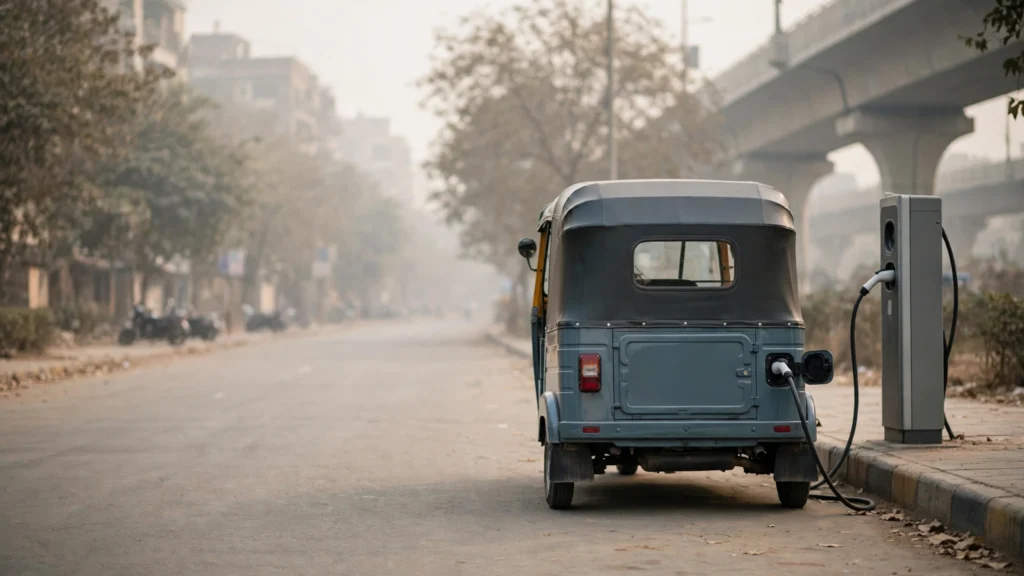
Cost is the second barrier. Transport operators say electric autos and goods vehicles are expensive to buy and maintain, and the charging network is too thin. For auto-rickshaw drivers, charging time is the daily worry. “It takes 5-10 minutes to fill a CNG auto. How long will charging take? There is no charging infrastructure. EVs are more expensive to maintain. The subsidy should have been at least Rs 1.5 lakh,” said Rajender Soni, general secretary of the Delhi Auto Rickshaw Sangh.
The scrapping incentive has its own problem. It is paid only if a new electric vehicle is bought within six months of scrapping the old one, and many owners can get a better price selling the old vehicle in the used market. “These vehicles are too expensive, and they are not widely used. If I can sell my old vehicle in the market at a better price, why would I choose to scrap it?” said Shyam Sundar, general secretary of the Delhi NCR Transport Ekta Manch.
Why it matters
Delhi’s EV policy was built on a simple idea: convert the vehicles that pollute the most per kilometre first, and the air gets cleaner fastest. The application data show the idea is sound but the execution is not landing. The two-wheeler response proves Delhiites will take a subsidy when the vehicle, the price and the charging work for them. The commercial segments show what happens when any one of those three is missing.
Three things need to change before January 1. First, the portal glitch has to be fixed, because drivers who want the subsidy should not be turned away by a missing model listing. Second, the charging question needs a visible answer in the places auto drivers actually work, not just in policy documents. Third, the government has to decide whether Rs 50,000 is enough when drivers themselves say it should be three times that. The subsidy is also designed to shrink every year, so waiting costs drivers money, but only if the switch itself is practical.
For readers, the practical point is the calendar. The January 1 deadline applies to new registrations, so existing CNG and diesel autos keep running. But anyone planning to buy an auto-rickshaw or a goods vehicle for Delhi in the coming months is buying into an electric-only future, and the first-year subsidy is the best the policy will ever offer.
What happens next
With a month to the deadline, the test is whether the government fixes the portal, expands charging and revisits the incentive size, or lets the mandate arrive while uptake is still near zero. The two-wheeler numbers show the policy can work. The auto and goods vehicle numbers show it has not worked yet where the pollution is heaviest.
FAQs
How many applications has Delhi’s EV policy received for electric autos?
Zero. Government data show no applications have been received for the Rs 50,000 purchase incentive for electric auto-rickshaws, and only 37 for electric goods carriers.
What is the electric auto subsidy under the Delhi EV Policy 2026?
Buyers of electric auto-rickshaws get Rs 50,000 in the first year, Rs 40,000 in the second year and Rs 30,000 in the third year. Electric goods vehicle buyers can get up to Rs 1 lakh in the first year.
When will only electric autos be registered in Delhi?
From January 1, 2027, only electric auto-rickshaws and N1 goods vehicles can be newly registered in Delhi. Electric-only registration for two-wheelers starts on April 1, 2028.
Why are drivers not applying for the subsidy?
Drivers cite high vehicle costs, inadequate charging infrastructure and long charging times. Industry executives also blame technical issues with the Delhi EV portal, where some certified models do not appear as eligible.
How have electric two-wheelers responded to the policy?
Far better. The purchase incentive for electric two-wheelers has drawn 12,584 applications, though the Rs 10,000 scrapping incentive for old two-wheelers has attracted only 237.
Delhi’s clean-air plan depends on converting its hardest-working vehicles first. Five months in, the drivers those vehicles belong to are still waiting for a deal that works for them.