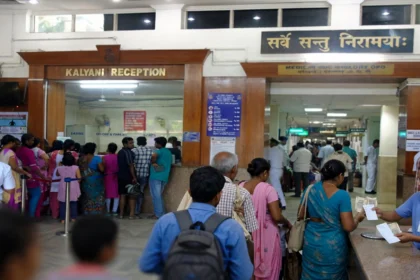
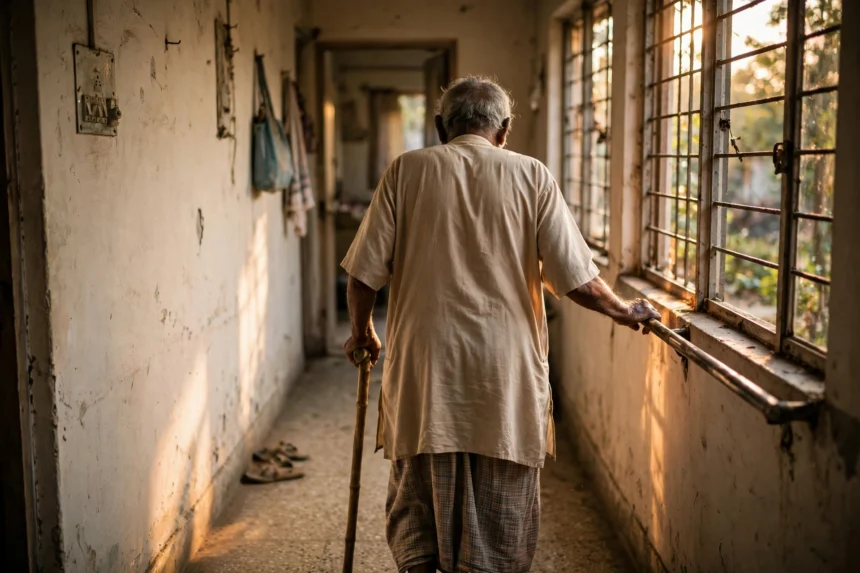
For decades, road crashes have dominated every conversation about injuries in India. A major new study says that picture has changed. Falls, the quiet accidents that happen at home, on stairs and on uneven streets, have now overtaken road crashes as the largest source of injury-related health loss in the country.
The finding comes from an analysis of Global Burden of Disease 2023 data published in The Lancet Regional Health, Southeast Asia, and reported on 25 November 2026. Researchers from PGIMER Chandigarh and AIIMS Madurai tracked injury trends across every state and Union Territory from 1990 to 2023.
Falls now lead the injury burden
The study measures health loss in disability-adjusted life years, or DALYs, where one DALY equals one lost year of healthy life through early death or long-term disability. In 2023, falls accounted for 958.7 DALYs per 1,00,000 people, ahead of road injuries at 831.1 and self-harm at 671.9.
That does not mean falls now kill more people than road crashes. They do not. Around 1.68 lakh people died in road crashes in 2022 alone. What the ranking shows is the total weight of death plus disability, and here falls have pulled ahead because they so often leave older people with fractures, lasting disability and a long road back to normal life.
Between 1990 and 2023, the age-standardised DALY rate for falls fell by only about 0.85 percent a year. Road injuries improved even more slowly, at 0.26 percent a year, the slowest decline of any major injury category.
An ageing India is driving the shift
The biggest force behind the change is demographic, not medical. Population growth pushed the absolute injury burden up across the board, but for falls, ageing did the heavy lifting. The study’s decomposition analysis found ageing alone added 2.57 million DALYs from falls, out of a net change of 4.66 million.
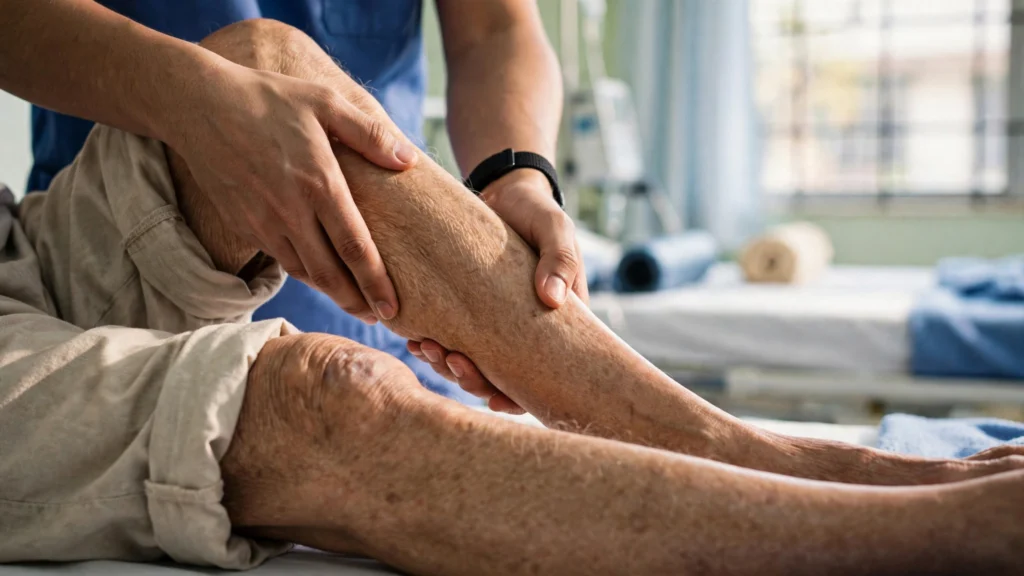
In plain terms, India has more older people than ever before, and older people fall more often and recover more slowly. A hip fracture at 75 can mean months in bed, a permanent loss of mobility and, too often, a shorter life. The study projects that falls and road injuries will remain the two dominant injury burdens right up to 2047.
The gap between states is widening
Progress has not been shared evenly. Inequality between states widened for burns and road injuries, with the Gini coefficient for burns rising from 0.164 in 1990 to 0.240 in 2023. The widest gap of all in 2023 was for poisonings, at 19.2-fold between the worst and best performing states. Where you live in India still shapes how likely you are to be hurt, and how well you recover.
Why it matters
This study quietly reorders India’s injury priorities. Road safety rightly gets the headlines, the budgets and the enforcement drives, and it must continue to do so. But falls have no ministry, no awareness month and no enforcement campaign, even though they now carry the larger health burden.
For families, the implication is immediate. A fall-risk check for an ageing parent costs little and can be done at a primary health centre. Expanding the National Programme for Health Care of the Elderly to include routine fall-risk screening, balance counselling and medication audits would catch high-risk people before the fall, not after the fracture. For policymakers, the study is a warning about the next two decades: India’s population will keep ageing, and the falls burden will keep growing with it unless prevention becomes part of routine elderly care.
What families can do today
- Check the home for trip hazards: loose rugs, trailing wires, cluttered walkways and poor lighting on stairs.
- Fit grab bars in bathrooms and handrails on staircases, and keep a night light on the route to the toilet.
- Encourage older family members to do simple balance and leg-strength exercises, and to get their eyesight checked every year.
- Ask a doctor to review medicines that can cause drowsiness or dizziness, especially when several are taken together.
- Make sure older adults wear well-fitting, low-heeled shoes with non-slip soles, even inside the house.
FAQs
Have falls really become a bigger problem than road crashes?
In terms of total healthy years lost, yes. Falls caused 958.7 DALYs per 1,00,000 people in 2023, ahead of road injuries at 831.1. But road crashes still kill far more people each year, so both remain urgent.
Why are falls rising if healthcare is improving?
The risk to each individual has actually fallen. The total burden is rising because India’s population is growing and ageing, and older people are far more likely to fall and to suffer lasting harm from a fall.
Can falls be prevented?
Yes, to a large extent. Strength and balance exercises, home safety changes, regular eyesight checks and medication reviews are all proven to reduce falls, according to international clinical guidance.
What is the government doing about it?
The National Programme for Health Care of the Elderly covers geriatric care at district hospitals and below. The study’s authors argue it should add routine fall-risk screening and prevention to its core work.
Falls will never make the evening news the way a highway pile-up does. But this study shows they now shape India’s health more than any other injury, and the sooner families and policymakers treat them that way, the fewer lives they will quietly take.