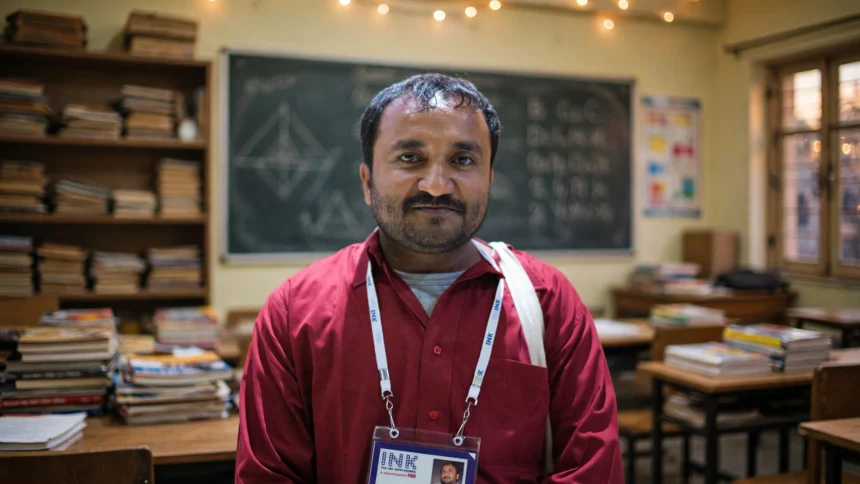
Indian mathematician Anand Kumar, the man behind the Super 30 programme in Patna, has received the Special Achievement Award in Japan for giving free, high-quality education to children from poor families. The award was presented on Wednesday, November 25, 2026, by Atsuhiro Horiuchi, chairman and chief executive officer of Japan’s CGC Group.
The honour recognises more than two decades of work that began in a small Patna classroom. For students who cannot afford expensive coaching, Kumar’s name has long stood for a simple idea: talent should not need money to reach an IIT classroom.
What the award recognises
According to the citation accompanying the award, Kumar was honoured for providing free, high-quality education to economically disadvantaged young people through Super 30, opening up new possibilities in their lives. His initiatives, the citation notes, have earned appreciation beyond India and inspired people around the world.
The award was presented by Horiuchi, who leads the CGC Group, one of Japan’s major business groups with 202 member companies and 5,083 stores. The citation made special mention of Super Infinity, Kumar’s latest initiative, which aims to make mathematics more accessible and engaging for children across the world.
Super 30: a classroom that costs nothing
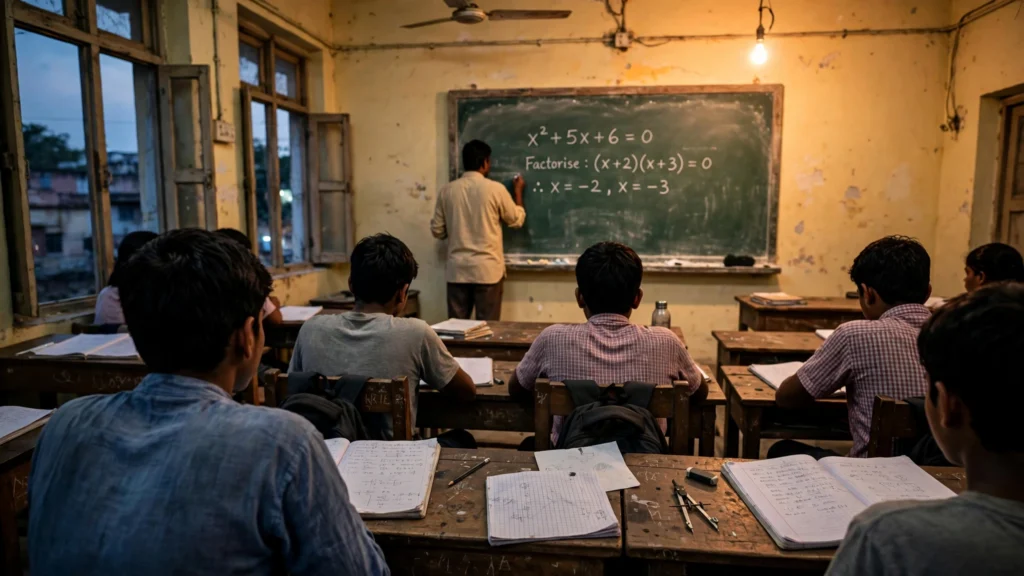
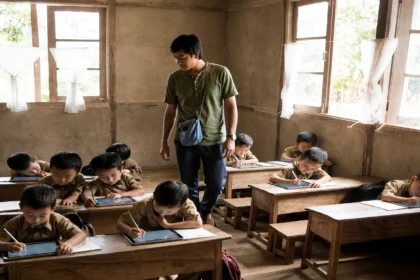
Kumar founded Super 30 in Patna in 2002 with a clear purpose: to help talented students from financially weaker families prepare for the entrance examinations of the Indian Institutes of Technology without paying coaching fees. Every year, the programme picks 30 students from underprivileged backgrounds and coaches them free of cost, covering food and lodging as well.
The model was radical in a country where IIT coaching can cost lakhs of rupees a year. He built the programme around the belief that a bright child from a poor family deserves the same shot as one from a rich one, and over the years Super 30 became one of India’s most talked-about education experiments.
Kumar is also a Padma Shri recipient, one of India’s highest civilian honours, which underlines how widely his work is recognised at home. The Japan award now adds an international chapter to that recognition.
Super Infinity and the maths mission
Alongside Super 30, the citation singled out Super Infinity, Kumar’s newer initiative. Where Super 30 selects a small group for intensive IIT preparation, Super Infinity tries to take mathematics to a much larger audience of children, making the subject easier to understand and more interesting, without the barriers of geography or family income. Many children decide early that mathematics is not for them, often because of how it is taught, and Super Infinity tries to change that first encounter.
Why it matters
This award matters for a reason that goes beyond one man’s trophy shelf. India’s entrance-exam coaching industry runs into thousands of crores, and for most families the price of preparation decides who even gets to compete. Super 30 has always been the counter-example: proof that a free, small, fiercely focused programme can send poor students into the IITs year after year.
The timing adds weight. JEE Main 2027 has drawn more than 15 lakh applications, and competition for engineering seats has never been tighter. In that environment, a model built on access rather than fees poses a practical question for policymakers: how much talent is India losing simply because families cannot pay for coaching?
There is also a longer arc here. In 2002, Kumar started with 30 students in Patna. In 2026, a Japanese business group is honouring him for the same work, and his new initiative is aimed at children in many countries. The journey took 24 years, and the programme has never charged its students a rupee.
For parents and students, the message is concrete. Free, quality preparation exists, but seats in programmes like Super 30 are few and selection is tough, so families should follow the programme’s own announcements rather than coaching centres using Kumar’s name.
What happens next
Kumar’s work now has two tracks: Super 30 continues its annual selection for IIT preparation, while Super Infinity widens the mathematics mission. The honour also raises a wider question: whether the Super 30 model can be replicated in other subjects and states, so free, focused coaching is not limited to one programme in one city.
Frequently asked questions
Who is Anand Kumar?
Anand Kumar is a mathematician from Patna and the founder of Super 30, a programme that gives free IIT entrance coaching to talented students from economically weaker families. He is a Padma Shri recipient.
What award did he receive in Japan?
He received the Special Achievement Award on November 25, 2026, presented by Atsuhiro Horiuchi, chairman and CEO of Japan’s CGC Group, for his contribution to education.
What is Super 30?
Super 30 is a Patna-based programme founded in 2002 that selects 30 underprivileged students each year and prepares them for IIT entrance examinations free of cost, including food and lodging.
What is Super Infinity?
Super Infinity is Kumar’s latest initiative, aimed at making mathematics more accessible and engaging for children across the world, beyond the small annual batch of Super 30.
Does the award change Super 30 admissions?
No. Selection for Super 30 continues through the programme’s own process, and students should follow official announcements from the programme for admission details.
From a free classroom in Patna to an award stage in Japan, Anand Kumar’s story is a reminder that good teaching, given freely, can travel a very long way.