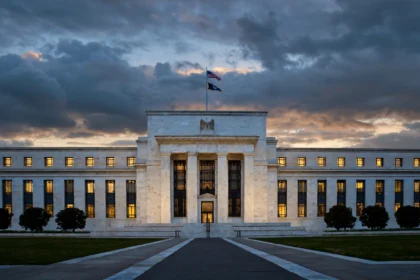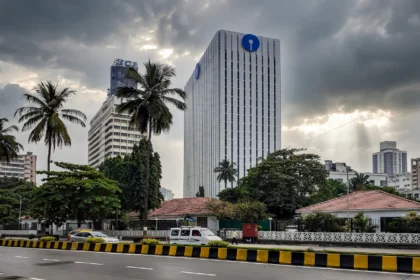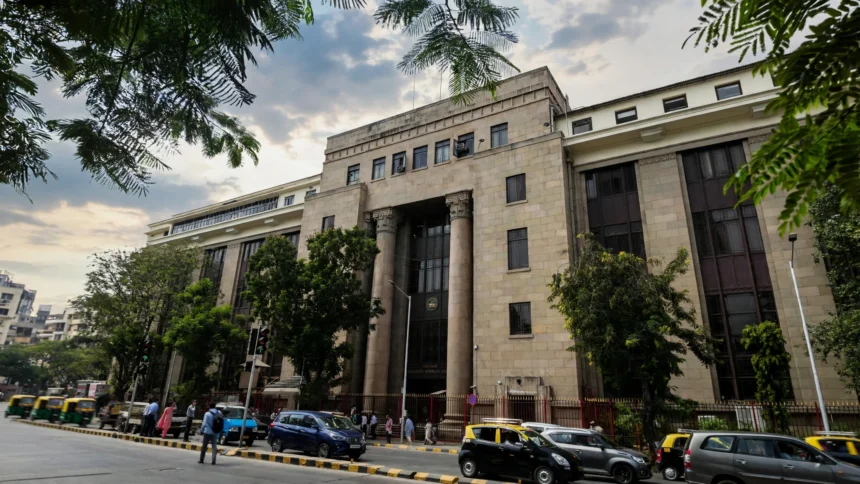
The Reserve Bank of India sees the economy holding its ground. Its November Bulletin, released on Wednesday, says high-frequency indicators stayed resilient through October, with record exports, near-record tax collections and foreign investors returning to Indian markets. The message is steady rather than spectacular: domestic demand is doing the heavy lifting while the world around India stays unsettled.
The bulletin arrives at a useful moment. India enters the third quarter of FY27 with corporate earnings holding up, credit demand strong and the rupee steadier than it was a month ago. But inflation has crept above 6 per cent, food prices are still pressing, and a fresh tariff threat from Washington landed on the same day the bulletin came out. The next test is the RBI’s December monetary policy meeting.
Exports hit a record $49.5 billion
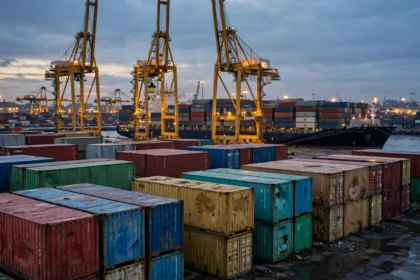
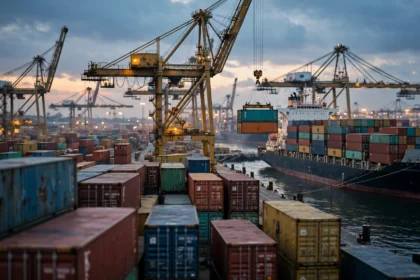
Trade is the headline of this bulletin. Merchandise exports rose 45.1 per cent year on year in October to a record $49.5 billion, the highest monthly figure India has ever recorded. It was the seventh straight month of double-digit export growth, and the gains were broad-based: petroleum products, electronic goods, engineering goods and drugs and pharmaceuticals all grew strongly. Exports to the United States and China kept up double-digit growth as well.
Imports rose too, up 16.5 per cent to $89.4 billion, but the trade deficit still narrowed to $39.9 billion from $42.6 billion a year earlier. It had been $30.2 billion in September, so the gap widened month on month even as it improved on the year. The bulletin credits the export performance for the improvement and notes that net inflows through external commercial borrowings and NRI deposits also stayed strong.
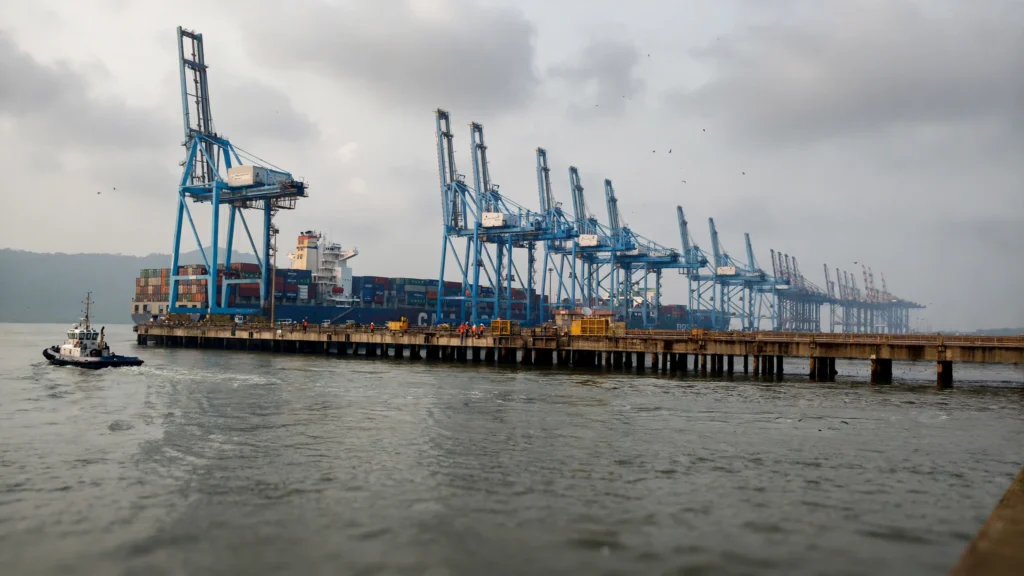
GST collections near an all-time high
The second pillar of the bulletin is tax revenue. Gross GST collections in October rose to the second-highest monthly level since the tax was rolled out in July 2017, growing 22.9 per cent from a year earlier. Collections from imports jumped 42.2 per cent, while domestic collections rose 15.8 per cent. Net GST revenue after refunds grew 25.6 per cent.
The RBI links the strong reading partly to festive-season demand and higher retail spending. Toll collections also kept growing steadily, which the bulletin reads as a sign that transport and logistics activity is holding up. Together, the tax and trade numbers paint a picture of an economy where people are still spending and factories are still shipping.
Foreign money returns and the rupee steadies
Financial markets turned a corner after a weak end to October. Indian equities recovered on robust corporate earnings, easing crude oil prices and a reversal in foreign portfolio flows. Net FPI inflows reached $2.3 billion in 2026-27 up to November 18, a sharp change from the selling seen earlier in the year.
The rupee, which started strengthening in the second week of October, gained further in November as portfolio inflows returned. The RBI’s own market operations show it remained active: net purchases of $6.94 billion in the onshore and offshore OTC segment in September took cumulative net purchases since end-March to $54.37 billion.
Corporate results back the market mood. Listed private non-financial companies showed resilience in the September quarter, with sales growth strengthening in manufacturing, led by automobiles, petroleum and chemicals.
Credit growth stays strong
Money and credit indicators stayed supportive. Bank credit growth remained strong at 19.5 per cent year on year as of end-October, while deposit growth eased slightly to 16.9 per cent from 17.8 per cent in September. Money supply growth moderated marginally to 16.5 per cent, and reserve money growth rose to 13.7 per cent, its fastest pace in more than five years.
Currency in circulation also grew at its fastest in over five years, the bulletin notes. The RBI reads all of this as evidence that strong bank and non-bank credit growth continues to support economic activity.
Why it matters
For readers, the bulletin is less about any single number and more about the balance of the economy right now. The October data shows an economy that can grow on domestic demand, exports and tax revenue at the same time, which is exactly the combination policymakers want. GST collections near a record mean the government has more fiscal room, and strong exports mean the trade gap is not blowing out even while India imports more oil and goods.
But the bulletin is a snapshot of October, and November has already added a complication. On the same day it was released, the US proposed tariffs of up to 25 per cent on Indian goods, with a lower 17 per cent rate if a trade deal is signed. That threat was not in the bulletin’s data, and it is the single biggest near-term risk to the export story it celebrates. If the tariffs land, the record export month could look like a high-water mark rather than a new normal.
The other watchpoint is inflation. Headline CPI inflation rose to 6.09 per cent in October from 5.54 per cent in September, driven mainly by food and beverages. The bulletin also flags that food price pressures stayed broad-based in November, with cereals, pulses and edible oils all rising. That matters because the RBI’s monetary policy committee meets in December, and inflation above 6 per cent narrows the room for any rate cut.
Crude oil is the third variable. The Indian basket averaged $95 a barrel in November up to the 18th, and a separate bulletin article found crude had re-emerged as a key contributor to imported inflation in 2026 after the West Asia conflict. The bulletin notes the West Asia crude shock was sharper than the Russia-Ukraine one, though its pass-through to retail fuel prices has been lower so far. Gold and precious metals have also emerged as imported-inflation drivers since 2024.
Numbers at a glance
- Exports: $49.5 billion in October, up 45.1 per cent, a record monthly high
- Imports: $89.4 billion, up 16.5 per cent
- Trade deficit: $39.9 billion, down from $42.6 billion a year earlier
- GST revenue: up 22.9 per cent, second-highest monthly collection since July 2017
- FPI inflows: $2.3 billion net in 2026-27 up to November 18
- Bank credit: up 19.5 per cent year on year; CPI inflation 6.09 per cent in October
FAQs
What did the RBI’s November Bulletin say about the economy?
It said high-frequency indicators showed resilience in October, with record exports, strong GST collections, firm corporate earnings and returning foreign investment, though inflation and global volatility remain risks.
How much did India’s exports grow in October?
Merchandise exports rose 45.1 per cent year on year to a record $49.5 billion, the seventh consecutive month of double-digit growth.
Why did GST collections rise so sharply?
Gross GST revenue grew 22.9 per cent to the second-highest monthly level since July 2017, helped by festive-season demand, higher retail spending and a 42.2 per cent jump in collections from imports.
What is the inflation picture?
Headline CPI inflation rose to 6.09 per cent in October from 5.54 per cent in September, mainly on food prices, and food inflation pressures stayed broad-based in November.
What happens next?
All eyes are on the RBI’s December monetary policy meeting, and on whether the US tariff proposal of up to 25 per cent on Indian goods moves from proposal to reality.
The November Bulletin gives India a solid report card for October. Whether the momentum survives the tariff threat and the inflation squeeze is the question the next few weeks will answer.