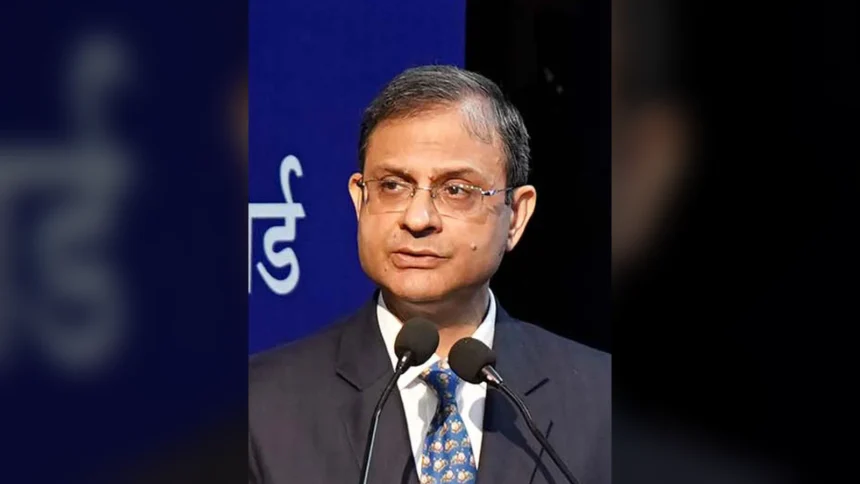
Indian exporters are leaving money on the table. That was the blunt message from Reserve Bank of India Governor Sanjay Malhotra on Friday, as he told small businesses in Mumbai that only 20 to 30 per cent of eligible Indian exporters actually use the lower tariffs available under the country’s free trade agreements.
Speaking at the SME Finance and Investment Summit, Malhotra said partner countries were doing far better out of the same deals. While Indian firms use barely a quarter of the benefits on offer, exporters from India’s trade partners use 60 to 70 per cent of the concessions available to them when selling into India.
“It is an opportunity we are leaving on the table,” the Governor said, urging exporters to learn the trade pacts relevant to their sector and to invest in quality, standards and certification.
The 20-30% gap in FTA use
India has signed a series of free trade agreements in recent years, opening up lower-tariff access to large markets for Indian goods. But signing a deal and using it are two different things. A trade agreement only helps an exporter who knows which pact covers their product, meets its rules of origin, and files the right paperwork.
The gap matters because tariffs decide whether an Indian product is competitive abroad. A rival supplier from a country with a better-used trade deal can land the same product at a lower price in the same market, even if the Indian product is just as good.
MSMEs and the AI opportunity
Malhotra devoted much of his address to micro, small and medium enterprises. The sector accounts for 31 per cent of India’s GDP, 35 per cent of manufacturing output and nearly half of the country’s merchandise exports. It is also the second largest employer after agriculture, providing around 45 crore jobs.
Yet productivity in the sector lags badly. Value added per worker in Indian MSMEs is only about 26 per cent of the level seen in large enterprises, the Governor said. Artificial intelligence could help close that gap: citing a 2025 survey, he said AI could generate between $490 billion and $685 billion in economic value for the MSME sector.
The catch is adoption. Only about 5 per cent of MSMEs use AI actively, and overall adoption is estimated at around 14 per cent, well behind peers such as China, the United States and Germany. Malhotra urged small businesses to move beyond experimenting with the technology and start using it in everyday operations.
Credit is flowing, but loan terms need attention
On financing, the Governor had encouraging numbers. Bank credit to MSMEs grew 27 per cent year on year in the 12 months to September 2026. He also pointed small businesses towards newer funding routes, including the account aggregator framework, the trade receivables discounting platform and the Unified Lending Interface.
There was one request he turned down. Some in the sector had asked for the recognition of non-performing assets on MSME loans to be extended from 90 days to 180 days. Malhotra said no, and instead advised businesses to negotiate longer moratorium periods matched to their cash flows, so that a loan does not slip into default.
Why it matters
The speech comes as India’s growth looks strong on paper. Economists expect the economy to have grown about 7.6 per cent in the July-September quarter, with the official data due on November 30, and the full-year forecast has been raised to around 7.2 per cent.
But the Governor’s message is a reminder that headline growth and export competitiveness are not the same thing. A fast-growing economy can still lose export orders if its firms do not use the trade deals negotiated on their behalf. The 20-30 per cent utilisation figure is striking precisely because the hard part, negotiating the agreements, is already done.
For a small exporter, the practical takeaway is simple. Check which free trade agreement covers your product and your destination market, find out what tariff saving it offers, and ask your export promotion council what documents you need.
FAQs
What did the RBI Governor say about free trade agreements?
Governor Sanjay Malhotra said only 20 to 30 per cent of eligible Indian exporters use the lower tariffs available under India’s free trade agreements, against 60 to 70 per cent utilisation by partner countries’ exporters.
How much value can AI create for MSMEs?
A 2025 survey cited by the Governor puts the figure at $490 billion to $685 billion in economic value for India’s MSME sector. Only about 5 per cent of MSMEs use AI actively today.
What is the MSME sector’s share of the economy?
MSMEs account for 31 per cent of India’s GDP, 35 per cent of manufacturing output and nearly half of merchandise exports, and provide around 45 crore jobs.
Did the RBI agree to relax loan default rules for MSMEs?
No. The Governor rejected a request to extend NPA recognition for MSME loans from 90 days to 180 days, and instead advised businesses to negotiate longer moratorium periods aligned with their cash flows.
When will the official GDP data for July-September be released?
The National Statistics Office is scheduled to release the GDP data for the July-September quarter on November 30. Economists expect growth of around 7.6 per cent.
India’s trade deals are already signed. The question is whether Indian exporters will finally start using them.