
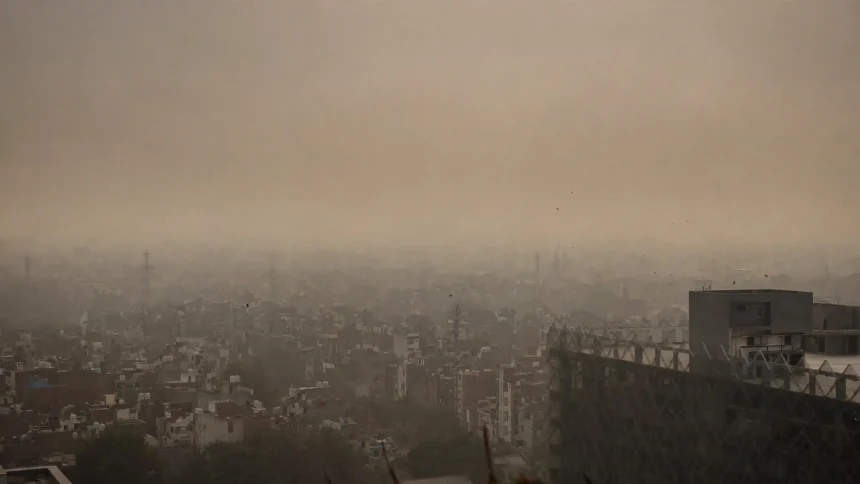
Delhi’s air quality index stood at 293 on Saturday, in the ‘poor’ category, according to the Central Pollution Control Board. The smog is now doing more than irritating lungs: doctors in Delhi and Mumbai report a clear rise in skin problems on high-pollution days, and research links the same toxic air to depression and slower thinking.
Skin takes the first hit
Dermatologists in the two metros report a 10 to 20 per cent rise in skin complaints during high pollution. Dr Saurabh Shah, consultant dermatologist at Mumbai’s Saifee Hospital, reports a 10 to 15 per cent rise when pollution turns severe, with allergies, itching and other inflammatory conditions. A physician at a Delhi government hospital reported a rise of almost 20 per cent in eczema, dermatitis, acne and irritation during severe pollution spells this year.
Fine particulate matter, PM2.5, along with nitrogen dioxide and ground-level ozone, can trigger oxidative stress and inflammation, weakening the skin’s protective barrier. Dr Ruben Bhasin Passi, senior consultant for dermatology at CK Birla Hospital in Gurugram, said these pollutants generate free radicals that damage skin cells and affect collagen and elastin.
The mind is not spared
Research has also drawn attention to the neurological and psychological consequences of breathing polluted air. A systematic review and meta-analysis in the journal Environmental Research in March examined the link between ambient air pollution and depression and anxiety among adults. Mehezabin Dordi, a clinical psychologist at Sir HN Reliance Foundation Hospital, said the literature points to an association between prolonged PM2.5 exposure and depression, although the evidence for anxiety remains less consistent.
A review by the Centre for Research on Energy and Clean Air (CREA) of 184 peer-reviewed studies from 1975 to 2025 found that 169 of them, or 91.8 per cent, linked air pollution to at least one adverse health outcome. Twenty-six of those studies were conducted in Delhi.
In Delhi, one study of asthma patients linked short-term exposure to PM2.5, PM10, nitrogen dioxide and sulphur dioxide with severe depression and poorer asthma control. Another linked PM10 exposure with attention-deficit hyperactivity disorder (ADHD). Dr Rajesh Sagar, professor of psychiatry at AIIMS New Delhi, said pollutants may trigger inflammation that affects the brain, influencing mood and thinking, particularly among children and young people.
Who is most at risk
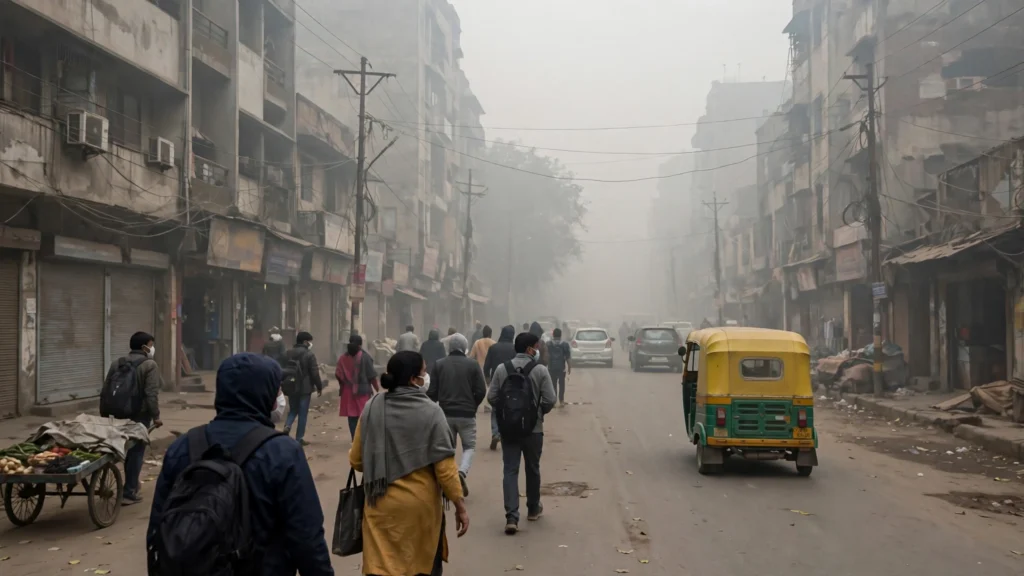
The same groups appear again and again. Children in industrial areas showed a higher prevalence of asthma. Older residents, particularly those above 60 to 65, showed stronger links between PM2.5 exposure and daily deaths. Outdoor workers, including autorickshaw drivers, street vendors and sweepers, reported respiratory complaints, eye irritation and reduced lung function. People with eczema, dermatitis or asthma are more vulnerable too, because pollution aggravates conditions they already manage. The review also noted that Delhi’s pollution is not just a winter problem: health risks extend through the year, and indoor air matters too.
Why it matters
The findings change how the cost of pollution should be counted. The debate has focused on hospital admissions and deaths, numbers that feel distant to most people. Itchy skin, acne flare-ups, low mood and foggy thinking are everyday experiences, and they are now part of the same story.
Delhi’s AQI of 293 on Saturday was ‘poor’, not ‘severe’, yet clinics were already reporting a 10 to 20 per cent rise in skin cases. The damage starts well before the dramatic ‘severe’ days that dominate headlines.
The scale of the gap is stark. Delhi’s average PM2.5 in November 2026 was 244 micrograms per cubic metre, against the World Health Organization’s annual guideline of 5. India’s national average in 2023 was 41, more than eight times that guideline. Based on 2023 levels, the average Indian’s life expectancy is cut by three years and six months. Policy is catching up slowly: the CREA review called for stricter enforcement of air quality standards, last revised in 2009, and time-bound targets for cutting pollution.
What you can do on high-pollution days
- Check the AQI before stepping out. On ‘poor’ or worse days, keep outdoor exercise short and avoid early mornings, when pollution peaks.
- Wear a well-fitted mask outdoors. It protects the lungs and cuts pollutants reaching the skin.
- Protect the skin barrier. Moisturise daily, wash your face after coming indoors, and avoid harsh scrubs.
- Clean the air indoors. Use an air purifier if possible, keep windows shut during peak pollution, and avoid burning incense or candles inside.
- Look after vulnerable family members. Children, the elderly and anyone with asthma or skin conditions need extra care on bad-air days, and should see a doctor early.
FAQs
Can air pollution really affect the skin?
Yes. Doctors report a 10 to 20 per cent rise in skin complaints when pollution is high, and research shows PM2.5 triggers oxidative stress that weakens the skin barrier.
Does dirty air cause depression?
Studies show an association between prolonged PM2.5 exposure and depression, including a March 2026 meta-analysis in Environmental Research. It is an association, not proof of causation, but the pattern appears across many studies.
What AQI level should I worry about?
Delhi’s AQI stood at 293 on Saturday, in the ‘poor’ category. Doctors already see more skin patients at this level, so ‘poor’ days deserve the same precautions as ‘severe’ ones.
Toxic air in India is no longer just a breathing problem. It is showing up on people’s skin and in their state of mind, and the damage starts earlier than most of us assume.