Seven children in India living with a rare genetic disorder will receive a year of life-changing medicine free of cost on November 30, after a Hyderabad paediatrician and a group of patient-rights organisations found a way to cut the price of the drug from up to Rs 9 crore a year to just Rs 2.5 lakh per child.
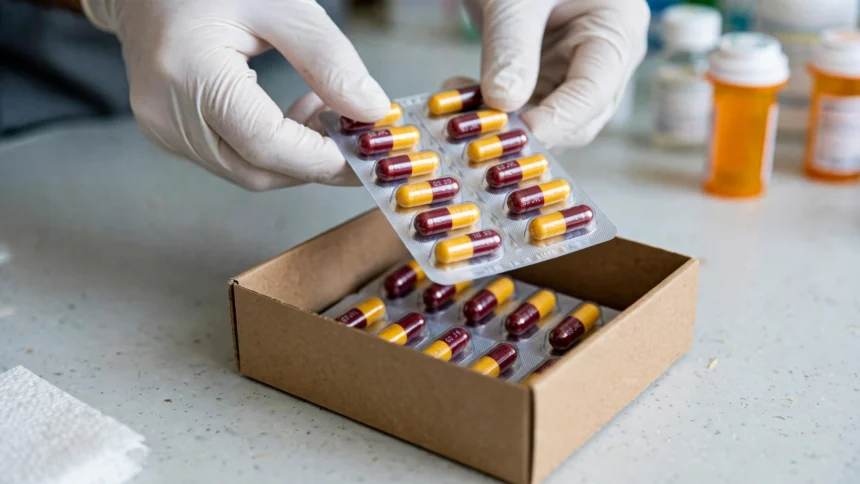
The children have Allan-Herndon-Dudley syndrome (AHDS), also known as MCT8 deficiency. The medicine they need, tiratricol, is not available in India, and buying it from Europe costs a fortune. A compounded version prepared by a pharmacy in the Netherlands has now brought the treatment within reach, and the first batch is ready to be handed over.
What is AHDS
AHDS is a rare genetic disorder caused by mutations in the MCT8 gene. The gene plays a key role in transporting thyroid hormones into brain cells. When it does not work properly, brain development is affected and children face severe developmental delays. The condition is rare, which is part of the problem: with so few patients, drug companies have little commercial reason to make the medicine affordable.
The price gap
The numbers explain why this story matters. The commercial version of tiratricol, sold in Europe as Emcitate by Swedish company Egetis Therapeutics, costs about 178 euros, or roughly Rs 18,934, per tablet in Germany. At an estimated annual cost of 441,000 euros, that works out to around Rs 4.68 crore per patient per year, with some estimates going up to Rs 9 crore. The compounded version, prepared by Transvaal Pharmacy in The Hague, Netherlands, costs about Rs 2.5 lakh per child for a year, or roughly Rs 15.08 lakh for all seven children together.
One mother knows that maths from experience. Pavitra Sirolkar, whose 20-month-old son Arav has AHDS, spent nearly Rs 13 lakh to buy a single month’s supply of the medicine from Germany before this initiative took shape.
How the breakthrough happened
The effort began with Arav’s diagnosis. Dr Sivaranjani Santosh, the Hyderabad paediatrician treating him, started contacting paediatricians, endocrinologists and paediatric neurologists to find a way to obtain tiratricol. Doctors at Christian Medical College (CMC) in Vellore, where other children with the condition had been identified, joined the search.
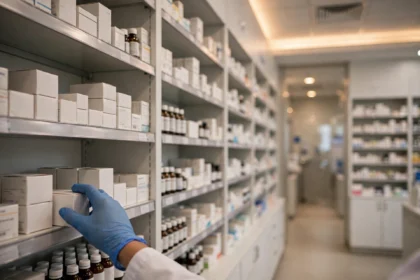
The solution came through compounding, where a licensed pharmacy prepares a medicine to order rather than selling a branded product. With support from the Netherlands-based Pharmaceutical Accountability Foundation, Transvaal Pharmacy in The Hague prepared the compounded formulation. Access to Medicines India, led by KM Gopakumar, and the Organisation for Rare Diseases India helped coordinate the effort in India.
Paying for it took a shared effort too. Dr Sivaranjani raised about Rs 6.09 lakh in India, while the Pharmaceutical Accountability Foundation raised the remaining 8,600 euros, about Rs 9.13 lakh, in the Netherlands. The seven children include one from Hyderabad, children identified by doctors at CMC Vellore, and a one-year-old whose
father reached out after seeing a social media appeal. The families have import permissions covering one year, and the medicine will arrive in six-month batches, with the first handover on November 30.
Why it matters
Seven children is a small number, but the model behind this story is much bigger. India has no shortage of rare diseases whose treatments exist but are priced far beyond any family’s reach. What this initiative shows is that the price of a drug and the cost of making it can be very far apart, and that compounding, crowdfunding and cross-border patient networks can close that gap when the formal system does not. It also shows the limits of a one-off rescue: Dr Sivaranjani herself has said importing the medicine cannot be a permanent solution, and after this year the same scramble begins again unless a lasting arrangement is found.
For now, the immediate result is concrete: seven families who were facing bills of crores will receive a year’s medicine free, and a mother who once paid Rs 13 lakh for a month’s supply will not have to do it again. The November 30 handover is the proof that the model works. The harder question, whether India can make it routine rather than exceptional, is still open.
Frequently asked questions
What is AHDS?
Allan-Herndon-Dudley syndrome is a rare genetic disorder caused by mutations in the MCT8 gene, which affects how thyroid hormones reach brain cells. It causes severe developmental delays in children.
What is tiratricol?
Tiratricol, also called TRIAC, is a medicine that acts on thyroid hormone receptors and may help manage some effects of MCT8 deficiency. It is not a cure.
Why is the commercial drug so expensive?
The branded version, sold as Emcitate in Europe, costs about Rs 18,934 per tablet in Germany, working out to roughly Rs 4.68 crore to Rs 9 crore per child per year.
How did the cost come down to Rs 2.5 lakh?
A pharmacy in the Netherlands compounded the medicine to order, and patient-rights groups in India and the Netherlands shared the cost.
When will the children receive the medicine?
The handover to the seven families is scheduled for November 30, with the medicine imported in six-month batches under import permissions covering one year.
For the seven families, November 30 will be the day a medicine that once cost crores becomes something they can simply collect. For everyone else, it is a reminder that affordable treatment is often a question of will and organisation, not just science.