India has no national palliative care policy. That gap has persisted for years even as millions of families care for seriously ill relatives at home, often with little support and heavy costs. Now the Indian Council of Medical Research (ICMR) has taken a concrete step toward closing it.
According to a report published today, the ICMR has launched a multi-state implementation research study to improve coverage of high-quality palliative care, flagging it as a priority under the national health research programme. Seven research teams have been selected across six zones, covering Jammu, Tamil Nadu, Madhya Pradesh, Assam, Odisha, Maharashtra and Bihar. The numbers behind the move are stark: nearly 7 to 10 million people in India need palliative care, yet less than four per cent have access to it.
What the ICMR study will do
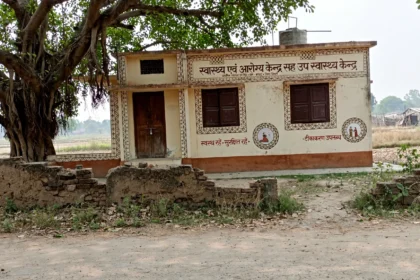
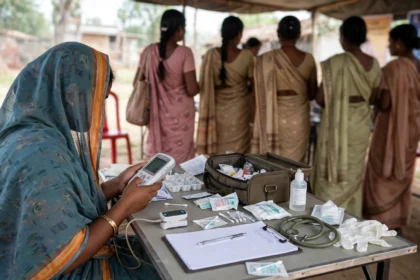
The study is not a survey or a paper exercise. It is implementation research, which means it tests how palliative care can actually work inside India’s public health system, at district hospitals, community health centres and primary health centres, and in people’s homes.
In a letter to the chief secretaries of the states involved, dated October 30, ICMR Director-General Dr Rajiv Bahl described palliative care as an essential component of comprehensive healthcare. The letter said the ICMR considers the study a national health research priority, with the aim of achieving 70 per cent effective coverage of the estimated need for palliative care at district level. Each study site has been allotted Rs 2.5 crore.
The work began in August, when the ICMR called a meeting of stakeholders at its New Delhi headquarters, with experts from AIIMS Jammu, CMC Vellore and Tata Memorial Hospital in Mumbai taking part.
Why this matters now
Palliative care is about much more than end-of-life care. The World Health Organization defines it as an approach that improves the quality of life of patients, adults as well as children, and their families who face problems linked to life-threatening illness. It covers pain relief, symptom management, emotional support and help for caregivers.
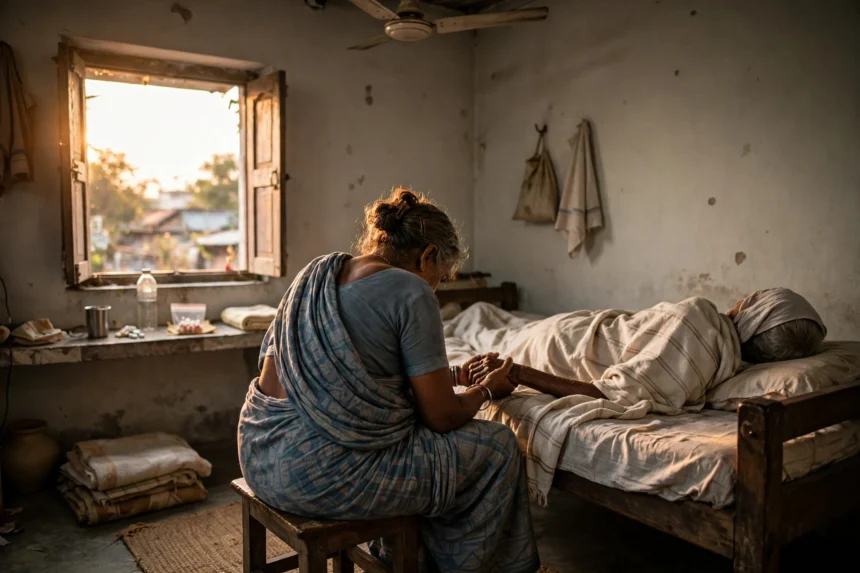
In India, most of this care currently falls on families. As Smriti Rana, head of the WHO Collaborating Centre for Training and Policy on Access to Pain Relief, told The New Indian Express, most seriously ill patients are cared for at home by families who are often unsupported and pushed into financial hardship.
The need is broad: cardiovascular diseases, chronic respiratory diseases, cancer and neurological illnesses. Patients with end-stage cancer account for nearly one-third of all palliative care needs, and experts estimate that four in ten people have at least one chronic disease.
The long road to a national policy
The study will take three years to produce a baseline assessment of needs and barriers, and the evidence needed to scale up services. That timeline is itself a concern.
Rana flagged the four-to-five-year timeline to a national policy as a risk, arguing that with people suffering now, the study should run alongside policy action, not before it. If the research is done well, she said, it can give the government the confidence and evidence to frame a national policy. But the real test will be whether findings translate into funded, implemented action.
India is not starting from zero. A National Programme for Palliative Care has existed since 2012, and several states have their own policies, with Kerala widely cited as the best example. What has been missing is evidence on what works at scale across very different settings.
Access to morphine remains a particular hurdle. The Narcotic Drugs and Psychotropic Substances Act was amended in 2014 to ease access to medicinal morphine, yet many states still face reluctance among pharmacists and doctors to stock and prescribe it.
What happens next
- The seven selected research teams will work with state governments to design and implement palliative care models in their zones.
- Over three years, the study will assess needs, barriers and costs, and test what works at district level.
- The evidence is meant to feed into a national palliative care policy, a step India has not yet taken despite a WHO resolution in 2014 urging member states to include palliative care in comprehensive health services.
For now, the ICMR’s move is best described as the report put it: baby steps, but useful ones. Whether they lead to a funded national policy will depend on what the next three years deliver, and whether the government acts on it.
FAQs
What is palliative care?
It is care that improves the quality of life of patients and families facing life-threatening illness, through pain relief, symptom management, emotional support and caregiver help. It is not limited to the final days of life.
Does India have a national palliative care policy?
No. India has a National Programme for Palliative Care since 2012 and some state policies, but no national policy.
How many people in India need palliative care?
An estimated 7 to 10 million people need it, but less than four per cent currently have access, according to the report.
What will the ICMR study cover?
Seven research teams across six zones will test palliative care models in public health facilities and home settings, aiming for 70 per cent effective coverage of need at district level over three years.