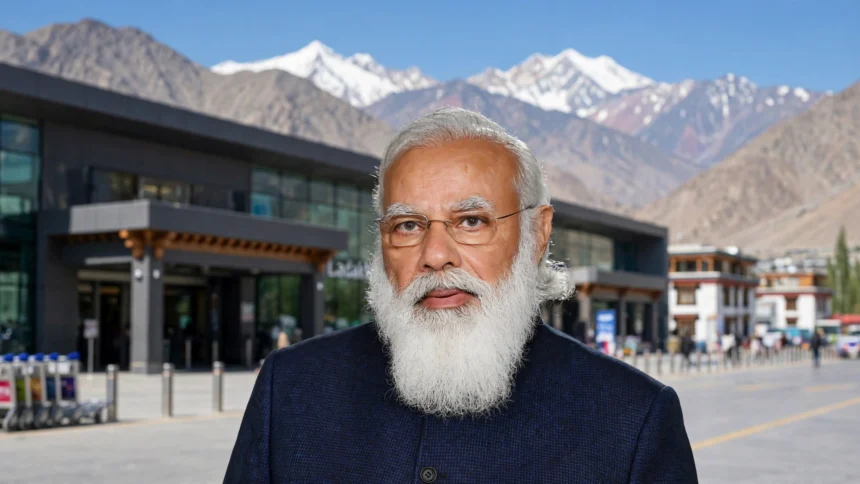
In a sweeping development push for the high-altitude Union Territory, Prime Minister Narendra Modi inaugurated five major projects worth around Rs 3,350 crore in Ladakh on Thursday, covering airport infrastructure, strategic road connectivity, hydropower, heritage conservation and water security.
The Prime Minister dedicated the projects to the nation via video conferencing at around 12:30 pm on Thursday, 15 October, and addressed the gathering on the occasion. Officials described the package as one of the most wide-ranging single-day development announcements Ladakh has seen since it became a Union Territory in 2019.
Announcing the inaugurations on Wednesday evening, the Prime Minister said the projects would strengthen connectivity, boost development, preserve Ladakh’s rich heritage and improve the quality of life of its people.
New Leh airport terminal: the centrepiece
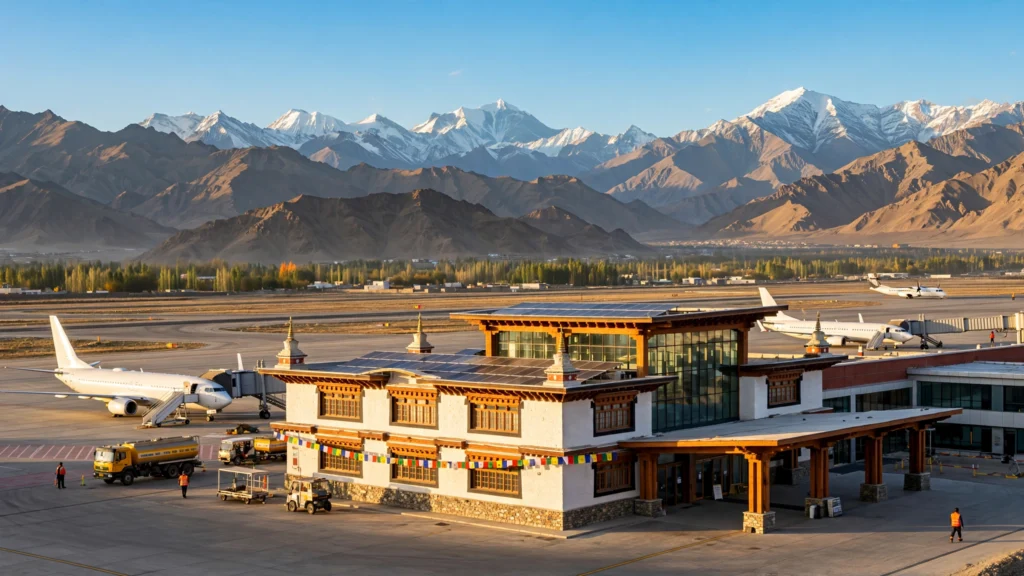
The biggest headline of the day is the new passenger terminal building at Kushok Bakula Rimpochee Airport in Leh, built at a cost of Rs 640 crore. Spread over nearly 23,800 square metres, the modern facility is designed to handle 35 lakh passengers every year, a major capacity leap for one of the world’s highest commercial airports, which sits at 3,256 metres above sea level.
The terminal incorporates geothermal energy systems to improve energy efficiency and cut its carbon footprint, a design choice that reflects Ladakh’s ecologically fragile high-altitude environment. Its architecture blends modern passenger amenities with elements of Ladakh’s traditional cultural heritage.
Union Civil Aviation Minister Ram Mohan Naidu Kinjarapu gave travellers a preview on Wednesday, sharing a video of the terminal’s interiors, check-in facilities and Ladakhi-inspired architecture on social media. “Julley, Ladakh!” he wrote, announcing the inauguration.
298-km strategic road through Zanskar
The Prime Minister also dedicated the 298-km Nimmu-Padum-Darcha Road, built by the Border Roads Organisation. The corridor connects Nimmu in Leh with Darcha in Himachal Pradesh through the remote Zanskar Valley, giving Ladakh a third route alongside the existing Srinagar-Leh and Manali-Leh highways.
The road crosses some of the most demanding Himalayan terrain, including the high-altitude Shinkun La Pass. Officials say it will significantly improve operational mobility and logistical support for the Armed Forces in the strategically sensitive region, while giving residents of Zanskar better access to healthcare, education, markets and essential services.
Hydropower and transmission projects
To strengthen Ladakh’s energy security, the Prime Minister inaugurated the 9 MW Hanu Small Hydroelectric Project along with the 66 kV double-circuit Dah-Hanu-Khaltsi transmission line. The two projects will improve power evacuation infrastructure and the reliability of the region’s electricity network, and mark a step towards harnessing Ladakh’s considerable hydropower and renewable energy potential.
India’s first petroglyph conservation park
In a nod to Ladakh’s ancient past, the Prime Minister inaugurated India’s first Petroglyph Conservation Park at Sindhu Ghat in Leh. Ladakh is home to hundreds of prehistoric rock art sites with carvings of wildlife, human figures and symbolic designs that record thousands of years of human history.
The conservation park will create a dedicated space to protect these vulnerable archaeological remains, raise public awareness and encourage responsible heritage tourism around them.
Water security for 40 villages
The package also includes 40 water bodies developed across 40 villages under Project Amrit Him Sarovar. Agriculture in Ladakh faces a sharp seasonal imbalance: farmers struggle with water scarcity during the crucial sowing season even as snowmelt and glacial runoff flow freely at other times of the year.
The project aims to conserve water when it is available and make it accessible when it is needed, supporting irrigation and strengthening long-term water security for farming communities.
What it means for Ladakh
Together, the five projects touch the pillars of Ladakh’s economy and daily life:
- Connectivity: The new terminal and the Zanskar road open the region to more tourists, trade and supplies.
- Security: A third axis to Ladakh adds resilience to military logistics in a sensitive border zone.
- Energy: New hydropower and transmission lines bring steadier electricity to a harsh climate.
- Heritage and farming: Rock-art conservation and village water bodies protect both culture and livelihoods.
The Prime Minister said the projects reflect the Centre’s continued focus on building modern infrastructure in the Union Territory while respecting its unique ecology and culture.
FAQs
What did PM Modi inaugurate in Ladakh on 15 October?
The Prime Minister inaugurated five projects worth around Rs 3,350 crore: the new Leh airport terminal, the 298-km Nimmu-Padum-Darcha Road, the 9 MW Hanu hydroelectric project with a transmission line, India’s first Petroglyph Conservation Park, and 40 water bodies under Project Amrit Him Sarovar.
How much did the new Leh airport terminal cost?
The terminal cost Rs 640 crore, covers nearly 23,800 square metres and can handle 35 lakh passengers a year.
Why is the Nimmu-Padum-Darcha Road important?
It gives Ladakh a third road link besides the Srinagar-Leh and Manali-Leh highways, improving civilian connectivity for Zanskar residents and strengthening logistical support for the Armed Forces.
What is the Petroglyph Conservation Park in Leh?
It is India’s first dedicated park for preserving prehistoric rock art, located at Sindhu Ghat in Leh, aimed at protecting Ladakh’s ancient carvings and promoting heritage tourism.
With the projects now open to the public, attention turns to how quickly they translate into better travel, steadier power and stronger livelihoods across the cold desert. For Ladakh’s residents and the soldiers posted in its harsh terrain, today marked a significant step forward.