India breaks into the top three on global healthcare confidence
India has climbed to the third spot globally on the Ipsos Quality of Care Perception Index, a finding from the newly released Ipsos Health Service Report 2026 that puts the country’s healthcare system ahead of several advanced economies on public confidence, access and trust. India sits just behind Malaysia on the index and shares the top tier with Singapore, a showing that will surprise even many Indians who are used to complaining about the system.
The survey, conducted across 32 countries between July 13 and August 7 this year, asked more than 22,500 adults how they rate the healthcare available to them. Nearly seven in ten Indians, 68 percent, rated the quality of healthcare positively, and 64 percent said they trust the system to give them the best treatment when they need it. At a time when many developed countries are seeing public confidence slide, India is among the most upbeat markets in the world on healthcare quality.
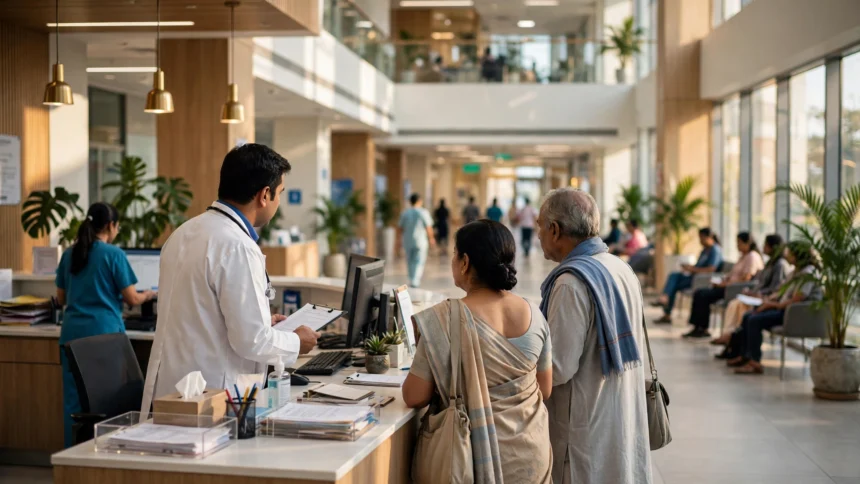
Easiest place in the world to see a doctor
The most striking number in the report concerns access. India recorded the highest score among all 32 countries surveyed for ease of getting a doctor’s appointment, with 73 percent of respondents saying they can secure care when they need it. Access goes beyond doctors: 81 percent reported easy access to pharmacies, cementing India’s position as one of the most accessible healthcare markets on the planet.

This stands in sharp contrast to the global picture, where waiting times have emerged as the single biggest healthcare-system worry. In many Western markets, the conversation is dominated by months-long waiting lists, overstretched hospitals and staff shortages. Indians, the survey finds, are far more likely to see accessibility as a strength of their system rather than a weakness.
Optimism about the future runs equally strong. More than half of Indians, 54 percent, expect healthcare quality in their local area to improve in the coming years, compared with a global average of just 31 percent. India ranks among the most optimistic countries surveyed, reflecting a public that believes the system is moving in the right direction.
The affordability shadow over the good news
But the report also draws attention to a fault line that runs beneath the confidence: cost. Forty-two percent of Indians identified the cost of accessing treatment as a major challenge for the healthcare system, and a striking 74 percent agreed that many people in India simply cannot afford good healthcare. That is the issue which, according to Ipsos, could define the next phase of healthcare development in the country.
The tension is visible in everyday behaviour. While 59 percent view the system as overstretched and 62 percent report long waits for appointments, 70 percent say people often rely on over-the-counter medicines or home remedies without consulting a professional.
Gauri Pathak, Chief Commercial Officer and Healthcare Research Lead at Ipsos India, said the findings point to a clear path forward: build on the strengths of trust and access while improving affordability, addressing concerns around safety and cleanliness, and meeting rising expectations on prevention, mental wellbeing and chronic disease management.
What worries Indians most about their health
The survey also mapped the health priorities weighing on Indians’ minds. Diabetes emerged as the top concern, named by 40 percent of respondents, followed by mental health at 37 percent, stress at 33 percent, obesity at 20 percent and drug abuse at 14 percent. The list underscores the growing weight of non-communicable diseases and psychological wellbeing in the country’s public health conversation.
That engagement with health is getting more active. Three in four Indians, 76 percent, said they frequently think about their mental wellbeing, and 78 percent support mandatory vaccination against serious infectious diseases. The public is thinking about prevention and overall wellbeing more than ever before, even as it worries about the system’s capacity to keep up.
What this means for the road ahead
Taken together, the report sketches an India that is confident about its doctors and hospitals in a way few other countries are, yet anxious about whether ordinary people can afford them. The next chapter of Indian healthcare will not be about convincing people the system works. It will be about making sure everyone can pay for it.
FAQs
What is the Ipsos Quality of Care Perception Index?
It is a measure from the Ipsos Health Service Report 2026 that ranks 32 countries on how their citizens perceive the quality of healthcare, covering public confidence, access and trust.
Where does India rank on the index?
India ranks third globally, behind Malaysia and alongside Singapore, ahead of many advanced economies.
How many Indians trust their healthcare system?
According to the survey, 68 percent of Indians rate healthcare quality positively and 64 percent trust the system to provide the best treatment when needed.
What is India’s biggest healthcare worry according to the report?
Affordability. Forty-two percent cite the cost of treatment as a major challenge, and 74 percent agree many Indians cannot afford good healthcare.
Which health issues concern Indians most?
Diabetes (40 percent) tops the list, followed by mental health (37 percent), stress (33 percent), obesity (20 percent) and drug abuse (14 percent).
Methodology note: The Ipsos Health Service Report 2026 surveyed 22,528 adults across 32 countries on the Ipsos Global Advisor online platform between July 13 and August 7, 2026. India’s sample of around 1,000 adults, like several other emerging markets, skews more urban and connected than the general population.