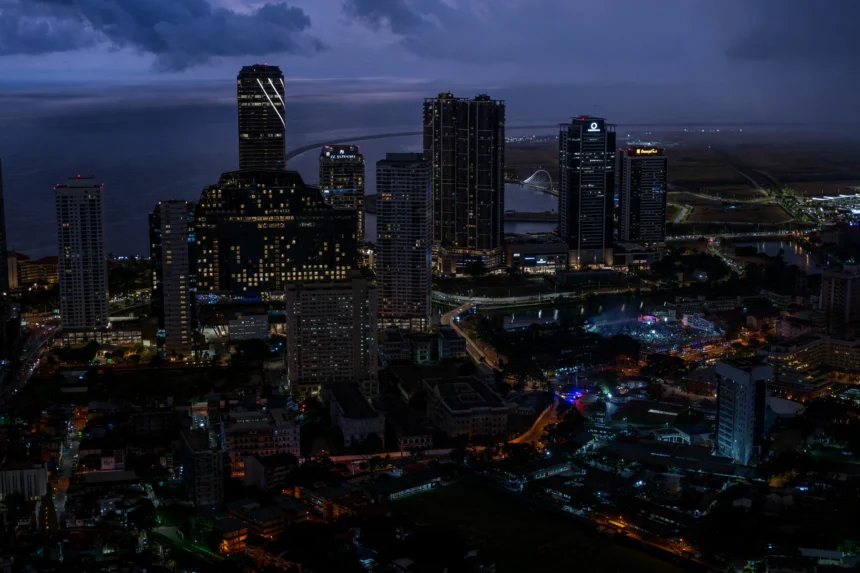
The lights went out across an entire country on Saturday, and the reason sounds almost impossible: Sri Lanka had too much electricity. A sunny weekend afternoon pushed the island’s rooftop solar panels to generate more power than the national grid could absorb, and the whole system collapsed, leaving 22 million people in the dark.
Power returned stage by stage by Saturday evening, according to the National System Operator, but the blackout has turned into a cautionary tale about what happens when clean energy grows faster than the grid built to carry it.
What exactly happened on Saturday
The interruption struck at around 11.45 a.m. on October 17, when what officials described as instability in the transmission network caused a total failure of the country’s power grid. Water supplies, internet services and mobile connectivity went down with it, and the water supply agency had to warn residents against wasting stored water while the cuts continued.
For several hours there was no clear timeline for restoration. Energy Minister Anura Karunathilaka said authorities hoped to bring supplies back “stage by stage” and made an unusual public appeal: every rooftop solar system owner should disconnect their system until further instructions, so engineers could stabilise the grid.
By evening the grid was back on its feet in most areas, and the National System Operator later confirmed the transmission system was fully restored islandwide.
Too much of a good thing
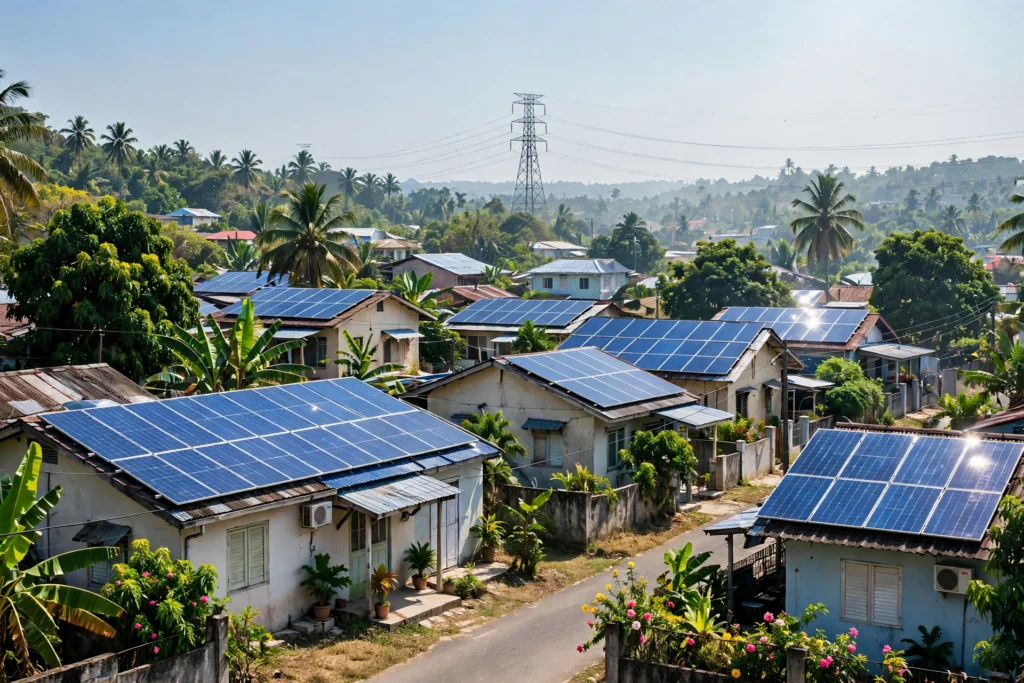
Sri Lanka’s solar numbers tell the story of the collision. The island has just over 3,000 megawatts of installed solar capacity, while daytime electricity demand sits between 2,000 and 2,500 megawatts. On a bright, sunny weekend day when offices and factories are shut, homes churn out power, demand is low, and the surplus has nowhere to go.
The surge has been fuelled by generous tax concessions that encourage consumers to put panels on their roofs and sell their surplus electricity back to the grid. The policy worked almost too well: generation now regularly outruns consumption, creating imbalances the state utility is struggling to manage.
This is not the first time. In February 2025, the entire grid shut down under nearly identical circumstances, a sunny Sunday with solar output exceeding demand, and it took more than six hours to restore supplies.
What else may have contributed
- Weekend demand dip: Saturday brought low industrial and commercial load, exactly when rooftop generation peaked.
- Possible plant fault: Officials said a failure at a hydropower station in the central hill country, detected a day earlier, could also have contributed.
- Grid age: Engineers point to limited storage and frequency-control tools in a transmission network built for one-way power flows.
The bigger plan, and the problem with it
The irony is that Sri Lanka wants much more solar, not less. The government aims to raise solar capacity to nearly 4,400 megawatts within three years, a jump of about 388 per cent from 2024 levels. If the grid could not handle this weekend, that target will need storage, smarter inverters and tougher connection rules to survive its own ambition.
Energy economists watching the episode say the lesson applies far beyond the island. Every country racing to add rooftop solar eventually meets the same physics: too much midday power can destabilise a grid faster than too little. Battery storage, time-of-use pricing and automatic curtailment are the usual fixes, but they cost money and take time to install.
Why India should pay attention
India is in the middle of its own rooftop solar sprint, with the PM Surya Ghar Muft Bijli Yojana pushing subsidised panels onto crores of rooftops and net-metering letting households sell power back to local utilities. The technology, the incentives and the weekend generation pattern are strikingly similar to Sri Lanka’s.
India’s grid is larger and more interconnected, which buys it headroom, but the principle travels: as rooftop capacity climbs toward the tens of gigawatts, discoms will need grid-scale batteries, flexible demand and smart inverters, not just more panels. Saturday’s blackout is a preview of what grid planners call the duck curve, and it is coming for every solar-heavy country.
FAQs
How long did the Sri Lanka blackout last?
The outage began around 11.45 a.m. on October 17 and was restored stage by stage through the afternoon and evening, a blackout of several hours for most of the island.
Was solar power really the cause?
Officials said the exact cause is still under investigation, but engineers strongly suspect an imbalance caused by high solar generation against muted weekend demand, possibly combined with a hydropower station fault.
Has this happened before?
Yes. In February 2025 Sri Lanka’s entire grid shut down in similar circumstances, also on a sunny day with excess solar output, and restoration took over six hours.
What did the government ask residents to do?
The energy minister appealed to all rooftop solar owners to temporarily disconnect their systems so engineers could stabilise the national grid during restoration.
What are the lessons for India?
India’s own rooftop solar push faces the same physics: surging midday generation against a dated grid. Storage, smart inverters and flexible tariffs are the long-term answers.
Sri Lanka’s lights are back on, but the question the weekend raised will not switch off so easily: can grids keep up with the clean-energy rush they were built to enable? The whole island just got its answer for one Saturday afternoon.