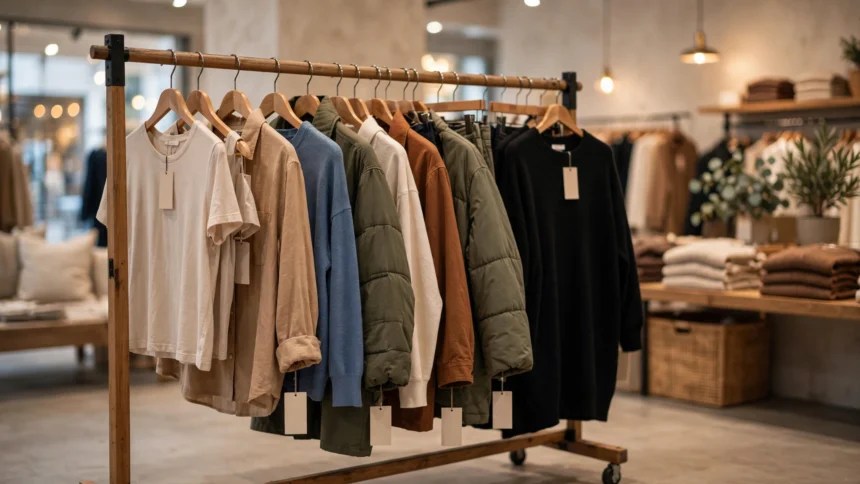
Something strange is happening inside the world’s biggest clothing stores. The XL rack is getting thinner, the 3XL and 4XL tags are quietly disappearing, and nobody in the industry will quite say why out loud. The answer, increasingly, is sitting in a medicine cabinet: weight-loss drugs like Ozempic and Wegovy are changing the bodies that walk through store doors, and fashion retailers are scrambling to keep up.
Walk through a clothing store in Delhi or Mumbai and you will see the opposite story playing out. Here, brands say their plus-size sections are among their fastest-selling shelves. The same drugs shrinking size charts in New York are apparently not yet rewriting the wardrobe in India. Fashion, it turns out, is now a tale of two appetites.
The shrinking size chart
In the United States, the changes have been hard to miss. H&M has reduced its extended-size offering and discontinued sizes 3XL and 4XL, saying it saw lower demand for them. Mango has cut back on new dresses in sizes 16 to 20. Anthropologie’s plus-size availability has thinned out, Loft shut its plus-size range altogether, Old Navy scaled back extended sizing, and Torrid has closed nearly a third of its stores.
The timing is not a coincidence. As of May 2026, roughly one in five American households, 21 percent, includes a current user of a GLP-1 weight-loss drug, according to PwC’s analysis of Numerator data. That is up from just 9 percent in January 2025. In the United Kingdom, adoption sits around 9 percent but is projected to grow fast. Millions of people are moving down clothing sizes in the space of a year, and retailers are adjusting their buying plans accordingly.
An H&M spokesperson told the Financial Express the brand constantly adapts its assortment to actual customer demand and declined to speculate on what is behind the shift. That careful phrasing is itself telling. No retailer wants to say out loud that its best customers are literally getting smaller.
India’s racks tell a different story
Ask Indian brands and you hear the mirror image. Companies report strong, sustained demand for plus-size clothing and growing sales across extended sizes. Where Western retailers are trimming the top end of their charts, Indian labels are racing to stock more of it.
There are good reasons for the split. GLP-1 penetration in India is far lower, these drugs are expensive here, and they are largely still a medical product rather than a lifestyle trend. Add to that a very different cultural relationship with body size, and a market where organised plus-size retail is still catching up to demand, and the result is a boom rather than a bust at the larger end of the rack.
Indian shoppers have complained for years that decent plus-size options were scarce. Brands that fixed that, from homegrown labels to large value retailers, found waiting demand. The West’s problem is overstock at the top of the chart; India’s is understock.
What this means for your wardrobe
If you wear larger sizes, the message depends on where you shop. In international fast-fashion chains, choice at the top end may keep narrowing, so stock up on the fits you love when you see them. In India, the trend favours you: more brands are investing in better plus-size fits, wider size runs and online-only extended ranges.
A few practical moves for shoppers:
- Try before you trust the label: size charts vary wildly between brands. A size that fits in one store can be two sizes off in another, so measure and check each brand’s chart.
- Watch the online shelves: several brands keep their most complete extended-size ranges online, with wider selections than what fits on store floors.
- Buy the staples now: if an international brand shrinks its size run later, good basics in your size get harder to find. Restock favourites when they are available.
- Support the plus-size specialists: brands built around inclusive sizing usually keep their full ranges even when fashion giants trim theirs.
A fashion divide worth watching
The bigger question is how long the two stories stay apart. If GLP-1 drugs become cheaper and more widely used in India, the same pressure on size charts could arrive here too. On the other hand, India’s brands have discovered that serving this customer is genuinely good business, and that insight does not vanish with a pill.
For now, though, the rack tells the truth: in the West, the fashion industry is quietly downsizing its sizing, and in India, it is still learning how to supersize it.
FAQs
Why are brands reducing plus-size ranges in the West?
Retailers say they are following customer demand. With GLP-1 weight-loss drugs moving millions of consumers into smaller sizes, brands like H&M have discontinued sizes such as 3XL and 4XL, and others like Mango and Anthropologie have trimmed their extended offerings.
Is India’s plus-size market shrinking too?
No. Indian brands report strong and growing demand for plus-size clothing across extended sizes, driven by lower GLP-1 adoption here and a long history of undersupply in larger sizes.
How many Americans now use GLP-1 drugs?
About 21 percent of US households include a current GLP-1 user as of May 2026, up from 9 percent in January 2025, according to PwC’s analysis of Numerator data.
Should I change my size when buying online?
Always check the specific brand’s size chart. Sizing varies widely between labels, and international brands in particular are shifting their ranges, so your usual size may not fit the way it used to.
Will GLP-1 drugs eventually reshape Indian fashion too?
Possibly, if the drugs become cheaper and widely used. For now, Indian brands are investing in wider size ranges because plus-size demand is strong and profitable.
Keep an eye on this story. The rack at your favourite store may tell you more about global health trends than any medical journal.