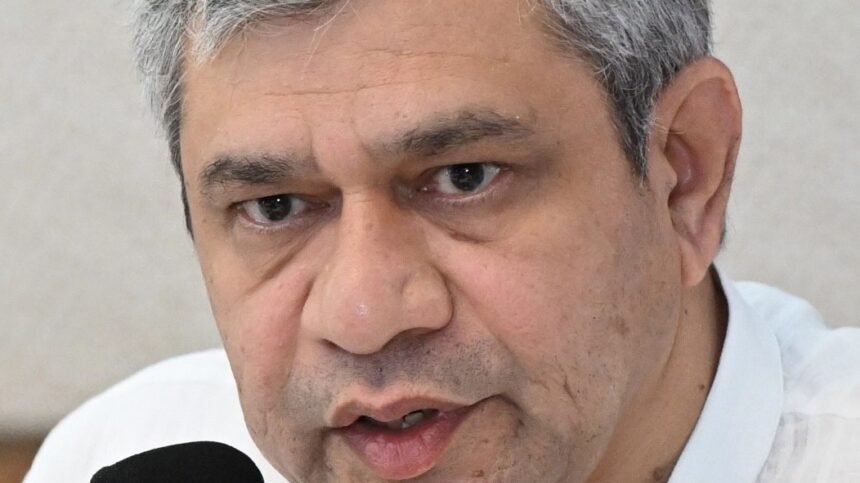
New Delhi is about to start one of the most important technology conversations India has had in years. Union Electronics and Information Technology Minister Ashwini Vaishnaw said on Friday that the government will release a consultation paper on artificial intelligence law in the coming weeks, opening the door for citizens, experts and companies to shape how AI is governed in the country.
Speaking at the NDTV World Summit 2026 in New Delhi, Vaishnaw said the paper is already being drafted and will seek inputs from society, citizens, industry and other stakeholders before any legislation is framed.
What Vaishnaw announced
Vaishnaw put it plainly. He said the risks from AI have now crossed a threshold where a law and new regulations are needed, and that those harms can be regulated. At the same time, he stressed that the consultation paper will gather views from across society before any final framework takes shape.
A consultation paper is not a law. It is a draft set of ideas put out for public feedback before the government moves toward legislation.
Vaishnaw also said the countries home to the top three or four AI ecosystems need to work together on fundamental principles, since AI harms do not stop at national borders.
Why the timing matters now
The announcement follows an earlier signal from the minister on October 8, when he said the government would release a consultation paper on AI regulation within a month. That paper was expected to focus on AI safety, human-first principles and the growing problem of deepfakes.
Deepfakes have become a central worry. Realistic fake videos and audio can spread false narratives, lure people into scams and damage reputations before the truth catches up. Vaishnaw has previously argued that people believe what they see, and a false video can set a completely wrong narrative in motion. That is why the government is pushing what it calls a techno-legal solution: technology safeguards combined with legal accountability, with industry taking primary responsibility for protecting users.
AI adoption in India has moved very fast, and Vaishnaw noted that adoption has been aggressive, which is why the government wants inputs from the people actually using the technology.

What the consultation is likely to cover
While the final paper is still being drafted, the minister’s recent remarks point to several themes likely to feature prominently:
- Safety and harm prevention: how to identify and limit AI-driven harms, from misinformation to cyberattacks, before they reach users.
- Deepfakes and accountability: who is responsible when synthetic media misleads the public, and what platforms must do to stop it.
- Human-first principles: keeping human oversight at the centre, so AI supports people rather than replacing their judgment silently.
- Skilling and inclusion: making sure no one is left behind as AI changes jobs, education and access to services.
- Industry responsibility: asking AI companies to lead in building safeguards, rather than waiting for the government to catch every problem.
A student, a startup founder and a parent worried about deepfake videos will all see different risks, and the paper is meant to collect those different views.
What it means for users and startups
For most people, an AI law will not change how they use a chatbot tomorrow. But over time, it could change what protections sit behind the tools they already use: clearer labels on AI-generated content, faster action against fake videos, and clearer accountability when an AI system causes harm.
For startups, the consultation is a chance to argue for practical rules. At the same event, Vaishnaw also said Indian-designed, Indian-made mobile phone brands and the first made-in-India chip will be ready by October 2028.
What happens next
The immediate next step is publication of the consultation paper itself, expected in the coming weeks. Once it is out, there will be a window for written feedback from citizens, civil society, researchers and companies. Only after that feedback is reviewed is the government likely to move toward drafting actual legislation.
The announcement sets the timetable, but the paper will set the terms, and anyone who cares about how AI is used in India will have a formal chance to be heard when it lands.
Frequently asked questions
Has India passed an AI law?
No. The government has announced a consultation paper, a draft for public feedback. No AI legislation has been finalised yet.
When will the consultation paper be released?
Minister Ashwini Vaishnaw said it will be issued in the coming weeks. The paper is currently being drafted.
Who can give feedback?
The minister said inputs will be sought from society, citizens, industry and other stakeholders, so the consultation is meant to be open, not limited to experts.
What issues will the paper focus on?
Based on the minister’s remarks, expect a focus on AI safety, deepfakes, human-first principles, skilling and industry responsibility, though the final scope will be clear only when the paper is published.
Does this affect how I use AI tools today?
Not immediately. Any rules that follow the consultation will take time to draft and pass, but they could eventually shape safety standards, content labelling and accountability for AI products in India.
With a consultation paper now weeks away, India is moving from talking about AI risks to writing down how it plans to deal with them.