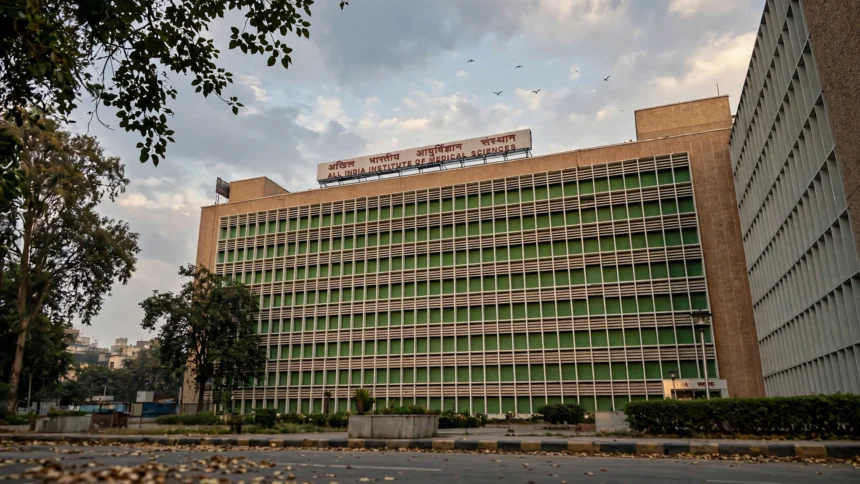
India may be on the verge of a sharp jump in how well it understands childhood cancer. Speaking in Mohali on Saturday, October 24, AIIMS New Delhi professor Sameer Bakhshi said the quality and quantity of information on childhood cancer survival in the country could improve dramatically over the next five years, after a decade of rapid progress in research.
Bakhshi, who heads the Department of Medical Oncology at AIIMS, New Delhi, was addressing the 10th Pediatric Haematology Oncology Support Services Conference, PHOSSCON 2026. His message was simple: for years, doctors and policymakers worked with patchy data. That picture is now changing fast.
“Of the information we have today, three-fourths has come in the last 10 years,” Bakhshi said. “On a graph, if the information for the last three decades is treated as almost a flat line, it could shoot up sharply in the next five years.”
What the AIIMS study found
The optimism rests on a landmark piece of work led by Bakhshi’s team at AIIMS. The study pulled together three decades of Indian evidence on childhood cancer survival, covering 182 studies involving 22,886 children. It is one of the most comprehensive looks yet at what India actually knows about how children with cancer fare after diagnosis and treatment.
Until recently, that evidence base was thin, with data scattered across centres and time periods. The new consolidated picture gives researchers a baseline they did not have before.
Poonam Bagai, organising chair of all ten editions of PHOSSCON and a co-author of the study, said the findings create the evidence needed to track progress and direct resources where children need them most.
Why the data gap matters so much
For families, a cancer diagnosis in a child is already frightening enough. For the health system, the lack of good data has been a second, quieter problem: if survival is not measured consistently, a hospital doing well and one struggling can look the same on paper.
- It shows which cancers have the best and worst outcomes, so treatment and follow-up can be targeted.
- It reveals where children are diagnosed late, which is often the difference between a curable cancer and a fatal one.
- It helps states plan services, from paediatric oncology beds to trained nurses and support for families who travel for treatment.
- It lets India compare its progress honestly against the global goal for 2030.
Better data does not cure cancer by itself, but it tells doctors and governments where to push.
The 2030 target: survival above 60 percent
The work feeds directly into a global commitment. Under the UNGA 80 resolution, countries are aiming for survival of more than 60 percent for children with cancer by 2030. For India, reaching that mark depends on two things happening together: more children getting diagnosed early and treated at equipped centres, and the data to prove how far the country has come.
Bakhshi’s argument is that the second half of that equation is finally catching up. Three-quarters of today’s information has arrived in just the last ten years, suggesting the research system has reached a tipping point.
Punjab’s example takes centre stage
The conference, a two-day event held at the Indian Institute of Science Education and Research in Mohali, SAS Nagar, was aligned with the Punjab government’s objectives on childhood cancer care. Punjab’s integrated childhood cancer care framework was discussed as an example of how a state can bring different parts of the system together, from early detection to treatment and follow-up support.
The idea is relevant well beyond Punjab, since childhood cancer care spans diagnosis, treatment, nutrition, schooling during treatment and long-term follow-up. A framework linking those pieces, rather than leaving families to navigate them alone, is a model other states will watch.
What this means for families right now
None of this changes a diagnosis overnight, and experts at the conference were careful not to overpromise. What it does mean is that parents, doctors and patient groups will increasingly have real numbers to work with: where outcomes are improving, and where support still falls short.
For families in treatment today, the practical advice is unchanged: seek a centre experienced in childhood cancers, ask about the full treatment and follow-up plan, and use the counselling and financial guidance hospitals and patient groups offer.
India spent thirty years building a thin record on childhood cancer survival. The last ten years changed that. If the next five go as Bakhshi expects, the country will finally see, clearly and in detail, how its children are doing, and what remains to be done to reach survival above 60 percent by 2030.
FAQs
What did the AIIMS expert actually predict?
Professor Sameer Bakhshi said data on childhood cancer survival in India could improve sharply in the next five years.
What was the AIIMS study based on?
Three decades of Indian evidence across 182 studies involving 22,886 children.
What is the 2030 target?
Under the UNGA 80 resolution, survival of more than 60 percent for children with cancer by 2030.
Where and when was this announced?
At PHOSSCON 2026 in Mohali on Saturday, October 24.
Does better data mean better treatment?
Not by itself, but it helps spot gaps, plan services and measure whether care is improving.
India’s childhood cancer story is moving from guesswork to evidence. That shift, experts say, could be the quiet breakthrough that helps save more young lives in the years ahead.