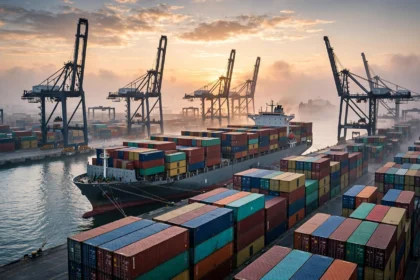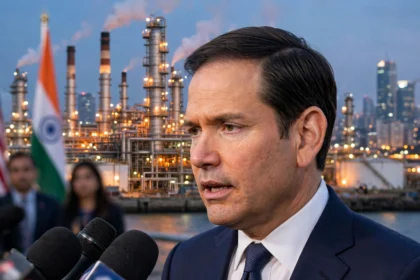
The world’s two largest economies have stepped back from the edge of a fresh tariff war. After two days of talks in Kuala Lumpur, the United States and China have agreed a framework for a trade deal, and the leaders of both countries are now expected to give it the final shape when they meet in South Korea this Thursday.
US Treasury Secretary Scott Bessent described the outcome as a substantial agreement. He said he does not expect the threatened 100 per cent additional tariff on Chinese goods to go ahead, and he expects some reprieve on the rare earth export controls Beijing had discussed.
The framework is not yet a signed deal. Chinese negotiators have called it a preliminary consensus that still needs internal approval on both sides, and the final terms will be decided by US President Donald Trump and Chinese President Xi Jinping. That makes Thursday’s meeting the real test.
What the framework covers
The talks, held on the sidelines of the ASEAN summit in Kuala Lumpur, brought together Bessent and US Trade Representative Jamieson Greer with Chinese Vice Premier He Lifeng and top trade negotiator Li Chenggang. Four issues dominated the agenda, and the framework touches each of them.
- Tariffs: The US is expected to hold off on steeper tariffs, while both sides look to extend the current tariff truce beyond its November 10 expiry date.
- Rare earths: China is expected to delay its expanded licensing regime for rare earth minerals and magnets by a year, easing a major supply chain worry for electronics, electric vehicle and defence makers.
- Soybeans: China is expected to resume substantial purchases of US soybeans and other farm goods, a lifeline for American farmers who had seen a key market dry up.
- Fentanyl: Curbing the flow of fentanyl into the United States was also on the table, alongside wider efforts to balance the bilateral trade deficit.
Greer said both sides had agreed to pause some punitive actions and had found a path to more US access to rare earths from China. Li said the two sides had reached a preliminary consensus and would now take it through their own approval processes.
Why rare earths matter so much
Rare earths rarely make headlines on their own, but they sit inside products people use every day: smartphones, electric motors, wind turbines and advanced weapons systems. When China, which dominates processing of these minerals, tightens export controls, manufacturers everywhere start hunting for alternative supplies and paying more for certainty.
A one year delay does not solve that dependence, but it buys time for factories to plan orders and avoid a scramble that pushes up costs.
What it means for India
India is not a party to this framework, but it will feel its effects. Indian electronics and electric vehicle firms share the same supply chains that depend on rare earths and other Chinese inputs, so any easing reduces one source of cost and delay.
Last week, the Nifty fell 2.36 per cent for the week, while the midcap index dropped 5.6 per cent and the smallcap index fell 7.3 per cent, in a week shaped by high crude prices and global selling. Brent crude breached 117 dollars a barrel, keeping India’s import bill and inflation outlook in focus. A US-China thaw does not fix crude prices or foreign fund flows on its own, but it removes one large uncertainty from a market that already has plenty.
What to watch on Thursday
Three questions will decide whether this framework becomes a real turning point or just another pause.
- Do Trump and Xi confirm the tariff pause and the rare earth delay in writing, with dates both sides accept?
- How large and how fast are the renewed Chinese soybean purchases, and what happens to other farm goods?
- Does the truce get a clear new expiry date, or does it stay open ended and fragile?
If the answers are specific, businesses can plan around them. If they stay vague, the relief could fade fast.
FAQs
What did the US and China agree in Kuala Lumpur?
A preliminary trade framework covering a pause on steeper tariffs, a delay in China’s rare earth export controls, renewed Chinese soybean purchases and action on fentanyl. It still needs approval by Trump and Xi.
When do Trump and Xi meet?
The two leaders are scheduled to meet on Thursday on the sidelines of the Asia-Pacific Economic Cooperation summit in South Korea to finalise the terms.
Will the 100 per cent tariff on Chinese goods still happen?
Bessent has said he does not expect it to go ahead under the framework, but the final decision rests with the leaders.
How long will China’s rare earth controls be delayed?
Reports of the framework put the delay at one year, giving manufacturers time to plan supplies.
Does the deal directly involve India?
No, India is not a party to it, but Indian firms and markets are affected through supply chains, commodity prices and global investor sentiment.
The Kuala Lumpur framework has opened a door. Whether Thursday’s meeting walks through it is the story to watch this week.