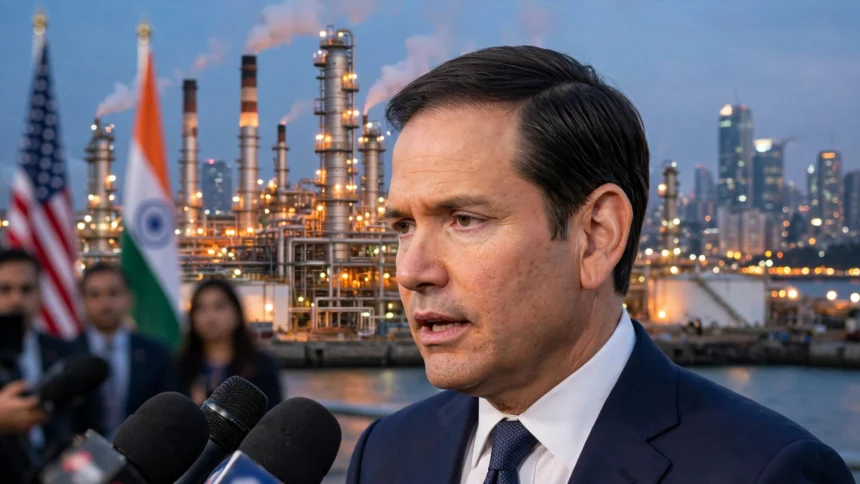
US Secretary of State Marco Rubio lands in Mumbai today for a three-day visit to India, and the timing is no coincidence. Just a day earlier, he told reporters that Washington is “very close” to finalising a trade deal with New Delhi. For Indian exporters living under the shadow of steep US tariffs, this week could bring the clarity they have been waiting for since early 2025.
Rubio will meet External Affairs Minister S Jaishankar in Mumbai on Tuesday. The conversation is expected to cover the proposed bilateral trade pact, energy supplies, defence cooperation and the West Asia crisis. Officials say the relationship is moving in a constructive direction, even as both sides navigate disagreements over tariffs and India’s purchase of Russian crude.
“Very close” to a deal
Speaking in Samarkand, Uzbekistan, on Monday, Rubio was unusually direct. “We’re trying to finalise a trade deal with India right now. We’re very close to doing that,” he said. It is one of the strongest public signals yet from the Trump administration that the negotiations, which began in early 2025 to resolve tariff disputes, eliminate non-tariff barriers and improve market access, are entering their final stretch.
The timing lines up with what New Delhi has been saying too. Last week, Commerce Minister Piyush Goyal said the first tranche of the India-US trade deal has been finalised and is now undergoing legal drafting. India is pushing for tariffs that are more favourable than those offered to competing exporting countries, and the US wants better market access for its goods.
The Russian oil factor
Energy remains the most sensitive part of the relationship. The West Asia crisis has disrupted oil supplies from the Middle East, pushing India to lean more heavily on Russian crude, which comes at a discount. Washington has repeatedly flagged this, but it has also shown flexibility.
A day before his India trip, Rubio noted that President Donald Trump had waived several sanctions linked to Russian fuel sales under the Lindsey O. Graham Sanctioning Russia and Iran Act. The law, now paused for a 60-day review period, would have imposed tariffs of up to 100% on goods from the top five importers of Russian crude and gas, including India and China.
Rubio described India as an important ally whose energy needs must be understood before any tariffs or sanctions are imposed. “Geography is real. For some countries, it’s very difficult to acquire energy from alternative sources,” he said, adding that the President wants to analyse what the sanctions and tariffs would mean for the global and US economies.
Why Jamnagar is on the itinerary
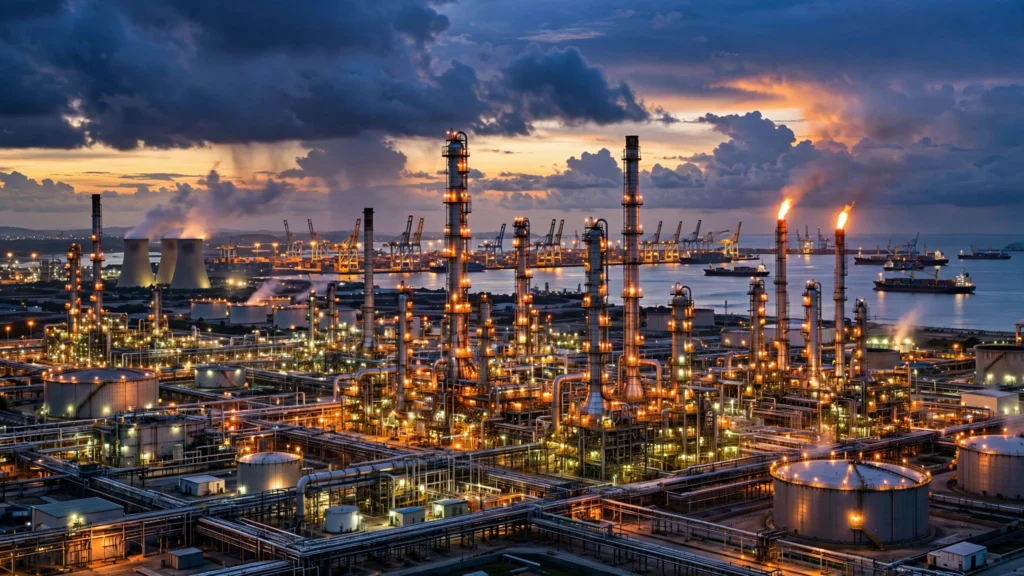
On Wednesday, October 21, Rubio will complete his Mumbai leg and fly to Jamnagar in Gujarat at 10:30 am. The choice of destination is telling: Jamnagar is home to one of the world’s largest oil refineries, a single-site complex that sits at the heart of India’s energy trade.
The stop underlines how central energy cooperation has become to the bilateral relationship. Any conversation about weaning India off Russian crude eventually runs into the hard question of alternative supply, and refineries like Jamnagar are where that conversation becomes concrete.
What the trade deal could mean for India
- Exporters: A deal could lower the tariff wall on Indian goods entering the US, one of India’s largest export markets.
- MSMEs: Better market access terms would help small exporters compete with suppliers from other Asian countries.
- Energy prices: Sanctions waivers linked to the deal could keep crude flows stable, easing pressure on fuel costs at home.
- Investors: A settled trade framework removes a major source of policy uncertainty for businesses planning US-India supply chains.
Frequently Asked Questions
Why is Marco Rubio visiting India now?
Rubio arrives in Mumbai on October 20 for a three-day visit, meeting EAM Jaishankar with the trade deal, energy security, defence and the West Asia crisis on the agenda.
Is the India-US trade deal actually close?
Rubio said on Monday the two sides are “very close” to finalising it, and Piyush Goyal said last week the first tranche has been finalised and is in legal drafting.
What about tariffs over Russian oil?
Trump has waived sanctions under the Lindsey O. Graham Act for a 60-day review. The trade deal talks are expected to factor into the final decision on waivers.
Why is Rubio visiting Jamnagar?
Jamnagar hosts one of the world’s largest oil refineries. The visit on October 21 signals how important energy cooperation is to the partnership.
How long have the trade talks been going on?
Since early 2025, covering tariff disputes, non-tariff barriers and market access on both sides.
Between the trade talks, the sanctions pause and the refinery visit, this is one of the most consequential India-US engagements of the year. The real test will be whether “very close” turns into a signed deal in the weeks ahead. Watch this space.