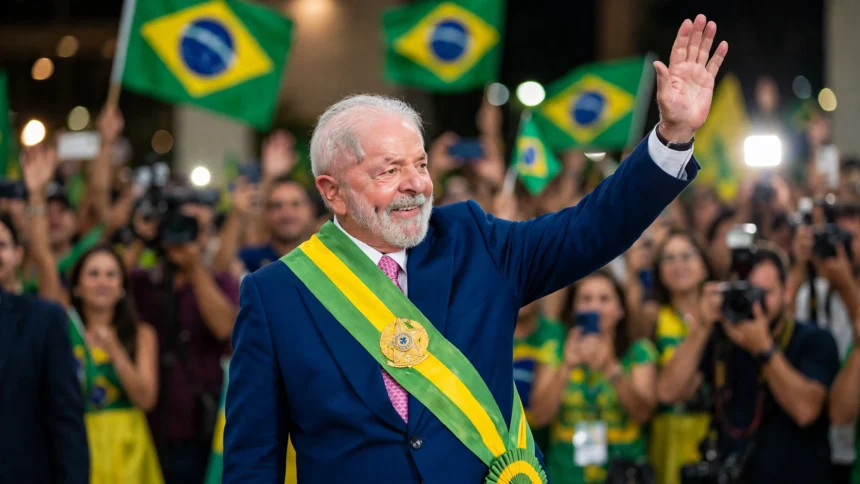
Brazil has delivered one of the most dramatic election results in its modern history. President Luiz Inacio Lula da Silva has won a historic fourth term, defeating Senator Flavio Bolsonaro in a tense presidential runoff held on Sunday, October 25, 2026. The result caps a remarkable comeback for the 80-year-old leftist leader, who trailed his rival in the first round and then overturned the deficit in just three weeks.
With nearly all votes counted, Brazil’s electoral court said Lula took about 51.8 percent of the valid votes, against 48.2 percent for Bolsonaro. The margin was roughly 4.4 million votes. It was a close finish, but a clear one, and it makes Lula the first candidate since Brazil returned to direct presidential elections in 1989 to win the presidency after finishing second in the first round.
A comeback few saw coming
The first round, held on October 4, had pointed the other way. Bolsonaro, the 45-year-old eldest son of former president Jair Bolsonaro, finished ahead with 47.03 percent of the valid votes, against 45.16 percent for Lula. That result gave the conservative campaign momentum and convinced many observers that the runoff was Bolsonaro’s to lose.
Lula’s campaign spent the three weeks between the rounds hammering away at the issues voters said mattered most: the cost of living, crime and corruption. Bolsonaro, meanwhile, promised tougher public security measures and steps to bring food prices down, while leaning heavily on his close relationship with the Trump administration in Washington.
In the end, Lula’s message landed better with the voters who had backed eliminated candidates in the first round. His support held firm in the northeast, his traditional stronghold, and he picked up enough votes in the big southeastern states to tip the balance. Supporters celebrated at the Sao Paulo hotel where Lula watched the count with First Lady Rosangela da Silva, allies and friends.
A contested finish
The final day of voting was anything but smooth. Voting was extended by two hours after both campaigns complained about problems at polling stations. Lula’s campaign pointed to incidents affecting buses that carry voters to polling venues in several states, while Bolsonaro’s campaign cited heavy rain that made it hard for voters to reach polling stations.
Supreme Court Justice Cristiano Zanin granted the extension at around 5 p.m. in Brasilia, just as polls were scheduled to close, and many stations had already shut down. The confusion gave Bolsonaro an opening. Speaking to supporters in Brasilia after Lula’s victory was declared, he said his team would challenge the result.
“It is impossible to recognize the election result given how these events unfolded,” Bolsonaro said. “We will take legal action. We will ask for this election to be annulled.”
Electoral authorities have declared Lula the winner, and the legal challenge now becomes the next test for Brazil’s institutions. His new term begins on January 5, 2027.
What the result means for Brazil and the world
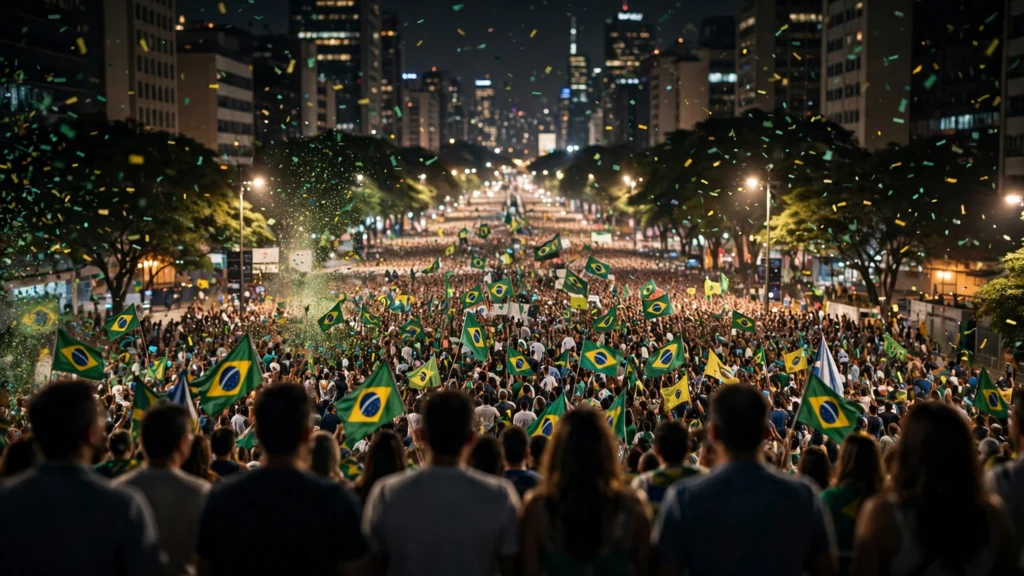
The result breaks a run of conservative victories across Latin America, where Trump-backed or right-leaning candidates have recently won in Bolivia, Chile, Costa Rica, Colombia, Ecuador, Honduras and Peru. Lula’s win shows the left still has real force in the region.
It also changes the equation with Washington. Lula has been a frequent critic of US President Donald Trump, who used steep tariffs on Brazilian imports and sanctions in an effort to shield Jair Bolsonaro from prison after his attempt to hold on to power four years ago. Bolsonaro the younger had promised warmer relations with Trump if elected. Instead, the White House now faces a Brazilian president who has openly accused the US government of intervening in the election on his opponent’s behalf.
For Lula himself, the win is deeply personal. He first ran in 1989, lost three elections before winning in 2002, was re-elected in 2006 and returned to power in 2022. He turns 81 on Tuesday.
In his victory speech, Lula thanked the generosity of the Brazilian people, including young people who he said went to the streets to defend Brazilian democracy.
The hard part starts now
Governing may prove harder than winning. Lula will face a more conservative Congress and limited room for an ambitious agenda, with the cost of living and public security still pressing on voters who gave him only a narrow mandate.
Bolsonaro’s legal challenge will hang over the transition, but for now Brazil’s electoral court has spoken: written off after the first round, Lula is heading back to the Planalto for a fourth time.
FAQs
Who won the Brazil presidential election 2026?
President Luiz Inacio Lula da Silva won the runoff on October 25, 2026, with about 51.8 percent of the valid votes.
Who did Lula defeat?
Senator Flavio Bolsonaro, the eldest son of former president Jair Bolsonaro and an ally of US President Donald Trump.
Why is Lula’s win historic?
He is the first candidate since 1989 to win the presidency after finishing second in the first round, and the first democratically elected Brazilian president to win four terms.
What happened on voting day?
Voting was extended by two hours after transport problems and heavy rain disrupted access to polling stations, a decision Bolsonaro’s campaign is now challenging in court.
When does Lula’s new term begin?
His fourth term is set to begin on January 5, 2027.
The verdict of the ballot box is already history: Lula, at 80, has done what no Brazilian president has done before.