Patna, October 30. It took almost 60 hours of counting and a late twist in the final round before Bihar’s most closely watched Legislative Council result was settled. When the Election Commission announced the winner on Friday, the Rashtriya Janata Dal had a second seat from these eight constituencies, and a stronger voice in the state’s Upper House.
RJD candidate Anil Jha has been declared elected from the Darbhanga Graduates constituency, defeating sitting BJP MLC Sarvesh Kumar. According to the Election Commission statement reported on Friday, Jha secured 25,406 votes against Kumar’s 21,396. The result completes the picture of the biennial elections held on October 23 for four Graduates and four Teachers constituencies, and it changes the arithmetic of the 75-member Bihar Legislative Council.
How Darbhanga turned late
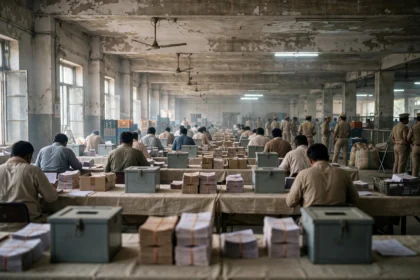
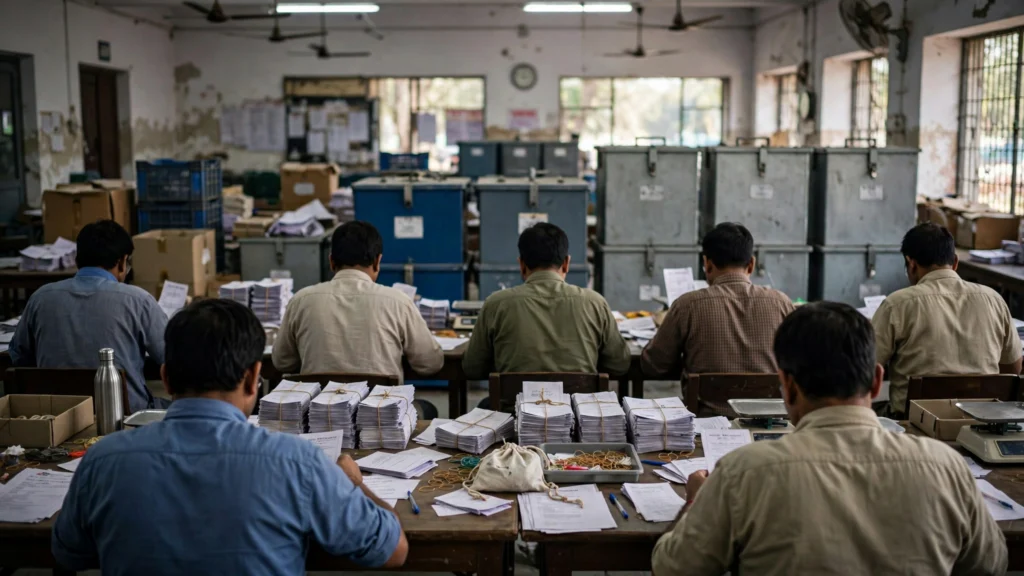
For much of the count, this did not look like an RJD win. Counting began on Tuesday morning, and the Darbhanga Graduates seat, with 40 candidates in the fray, stretched on far longer than most. BJP supporters claimed a day later that the sitting member, whose tenure ends in November, had retained the seat. The RJD disagreed, loudly.
RJD working president Tejashwi Yadav, who is also the Leader of the Opposition in the state Assembly, raised an alarm on social media during the count. He accused the Election Commission of foul play and of trying to engineer a BJP victory, pointing to what he said was around 10 per cent of votes being declared invalid in a process that ran for more than 56 hours. The Commission went ahead with the count, and by late Thursday evening celebrations had already broken out in the RJD camp, even before the formal declaration on Friday.
The mechanics of the turnaround lay in the voting system itself. These Graduates and Teachers seats use the single transferable vote system, under which voters rank candidates in order of preference. When lower-ranked candidates are eliminated, their votes transfer to the next preference on the ballot. In Darbhanga, reports said the elimination of the Jan Suraaj Party candidate, who had emerged third, proved decisive in the final round.
What the final tally looks like
The RJD had held none of the eight seats going into these polls. It now holds two of them, and its overall strength in the Vidhan Parishad has risen to 17. That still leaves it in third place, but the gain matters for a party that suffered a heavy defeat in last year’s Assembly elections.
- BJP: 24 members, still the single largest party, but down after losing Darbhanga Graduates and Patna Teachers.
- JD(U): 20 members, retaining second place. Its candidate retained Patna Graduates for a fourth consecutive term.
- RJD: 17 members, up after winning Darbhanga Graduates and Patna Teachers.
- Jan Suraaj Party: won Darbhanga Teachers, marking its presence in the Council.
- Independents: won the remaining two seats among the eight that went to polls.
The BJP contested four of the eight seats, of which it held three. It lost two, but it did wrest the Tirhut Teachers constituency, where BJP candidate Narendra Prasad Singh defeated CPI MLC Sanjay Kumar Singh. Earlier, RJD candidate Sanjeev Kumar had been declared elected from Patna Teachers, defeating five-term BJP MLC Nawal Kishor Yadav. That result, like Darbhanga, hurt the BJP in a seat it had long held.
Why the result is being read politically
RJD MP Manoj Jha, speaking after the results, described the outcome as a sign of an undercurrent against the ruling coalition. He pointed to the consolidation of the non-BJP and non-JD(U) vote, the RJD’s gains, the emergence of Prashant Kishor’s Jan Suraaj Party, and the success of independent candidates.
Tejashwi Yadav went further, calling the results across the four Teachers and four Graduates constituencies a mandate of the educated society against the NDA. That framing is political, not official, and the BJP will dispute it. But the numbers give the RJD a talking point it did not have a week ago: in seats decided by teachers and graduates, the ruling alliance did not sweep the board.
There is also a narrower lesson from Darbhanga. The BJP failed to win either of the two Darbhanga constituencies, a district that matters to the party not least because Bihar BJP president Sanjay Saraogi represents Darbhanga in the Assembly. Losing a Graduates seat there, after leading for much of the count, will sting.
FAQs
Who won the Darbhanga Graduates MLC seat?
RJD candidate Anil Jha won, defeating sitting BJP MLC Sarvesh Kumar. The Election Commission formally declared him elected on Friday, October 30.
What was the vote margin in Darbhanga Graduates?
As per the Election Commission statement, Jha secured 25,406 votes against Kumar’s 21,396.
What is the RJD’s strength in the Bihar Legislative Council now?
The RJD’s tally has risen to 17 in the 75-member Council, after winning two of the eight seats that went to polls on October 23.
Why did counting take so long?
The Darbhanga Graduates contest had 40 candidates and used the single transferable vote system, with counting stretching over nearly 60 hours before a winner could be declared.
Who are the largest parties in the Council now?
The BJP remains the largest party with 24 members, followed by JD(U) with 20 and the RJD with 17.
The formal declaration closes one of the longest counts in recent Bihar Council elections. The politics it has set off, about teachers, graduates, and who speaks for them, will run for much longer.