Karwa Chauth is no longer just a north Indian shopping story. Fresh sales data released on Friday shows that festive buying around the festival surged far beyond its traditional heartland this year, with direct-to-consumer brands recording a sharp jump in orders in the six days leading up to October 29, when the fast was observed across the country.
According to commerce platform GoKwik, sales across its network rose 64 percent year-on-year in the six days before Karwa Chauth. Orders climbed 60 percent to 3.19 million, up from 2 million in the comparable period last year. The numbers point to a festival that is steadily turning into a pan-India shopping occasion, driven by jewellery, beauty and ethnic wear.
GoKwik works with more than 15,000 direct-to-consumer brands, handling checkout, shipping, WhatsApp commerce and performance marketing for them. Its analysis covered overall network transactions during the six-day period, along with a separate subset of products explicitly labelled for Karwa Chauth.
The big shift: growth beyond the north
The most striking part of the data is where the growth came from. Demand for festival-labelled products rose 3.4 times in central India, 2.7 times in western India and 2.3 times in eastern and northeastern India. Southern India grew by about 3 percent, a modest rise but still a sign that the occasion is finding buyers well outside its home turf.
North India, however, remains the engine of Karwa Chauth shopping. Demand there reached 3.9 times last year’s level, and the region’s share of festival-labelled orders actually increased to 62 percent, up from 46 percent a year ago. In other words, the festival is expanding into new markets without losing momentum in its traditional base.
Chirag Taneja, co-founder and chief executive officer of GoKwik, said the occasion’s commercial relevance now extends well beyond its traditional northern heartland, bringing together ritual preparation, dressing and gifting into one concentrated shopping window.
What shoppers actually bought
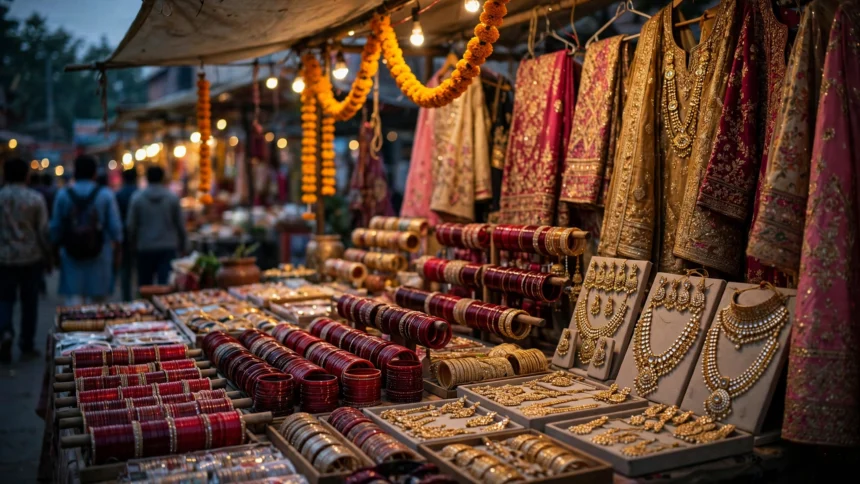
The shopping basket this Karwa Chauth looked exactly like the ritual itself: traditional, detailed and planned in advance. Within northern India, demand for pooja accessories reached 3.2 times the regular-week baseline, while mangalsutra and bridal jewellery rose 2.35 times and jewellery sets 2.27 times. Demand for maang tikka more than doubled.
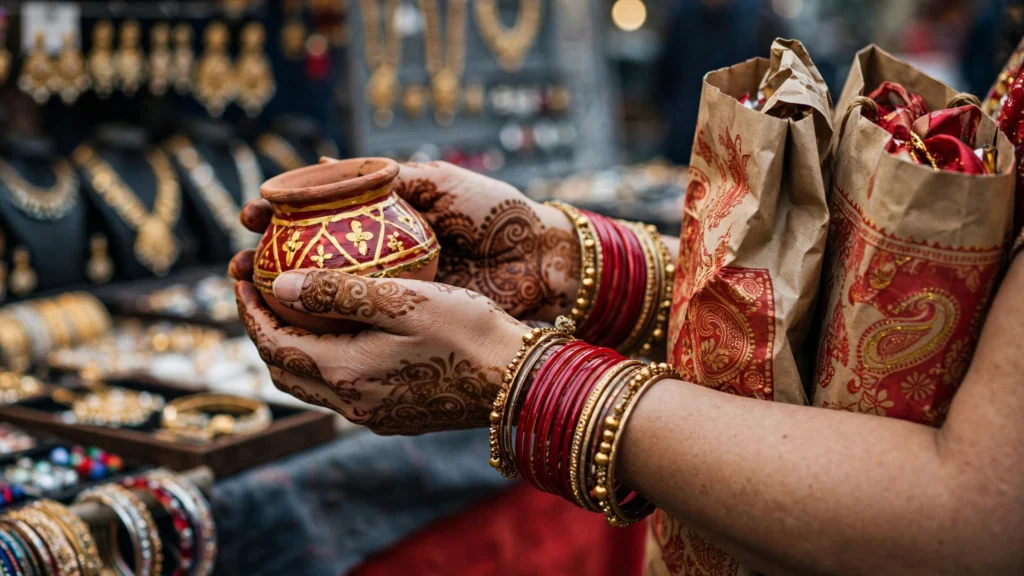
Beauty and clothing followed the same pattern. Face makeup demand increased 76 percent and ethnic wear demand rose 73 percent, reflecting the solah shringar tradition of dressing up for the evening rituals. A separate look at colours in festive fashion purchases showed a preference for red, maroon and magenta, richer shades that are regaining prominence alongside the pastels that have dominated recent festive seasons.
- Pooja accessories: demand 3.2 times the regular-week baseline in north India
- Mangalsutra and bridal jewellery: up 2.35 times the baseline
- Jewellery sets: up 2.27 times the baseline
- Maang tikka: demand more than doubled
- Face makeup: up 76 percent; ethnic wear: up 73 percent
Shoppers paid upfront, and skipped the coupons
Two buying habits stood out in the data. First, shoppers showed a stronger preference for paying upfront: prepaid purchases accounted for 60 percent of orders for products explicitly labelled for Karwa Chauth, compared with 54 percent across GoKwik’s wider network.
Second, discounts mattered less than the occasion itself. Coupon usage on Karwa Chauth purchases fell to 47.4 percent from 51.9 percent a year ago, suggesting that shoppers were buying for the ritual rather than waiting for a deal. For brands, that is a useful signal: festive intent, not discount depth, drove the cart this time.
A wide open opportunity for brands
Despite the surge, the festival remains surprisingly under-served by sellers. Only 37 merchants on GoKwik’s network explicitly marketed products for Karwa Chauth, leaving plenty of room for brands to build dedicated collections and targeted campaigns around the occasion.
GoKwik said jewellery, beauty and ethnic-wear businesses in particular could benefit from occasion-specific assortments, regional targeting and inventory planning aligned with local demand. The regional spread of this year’s data gives them a clear map: central and western India are the fastest-growing new markets, while the north still delivers the biggest volumes.
One note of caution sits inside the numbers. GoKwik itself flagged that year-on-year comparisons partly reflect the expansion of its merchant network, so some of the growth comes from more brands selling on the platform rather than purely from higher demand per brand. Even with that caveat, the direction is clear: Karwa Chauth shopping is growing, and it is growing everywhere.
FAQs
How much did Karwa Chauth shopping grow this year?
Sales on GoKwik’s network rose 64 percent year-on-year in the six days before Karwa Chauth, with orders up 60 percent to 3.19 million.
Which regions saw the fastest growth?
Central India led with demand up 3.4 times, followed by western India at 2.7 times and eastern and northeastern India at 2.3 times. North India remained the largest market.
What sold the most for Karwa Chauth?
Pooja accessories, mangalsutra and bridal jewellery, jewellery sets, maang tikka, face makeup and ethnic wear led demand, along with red, maroon and magenta festive fashion.
When was Karwa Chauth observed in 2026?
Karwa Chauth fell on Thursday, October 29, 2026, with the traditional fast ending at moonrise.
Karwa Chauth 2026 may be over, but the shopping story it leaves behind is one brands will study well into the wedding season: a ritual rooted in the north, now ringing tills across the country.