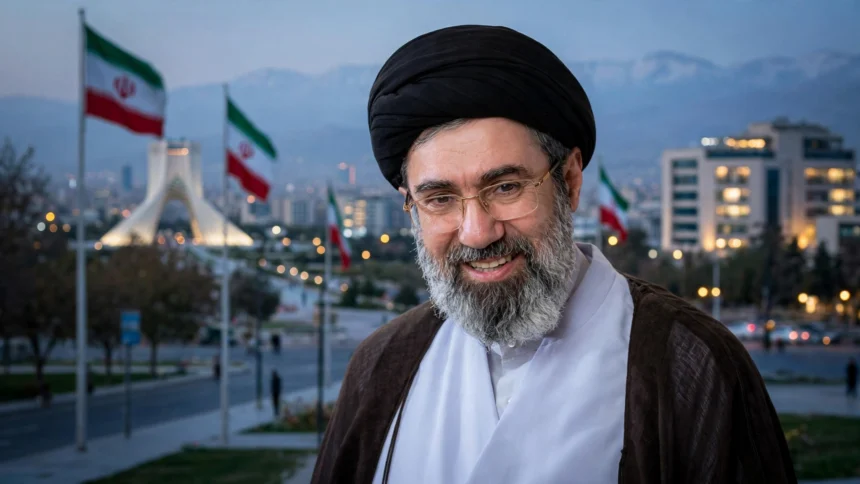
Iran’s Supreme Leader Ayatollah Mojtaba Khamenei warned the United States and Israel on Saturday, October 31, against returning to war, telling his top military commanders that any fresh attack would draw an immediate response with no geographic limits. The warning, issued in a written statement posted on his website, is his sharpest public message since he took over Iran’s leadership in March, and it comes at a moment when diplomacy and threats are running side by side.
“If the enemies once again launch military or terrorist attacks, it is the armed forces of the Islamic Republic and the Iranian nation that will determine the time and conditions for ending them,” the statement said. In the same message, Khamenei ordered commanders to ensure that “any level or type of threat must be met with an immediate, impactful and geographically unrestricted response.”
The remarks were made during a reported meeting with Iran’s senior military leadership, including armed forces chief of staff Ali Abdollahi, army chief Amir Hatami and Revolutionary Guards commander Ahmad Vahidi. It was the first reported meeting between Khamenei and the country’s top commanders since he became supreme leader. Khamenei has not been seen in public since he succeeded his father.
What Tehran ordered its military to do
Beyond the warning itself, the statement carried concrete instructions. Khamenei ordered the armed forces to update their target list to include “all types of tangible and intangible assets belonging to the American-Zionist enemy,” a phrase Tehran uses for the United States and Israel. He also directed commanders to keep combat readiness high, speed up ammunition and weapons production, and strengthen military intelligence and indigenous defence capabilities.
The language is deliberately broad. By refusing to limit retaliation geographically, Tehran is signalling that a renewed conflict would not stay confined to the battlefield where it started. Iranian officials have made the same point in blunter terms in recent days. Army spokesman Brigadier General Mohammad Akraminia warned that if US President Donald Trump launched another operation alongside Israel, the flames of war would engulf a much wider geographical area. Foreign Minister Abbas Araghchi, meanwhile, warned of an “earth-shattering blow” from Iran’s armed forces and said there would no longer be any red lines.
Why the warning comes now
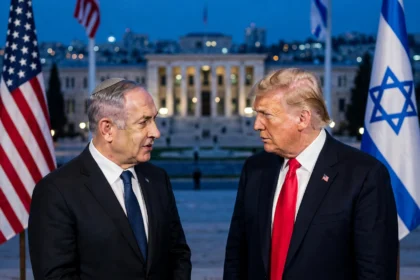
The timing is tied to threats from the other side. Trump has warned of possible fresh military strikes after the US midterm elections on Tuesday, saying last weekend that he was weighing whether to “finish them off.” Israeli Prime Minister Benjamin Netanyahu has described the situation as a historic, one-time opportunity to topple the Iranian government.
That war started on February 28, when US and Israeli strikes hit Iran. Tehran responded with attacks on countries around the region. In the first wave of strikes, Khamenei’s father, Ayatollah Ali Khamenei, was killed, along with several senior military commanders. Mojtaba Khamenei succeeded him in March and has communicated only through written statements since, leaving his condition and whereabouts a subject of constant speculation.
Diplomacy is still running in parallel
Even as the warnings sharpen, diplomatic efforts to avert a resumption of fighting are under way. A Qatari delegation arrived in Tehran on Friday, October 30, for talks with Iranian officials. Qatar and Pakistan have been mediating between Washington and Tehran. Iran has also reportedly received a letter from US Vice President JD Vance, sent at Trump’s direction and aimed at reviving negotiations. According to Iranian media, Tehran had yet to respond to that letter.
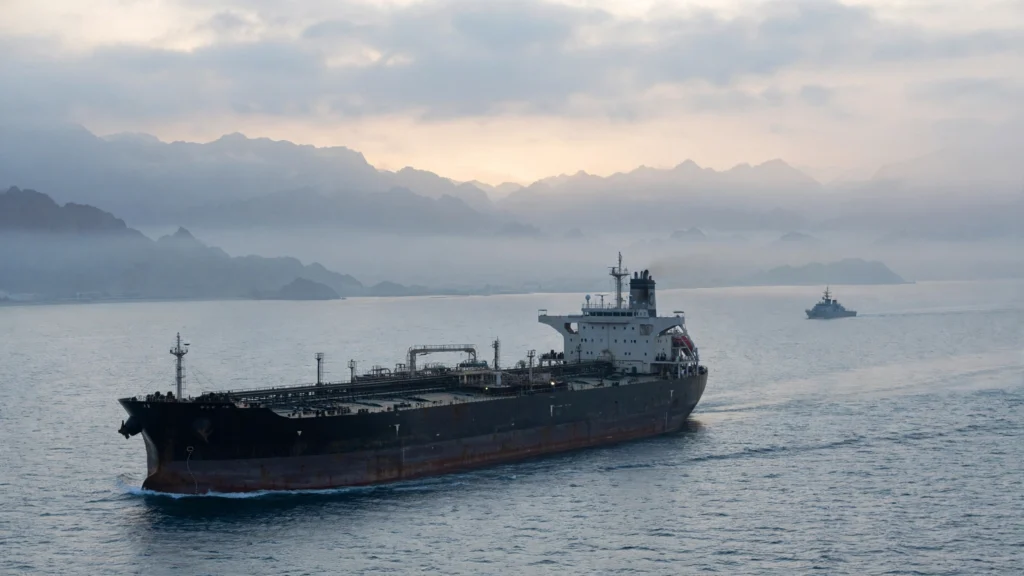
One concrete sign of movement concerns the Strait of Hormuz. Iran’s foreign minister has said a proposal has been reached that could fully reopen the strait in just two days, as talks with mediators remain on track. That matters far beyond the region. The strait normally handles around one-fifth of global oil consumption, and Iran has restricted maritime traffic through the passage since hostilities broke out, contributing to higher global energy prices.
What happens next
Three things to watch in the coming days:
- Whether Trump repeats or softens his post-midterms strike warning after Tuesday’s US elections, and how Israel responds.
- Whether Tehran replies to the Vance letter, and whether the Qatari mediation produces a concrete de-escalation step on Hormuz.
- Whether any new public message or appearance from Khamenei follows Saturday’s statement, after months out of public view.
FAQs
Who is Mojtaba Khamenei? He is Iran’s current Supreme Leader. He succeeded his father, Ayatollah Ali Khamenei, in March 2026 after his father was killed in US-Israeli strikes at the start of the war in February.
What did Khamenei warn on October 31? He warned the US and Israel against fresh attacks, saying any threat must be met with an immediate, impactful and geographically unrestricted response, and that Iran would determine the time and conditions for ending any renewed conflict.
Why has Khamenei not been seen in public? He has not appeared publicly since becoming supreme leader in March, communicating only through written statements.
What is happening with the Strait of Hormuz? Iran has restricted traffic there since the war began. Its foreign minister says a proposal could fully reopen it in two days.
Is diplomacy still under way? Yes. A Qatari delegation visited Tehran on October 30, and Iran has reportedly received a letter from US Vice President JD Vance.
Stay with Informeia for updates on the Iran situation and other major world developments as they unfold.