Tehran has put a clock on one of the world’s most sensitive waterways. On Monday, Iran said the Strait of Hormuz could reopen within two days if the United States first meets its demands, a sharply shorter timeline than the week-long plan it floated in September. The offer, relayed through Qatari mediators, is not a deal yet. Washington has not publicly accepted it, and no one has announced that normal passage has resumed.
Foreign Minister Abbas Araghchi set out the sequence in an interview released on Sunday. On day one, the United States would implement agreed measures. On day two, the strait would reopen and transit would return to its previous state. Spokesman Esmaeil Baghaei repeated the two-day figure in Tehran on Monday, calling it evidence of what he described as Iran’s good-faith approach.
What Iran is actually offering
The plan condenses an older one. In September, Tehran sent Washington a seven-step proposal through Qatar, under which the strait would reopen on the sixth day after US demands were met. The new version compresses that process into 48 hours.
Baghaei said messages were still being exchanged through mediators, and Iranian negotiators who left Doha on Sunday had not walked away. An official briefed on the talks told Reuters a draft proposal to end the war with the United States was being circulated, with a follow-up meeting possible. No details have been made public, and Araghchi framed the two-day plan as a proposal, not a concluded agreement.
What Tehran wants in return
Iran wants an end to the Middle East war on all fronts, frozen assets abroad to be unfrozen, oil sanctions to be lifted, the US naval blockade on Iranian ports to end, acceptance of a new Iran-Oman transit route through the strait, and fewer US troops in the region.
Baghaei was blunt on Monday: no final agreement could begin, and the strait could not be reopened or secured, unless the blockade ended and Iran’s demands were respected. “Everything depends” on Washington accepting them, he said, and only then could later stages be discussed. Deputy Foreign Minister Kazem Gharibabadi travelled to Doha to keep the exchanges moving through Qatari intermediaries.
Why Qatar’s role matters
Qatar has carried messages between two governments that are not negotiating directly, and Qatari consultations reportedly helped shorten the seven-day proposal to 48 hours. The sequence itself is now the negotiation: Iran wants American steps first, then it reopens the strait. Washington has not publicly endorsed that order, or the conditions attached to it.
What Washington has not said
The United States has not publicly accepted the two-day framework. President Donald Trump has called talks with Tehran productive and said Washington would not launch new attacks before Tuesday’s midterm elections, but he has not ruled out further military action. On Saturday, he said he still had to “take care” of one or two targets, including Pickaxe Mountain in central Iran, a suspected nuclear site. Tehran denies it is a nuclear installation.
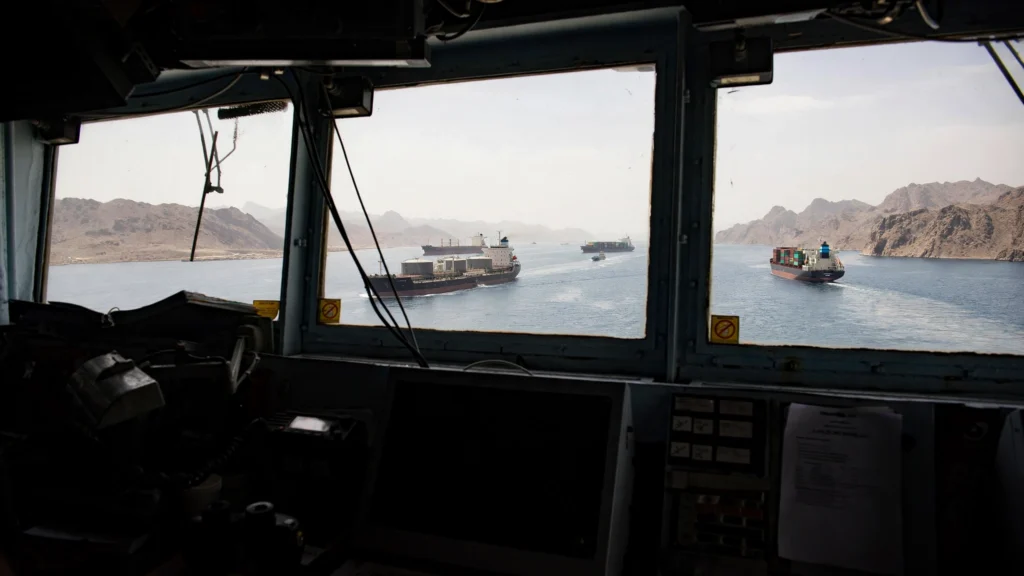
Baghaei warned on Monday that any fresh attack would be met with a powerful, immediate and comprehensive response. The US military, meanwhile, has maintained that the internationally recognised shipping lanes are open, even as Iran has claimed control over the waterway and targeted vessels crossing without its authorisation.
Why it matters for oil and India
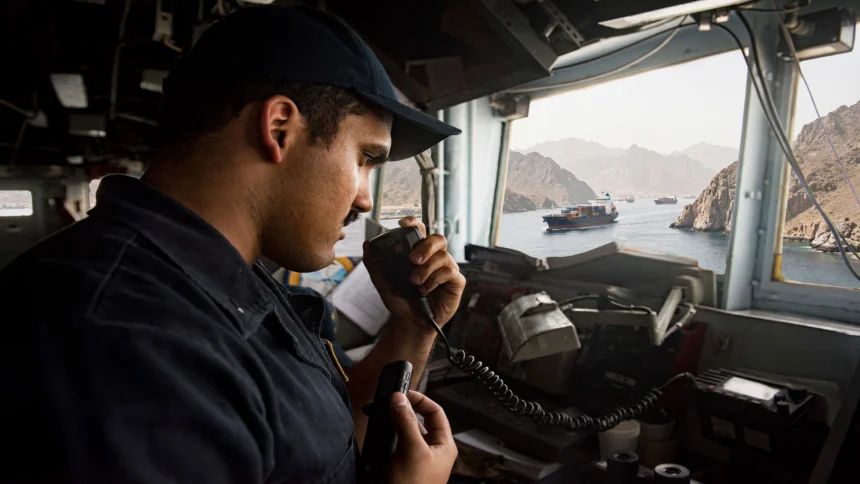
The strait, a narrow passage between Iran and Oman, carries a large share of the world’s seaborne oil. Disruption there feeds quickly into crude prices, shipping insurance and freight costs, and then into fuel prices and import bills in energy-importing countries, including India.
Tensions have built since the Middle East war broke out in late February. Washington imposed its naval blockade in response to Iran’s assertion of control over the waterway, and since August has added sanctions it described as the “economic asphyxiation” of Iran. A genuine reopening would ease a major risk premium over global energy markets. A breakdown would keep it in place, and could push it higher.
What to watch next
Watch for a public American response, especially on the blockade and oil sanctions; for a follow-up meeting after the Doha exchanges; and for any formal announcement that navigation has actually resumed. Until then, the honest summary is narrow: Iran has offered a faster route out of the standoff, and the ball, in Tehran’s own phrase, is in Washington’s court.
Frequently asked questions
What is the two-day plan?
The US acts on day one; the Strait of Hormuz reopens with normal navigation on day two.
Has the US accepted it?
No. Washington has not publicly accepted it, and Qatari-mediated consultations continue.
What does Iran want?
An end to the war, unfrozen assets, lifted oil sanctions, an end to the blockade, an Iran-Oman transit route, and fewer US troops.
How does it differ from September?
The September plan took seven days, reopening on day six. The new plan takes 48 hours.
Why does it matter for India?
Seaborne oil passes through the strait, so disruption can lift crude prices and India’s import bill.
That is the state of play on Monday: a two-day offer, conditions attached, and a decision still to come from Washington.