For years, the formula felt foolproof in middle-class Indian homes: get your child into engineering, and a good job will follow. A column in The Times of India on Monday has put an uncomfortable question to that belief, and the numbers behind it are hard to argue with.
Author and columnist Chetan Bhagat pointed out a widening gap that should worry every family planning an engineering admission. Engineering enrolments in India have climbed from 9.2 lakh to 13.5 lakh in four years, a rise of about 47 percent. In the same period, the technology industry’s net job additions have moved sharply in the opposite direction, falling from 4.45 lakh to 1.35 lakh, a drop of roughly 70 percent, according to Nasscom data cited in the column.
Put simply, India now has around ten engineering enrolments for every net new technology job added. Four years ago, the ratio was about two enrolments per job. The career maths that powered a generation of admissions has changed, and it has changed fast.
The fresher hiring squeeze
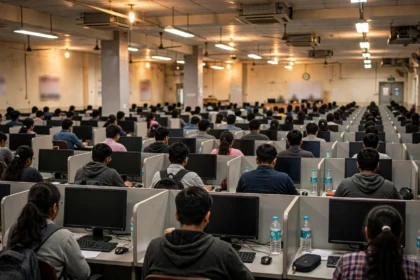
The pressure is clearest at the entry level, where most new graduates actually compete. Staffing firm HAN Digital estimates that fresh graduate recruitment in the IT-BPM sector has fallen from about four lakh in FY22 to 1.75 lakh in FY26, a decline of 56 percent. That is the funnel through which lakhs of engineering graduates try to enter the industry each year, and it has narrowed by more than half.
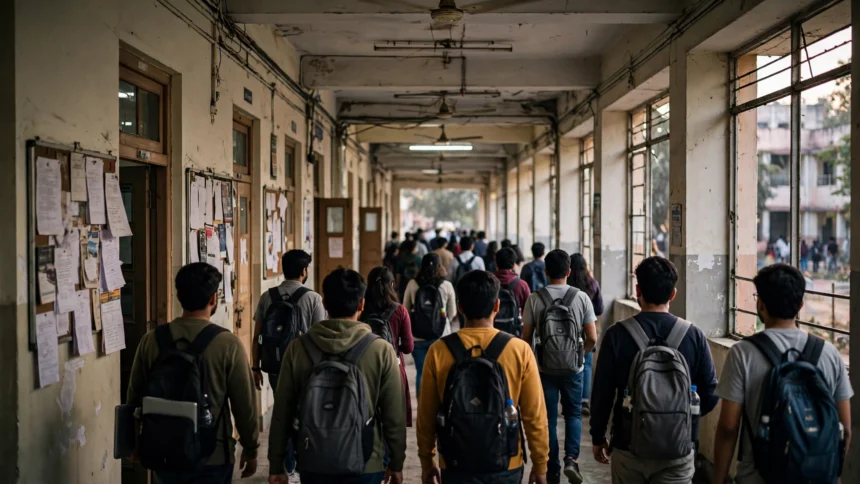
This is not a story of one bad placement season. The figures describe a four-year trend, and they line up with what students and placement officers have been sensing on campuses: fewer mass-recruitment drives, longer waits for offer letters, and tougher screening even for roles that once hired in bulk.
Why AI is changing the entry-level job
Artificial intelligence is a big part of the shift. Tasks that were traditionally handed to fresh graduates are increasingly handled by AI tools. Basic coding, software testing, legal research, preparing presentations and routine customer support are all on that list. The disruption is not limited to information technology either. Law, consulting, finance and several other white-collar professions are feeling the same pressure on junior roles.
The point is not that AI has made engineers useless. It is that the first rung of the ladder looks different now. Employers want graduates who can use AI tools, check their output, solve problems for real clients and learn quickly, rather than graduates who can only repeat textbook procedures. A degree alone no longer signals those abilities the way it once did.

Interestingly, the same message came from a different stage on the same day. At the HR Conclave of IIM Kashipur on Monday, human resource leaders said AI will not replace jobs outright, but it will change how work gets done. Their advice to students was blunt in a reassuring way: human judgment and problem-solving still matter, and individual contribution will increasingly count for more than a job designation.
What this means for students and parents
None of this means engineering is a bad choice. India still needs good engineers, and technology remains one of the largest employers in the country. But the old assumption, that an engineering seat automatically converts into a technology job, no longer holds. Families need to look beyond the admission letter.
- Skills beat the seat: Internships, live projects, coding portfolios and hands-on work now matter as much as the college name on the degree.
- Learn to work with AI: Students who can use AI tools well, and spot their mistakes, have an edge over those who either ignore the tools or depend on them blindly.
- Look past the obvious sectors: Manufacturing, healthcare, energy, defence and government technology roles are all hiring engineers, and competition there is different from the IT services race.
- Judge colleges on outcomes: Ask for real placement data, median salaries and the share of students placed, not just the highest package advertised on a brochure.
The broader lesson of Bhagat’s column is about planning, not panic. Middle-class families invest years of savings and enormous emotional energy in an engineering dream. That dream still has value, but it needs updating. A student who graduates with practical skills, work experience and the ability to keep learning is far better placed than one who simply collects a degree and waits for the market to come calling.
The market, as the last four years show, does not come calling the way it used to. The sooner students and parents accept that, the better their choices will be.
Frequently asked questions
How much have engineering enrolments risen in India?
Engineering enrolments rose from 9.2 lakh to about 13.5 lakh over four years, an increase of roughly 47 percent, according to data cited in Chetan Bhagat’s column in The Times of India.
How many net tech jobs did India add in FY26?
Net job additions in India’s technology industry fell to 1.35 lakh in FY26, down from 4.45 lakh in FY22, as per Nasscom data cited in the column.
Has fresher hiring in IT also fallen?
Yes. Staffing firm HAN Digital estimates fresh graduate recruitment in the IT-BPM sector dropped from about four lakh in FY22 to 1.75 lakh in FY26, a decline of 56 percent.
Is AI replacing engineering jobs?
AI is changing entry-level work more than wiping out engineering as a profession. Routine tasks like basic coding and testing are increasingly automated, but employers still need people who can solve problems, use AI tools well and exercise judgment.
What should engineering aspirants do differently now?
Focus on practical skills, internships and projects alongside the degree, learn to work with AI tools, and consider sectors beyond IT services when planning a career.
India’s career landscape is shifting fast, and Informeia will keep tracking the numbers that matter for students and job seekers.