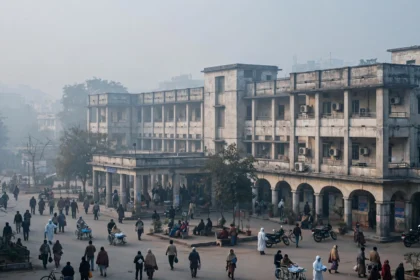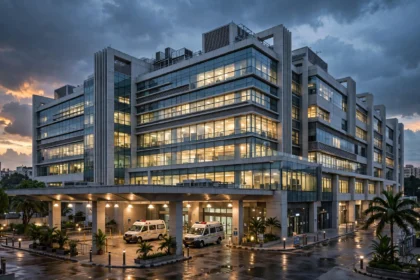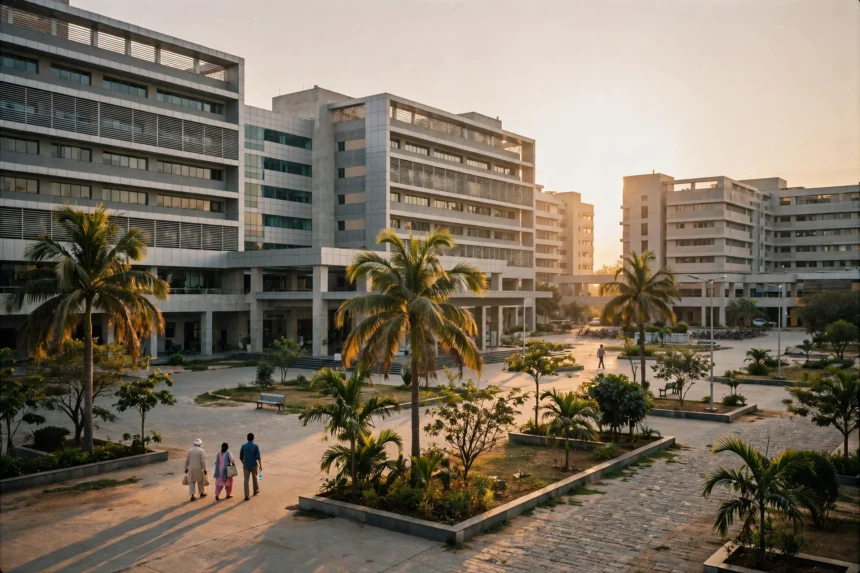
For years, a cancer diagnosis in Saurashtra meant packing a bag. Patients from Rajkot, Jamnagar, Junagadh and Porbandar travelled hundreds of kilometres to Ahmedabad or Mumbai for advanced radiation treatment, paying for rented rooms and long stays on top of medical bills. On Monday, that journey got shorter. Union Health Minister Jagat Prakash Nadda inaugurated a new advanced radiotherapy facility at the All India Institute of Medical Sciences (AIIMS) in Rajkot, built at a cost of approximately Rs 39 crore.
The facility was inaugurated virtually by Nadda, with Gujarat Minister of State for Health, Family Welfare and Medical Education Praful Pansheriya joining the ceremony through video conference from Gandhinagar. It has been developed under the Pradhan Mantri Swasthya Suraksha Yojana (PMSSY), the Centre’s flagship programme for setting up AIIMS-like institutions and upgrading government medical colleges.
What the new facility offers
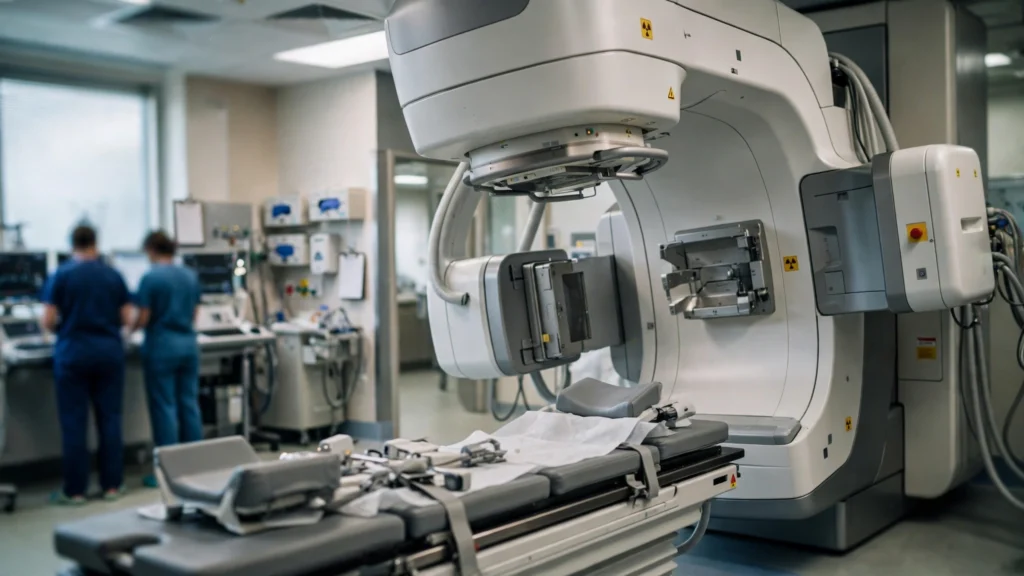
The new department is equipped with three key pieces of technology: a high-energy Linear Accelerator (LINAC), a wide-bore CT simulator and a High Dose Rate (HDR) brachytherapy unit. Together, they allow doctors to plan and deliver radiation with millimetre-level precision, targeting tumours while sparing surrounding healthy tissue as far as possible.
The LINAC supports modern techniques such as Intensity-Modulated Radiotherapy (IMRT), Volumetric Modulated Arc Therapy (VMAT), Image-Guided Radiotherapy (IGRT) and Stereotactic Body Radiotherapy (SBRT). In practical terms, these techniques mean shorter, more accurate treatment sessions and fewer side effects for many patients, compared with older, broader radiation methods.
The wide-bore CT simulator is used to map the exact position of a tumour before treatment begins, while the HDR brachytherapy unit delivers radiation from inside or very close to the tumour, a method commonly used in cancers such as cervical cancer. The combination gives AIIMS Rajkot a full radiotherapy chain, from planning and imaging to treatment, under one roof.
Who benefits: 1.54 crore people across Saurashtra and Kutch
The facility is expected to serve an estimated catchment population of 1.54 crore people across Saurashtra and Kutch. The districts in its reach include Rajkot, Jamnagar, Junagadh, Porbandar, Amreli, Bhavnagar, Morbi, Surendranagar, Gir Somnath, Devbhoomi Dwarka and Botad.
For families in rural and semi-urban areas, the difference is not abstract. A patient who earlier spent weeks away from home for treatment can now be treated closer to family support, and the cost of travel and accommodation, often the hidden burden of cancer care, comes down sharply. Treatment at the facility will be free for eligible beneficiaries under the Ayushman Bharat Pradhan Mantri Jan Arogya Yojana (AB PM-JAY), while other patients will receive highly subsidised care.
The Radiation Oncology department at AIIMS Rajkot has been operational since May 29, 2026, and is expected to treat between 500 and 700 patients every year. Officials said the new facility will reduce regional disparities in cancer care, a gap that has long pushed Saurashtra’s patients towards bigger cities.
Why this matters for Gujarat’s cancer care map
Cancer treatment in India is heavily concentrated in a few large cities, and Gujarat has been no exception. Ahmedabad has traditionally absorbed much of the state’s advanced oncology load. A fully equipped radiotherapy unit in Rajkot spreads that load and, just as importantly, brings early, complete treatment within reach of patients who might otherwise delay care or drop out midway because of distance and cost.
Doctors repeatedly stress that delay is one of the biggest enemies in cancer care. When treatment is far away and expensive to access, patients postpone it, and tumours advance. A local facility with precision equipment changes that calculation, especially for patients who need daily radiation sessions over several weeks.
The Rajkot facility also strengthens AIIMS Rajkot itself, which is still a young institution. Alongside medical, surgical and radiation oncology services, it gives the institute a complete cancer care offering and a base for training specialists in the region.
What patients should know
- Where: Advanced Radiotherapy Facility, Department of Radiation Oncology, AIIMS Rajkot, Gujarat.
- Cost: Free for eligible Ayushman Bharat PM-JAY beneficiaries; highly subsidised care for others.
- Equipment: High-energy Linear Accelerator, wide-bore CT simulator and HDR brachytherapy unit.
- Treatment techniques: IMRT, VMAT, IGRT, SBRT and brachytherapy, planned with CT-based imaging.
- Expected load: Around 500 to 700 patients every year.
Patients and families seeking treatment should contact AIIMS Rajkot’s Radiation Oncology department directly for appointments, eligibility checks under Ayushman Bharat and referral requirements.
Frequently asked questions
When was the AIIMS Rajkot radiotherapy facility inaugurated?
Union Health Minister J P Nadda inaugurated the advanced radiotherapy facility on Monday, November 2, 2026, through video conference.
How much did the facility cost?
The facility was developed with an investment of approximately Rs 39 crore under the Pradhan Mantri Swasthya Suraksha Yojana.
Is cancer treatment free at AIIMS Rajkot?
Treatment is free for eligible beneficiaries under the Ayushman Bharat PM-JAY scheme, while other patients receive highly subsidised care.
Which areas will the facility serve?
It is expected to benefit about 1.54 crore people across Saurashtra and Kutch, including Rajkot, Jamnagar, Junagadh, Porbandar, Bhavnagar and Morbi.
What is a Linear Accelerator?
A Linear Accelerator is a machine that delivers high-energy X-rays to destroy cancer cells with precision, allowing techniques such as IMRT, VMAT and SBRT that limit damage to nearby healthy tissue.
For Saurashtra, the headline is simple: advanced cancer treatment no longer requires leaving the region. And for thousands of families facing a diagnosis in the years ahead, that shorter journey could make all the difference.