India has fought anaemia for decades with iron tablets, fortified food and regular screening drives, yet the numbers remain stubborn. Now, a fresh row over an everyday kitchen item, ordinary salt, has put the country’s anaemia strategy back under the spotlight. On 4 November 2026, public health experts pushed back hard against a proposal to expand double-fortified salt, warning that a simple fix could end up masking a far more complicated problem.
The trigger is an open letter from Health for All, a collective of doctors, researchers and public health professionals, questioning the scientific basis for successive iron-fortification drives and asking policymakers to explain their priorities first.
What is double-fortified salt, and why is it back in focus?
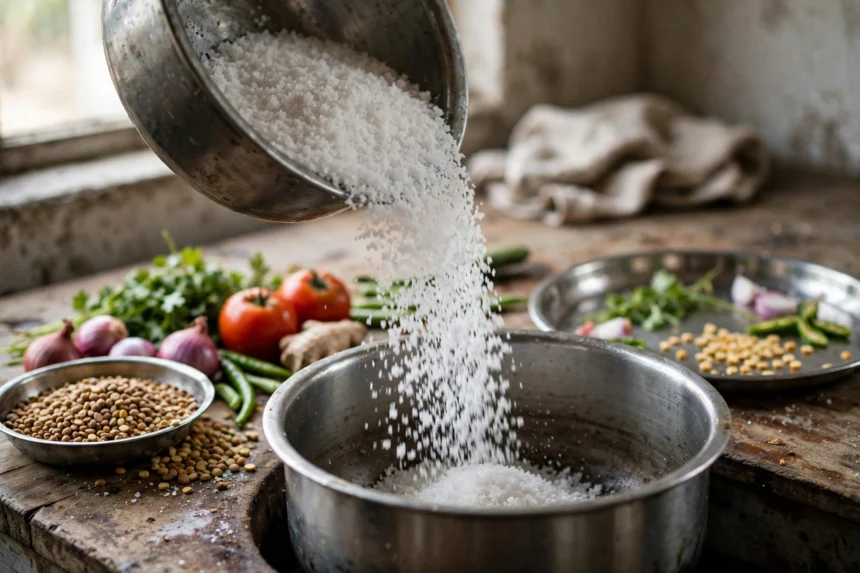
Double-fortified salt, usually shortened to DFS, is common edible salt fortified with two micronutrients: iodine and iron. Iodised salt is already a familiar public health success in India, reaching around 95 percent of households. The idea behind DFS is straightforward: since almost every household already uses salt daily, adding iron to it could reach people who rarely visit a clinic or finish a course of iron tablets.
DFS was developed by the National Institute of Nutrition in Hyderabad, with standards set by the Food Safety and Standards Authority of India. It is already mandated in PM POSHAN school meals and ICDS, reaching about 7.6 crore people across four states.
The proposal gained fresh momentum after the government temporarily discontinued its fortified-rice programme in February 2026, following an IIT Kharagpur study that raised concerns about how added nutrients hold up under prolonged storage. With rice fortification paused, researchers suggested expanding DFS as an alternative route to deliver iron at scale.
The scale of anaemia in India
The reason the debate matters is the sheer size of the problem. Data from the National Family Health Survey (NFHS-5), covering 2019-21, found that 67.1 percent of children under five and 57 percent of women aged 15 to 49 were anaemic. Those figures were higher than in the previous survey, and they continue to be quoted in almost every discussion on the subject.
Anaemia is not a minor deficiency. In children, it can affect growth and learning; in pregnant women, it raises the risk of premature delivery and low birth weight; in adults, it can mean constant fatigue and lower productivity.
Supporters point to evidence that it can help. A 2022 Cochrane review found DFS probably reduced anaemia prevalence by around 21 percent compared with iodised salt alone, though haemoglobin gains were modest. Indian trials in Bengaluru, Darjeeling, Punjab, Tamil Nadu and Bihar reported better iron status, and the cost is roughly Rs 14 to Rs 20 per person per year.
Why experts are pushing back
The critics do not dispute that iron matters. Their argument is that iron is only part of the story, and that treating every case of anaemia as iron deficiency risks missing the real causes in millions of people.
A 2025 study based on venous blood samples across eight Indian states, published in the European Journal of Clinical Nutrition, found that iron-deficiency-associated anaemia accounted for less than one-third of overall anaemia in the populations examined. Other causes include vitamin B12 and folate deficiency, chronic infections, malaria, sickle cell disease and thalassaemia, none of which iron in salt can fix.
The open letter also raises a practical concern: a functioning health system that can test, diagnose and treat the specific cause matters more than a blanket intervention. In tribal areas, for instance, a large share of anaemia cases is linked to sickle cell disease, thalassaemia, B12 deficiency and infections. Handing out fortified salt without diagnosis, the experts argue, could delay proper treatment.
The doctors also challenged promoting fortified staples while basic nutritional gaps remain, including access to eggs, meat, pulses, milk, vegetables and fruit. Fortification, they say, should not substitute for diverse diets.
What happens next?
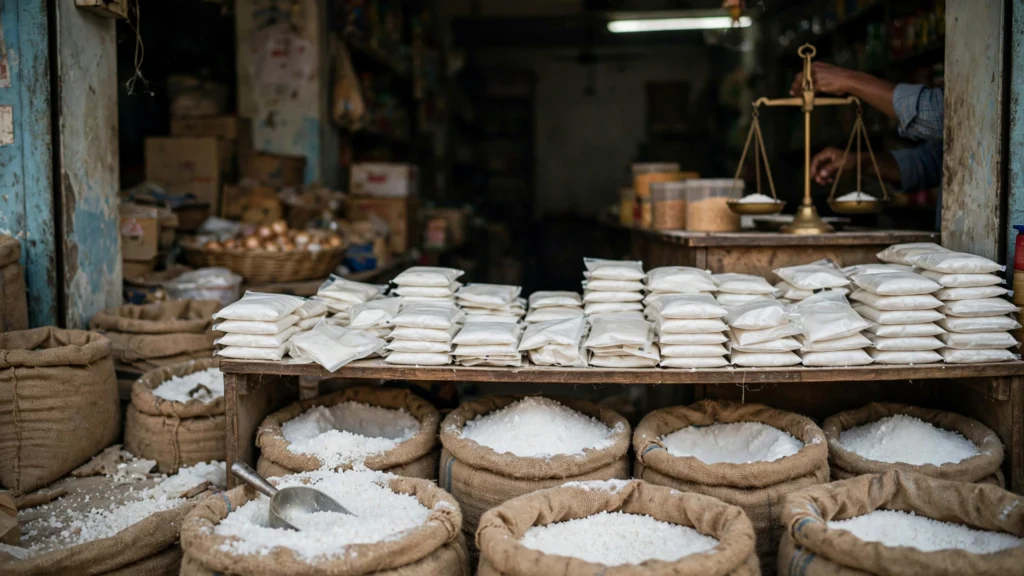
For now, no nationwide DFS replacement has been announced, and its rollout through the Public Distribution System, which reaches about 80 crore people, remains uneven because states decide individually. Supporters say a national push would close that gap; critics say scaling up before fixing diagnosis and diet would repeat past mistakes.
Families need not wait for a policy decision. Anyone with persistent tiredness, pale skin, breathlessness or dizziness should get a blood test and medical advice rather than self-treating with supplements.
Frequently asked questions
What is double-fortified salt?
Ordinary edible salt fortified with both iodine and iron, delivered through a food nearly every household uses daily.
How common is anaemia in India?
According to NFHS-5 (2019-21), 67.1 percent of children under five and 57 percent of women aged 15 to 49 were found anaemic.
Does double-fortified salt reduce anaemia?
A 2022 Cochrane review found it probably cut anaemia prevalence by around 21 percent versus iodised salt, though haemoglobin gains were modest.
Why are some experts opposed to expanding it?
They argue iron deficiency is only part of anaemia; other causes such as B12 deficiency, infections and blood disorders need diagnosis and treatment salt cannot provide.
Is double-fortified salt already in use in India?
Yes, in a limited way. It is mandated in PM POSHAN school meals and ICDS, reaches about 7.6 crore people in four states, but PDS use remains uneven.
Note: This article is for information only and is not medical advice. Consult a doctor for diagnosis or treatment of anaemia.