
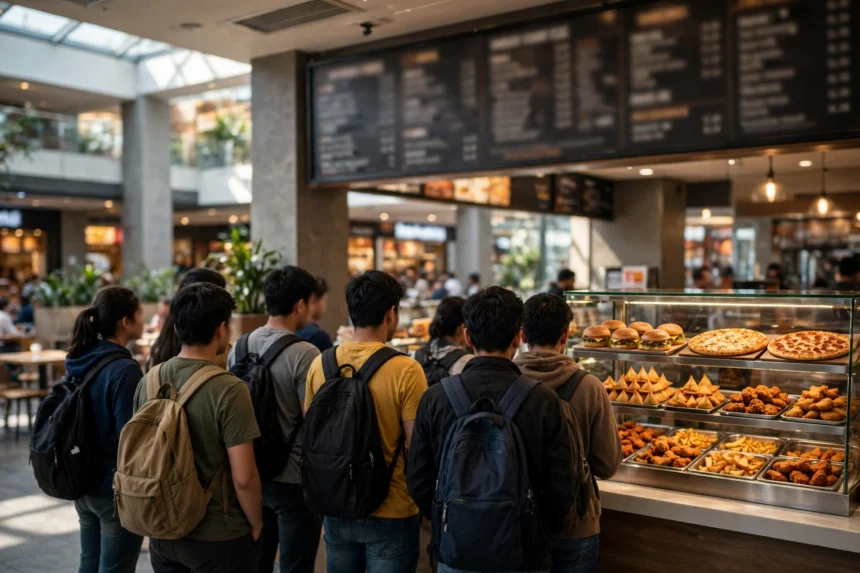
Your next burger in Bhubaneswar may come with a number you cannot ignore. Food safety officials in the Odisha capital have begun a drive making it compulsory for eateries serving high-fat, sugar and salt (HFSS) food to print the calorie count of each item on their menus. The first round of inspections covered 42 food outlets across the city.
The drive, launched by the Commissioner of Food Safety’s office, aims to tell diners what they are actually eating. Officials carried out the checks on Sunday, visiting food outlets inside several busy malls.
What the Sunday inspections found
The teams visited outlets at DN Regalia, Esplanade, Utkal Galleria, Symphony, Forum Mart and BMC Bhawani Mall, covering local eateries and franchises of brands such as Pizza Hut, Burger King, Wow Momo, Domino’s, Amritsari Express and Baskin Robbins, most of which draw a young crowd.
Officials also examined the use of food colour, the labelling of packaged items, the storage of raw materials and whether cooking oil was kept in the right conditions.
- 42 food establishments inspected in a single day
- 69 kg of stale, unhygienic food destroyed on the spot
- 15 suspected food samples collected for laboratory examination
- 11 warning notices issued to outlets found wanting
FSSAI food safety officer Pratikshya Das Mohapatra said no major violation was found, but some outlets not properly following FSSAI standards were warned and issued notices, and suspected samples were sent for lab tests. “Some local outlets not mentioning calories of HFSS food items on their menus were also cautioned,” she said.
What the calorie rule actually requires
The drive enforces a rule that has existed on paper for years. The Food Safety and Standards Authority of India (FSSAI) added menu labelling to its regulations in August 2020, and the calorie requirement took effect in July 2022. It applies to establishments holding a central licence, or chains with ten or more outlets.
Under the rule, menus must show the calorific value in kcal per serving, along with the serving size, against each item. Menus must also carry the line that an average active adult requires 2,000 kcal of energy per day, though needs may vary. Allergen details and the green veg and brown non-veg symbols must also appear. Small, single-outlet restaurants with a state licence are exempt, which is why the drive has focused on mall outlets and big chains.
Why it matters
The gap between the rule and the reality is the real story. A labelling law in force since 2022 is only now being pushed at street level in a state capital. For years, a young diner ordering a pizza or a burger in Bhubaneswar had no way of knowing whether that one meal carried 400 calories or 1,200. The menu simply did not say.
That matters because eating out has changed. For students and young professionals, mall food courts and delivery apps are everyday food, not an occasional treat. When a single burger meal can supply more than half of a day’s 2,000 kcal reference intake, the number on the menu is the difference between an informed choice and a blind one. Rising obesity among children and young adults is a flagged national concern.
The drive is part of a wider push. The regulator has published fat, salt and sugar thresholds that would restrict HFSS sales near schools, and Maharashtra already bars shops within 50 metres of schools from carrying such products. A calorie count on a mall menu is the first visible step of that policy reaching everyday life.
There is also a practical angle. A calorie number only helps if you know how to read it. The 2,000 kcal reference is for an average active adult, and needs vary. A meal that lists 900 kcal is not automatically bad, but two such meals in a day leave little room for anything else. The label is not there to scare people away from their favourite food. It is there to let them decide with their eyes open.
What happens next
Officials said another drive is expected in the coming days, asking outlets to display details of the cooking oil they use. The 15 samples collected on Sunday will now be tested in a laboratory, and the results will decide whether any warned outlet faces further action.
For now, the message is simple: the calorie count is not optional, and the checks will continue. Diners may soon find that the most honest thing on the menu is a number.
FAQs
Which eateries must show calories on their menus?
Establishments with a central FSSAI licence, or chains with ten or more outlets, must display the calorie value per serving. Small single-outlet restaurants are exempt.
What else must the menu show?
Calories per serving and serving size, the 2,000 kcal daily reference line, allergen details and the veg or non-veg symbol for each item.
How many outlets were checked?
Officials inspected 42 establishments in a day, destroyed about 69 kg of stale food, collected 15 samples for lab tests and issued around 11 warning notices.
What is HFSS food?
HFSS stands for high in fat, salt and sugar. It covers most fast food, fried snacks, sugary drinks and packaged junk food.
What is the next step in the drive?
A follow-up drive will ask outlets to display details of the cooking oil used in their food, while the samples collected on Sunday are tested.