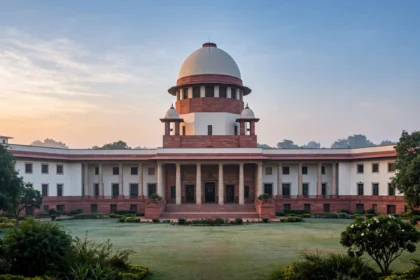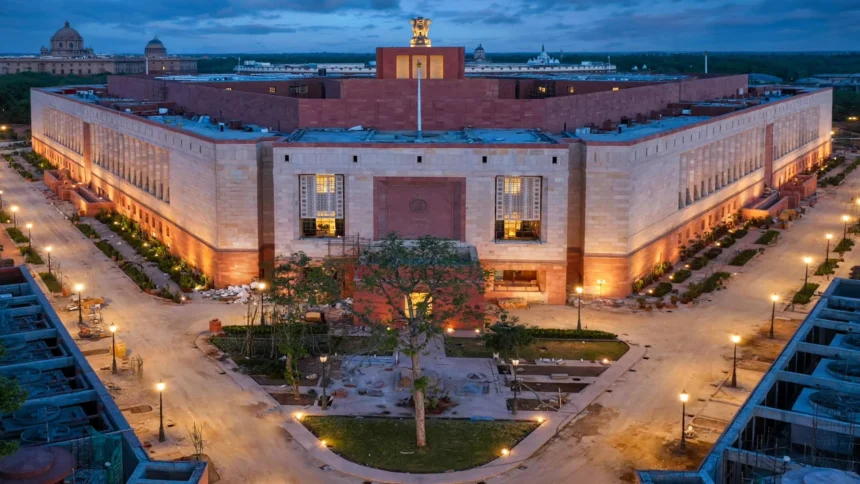
Parliament is coming back after more than three months away, for a sitting that could reshape Indian politics for a generation. The Lok Sabha will reconvene on Monday, November 30, and the Rajya Sabha on Wednesday, December 2, for a special sitting widely expected to take up an amended Delimitation Bill. The Union Cabinet meets on Friday, November 27, to clear it first.
Parliamentary Affairs Minister Kiren Rijiju announced the dates on Thursday, November 26, Constitution Day. The sittings should end on December 3, after a 108-day gap.
What the amended Bill proposes
The Hindu reports the amended Bill carries three changes. First, the Lok Sabha would grow by a uniform 50 per cent across states, from 543 seats to a maximum of 850. Second, the freeze on using the 1971 Census to decide each state’s share of seats would be extended by 25 years. Third, constituencies within each state would be redrawn using the 2011 Census.
The expansion unlocks the 33 per cent reservation for women in Parliament and state assemblies, granted by a 2023 law but still waiting to take effect. Delimitation has to happen first. If the House grows to 850, about 283 seats would be reserved for women on rotation, per NDTV.
The flat formula also answers the biggest fear around delimitation: that southern states which controlled population growth would lose out. A uniform rise keeps the balance between states as it is, instead of redistributing seats on current population.
Why the government is trying again
This is not the government’s first attempt. An earlier version was defeated in April 2026, when the ruling coalition could not muster the two-thirds majority a constitutional amendment needs, around 360 votes in the 543-member House.
Since then, the government has used the long recess to build support. The Monsoon Session was adjourned sine die on August 13 but never formally prorogued, which makes this week’s recall possible at short notice. The Tribune reports the government may even skip a separate Winter Session this year, something that has happened only in 1975, 1979, 1984 and 2020.
The opposition pushback
The announcement drew a sharp response from the Congress within hours. Party general secretary Jairam Ramesh called it an assault on the Constitution and a calculated attempt to revive the Constitution (131st Amendment) Bill, 2026, the legislation that failed in April.
The Congress-led INDIA bloc, along with the DMK and the Aam Aadmi Party, had earlier set four conditions for supporting the Bills: the Lok Sabha should stay at 543 seats, each state should keep its current number of seats, 182 of the existing 543 seats should be reserved for women right away, and the arrangement should be frozen for 25 years. The government’s formula protects each state’s share in part, but it does not accept the 543-seat cap.
A Congress strategy group meets in Delhi on Friday to finalise its approach. With a two-thirds majority needed, every vote in the Lok Sabha will matter.
Why it matters
For ordinary voters, the most visible change will be the women’s quota. If the Bill passes, the 2029 general election could be fought in a House of up to 850 seats, with roughly a third reserved for women, the largest single expansion of women’s representation in India’s parliamentary history. It would change candidate selection in every party, in every state, within three years.
There is also a warning in the numbers. The Bill needs around 360 votes, and the government failed to reach that mark in April. If the numbers are not there this time, the Bill fails again, and the women’s quota waits once more.
What happens next
- Friday, November 27: The Union Cabinet meets to clear the amended Delimitation Bill.
- Monday, November 30: The Lok Sabha reconvenes and the Bill is expected to be tabled.
- Wednesday, December 2: The Rajya Sabha sits, and the legislation moves to the Upper House if cleared below.
- Thursday, December 3: The sittings are expected to conclude, subject to the demands of business.
The week ahead will show whether the government’s floor management has produced the two-thirds majority it needs. If the Bill passes, constituencies are redrawn on the 2011 Census. If it fails, the 2029 election will be fought on the old map.
Frequently asked questions
What is the Delimitation Bill?
A constitutional amendment Bill that redraws constituency boundaries and raises the Lok Sabha from 543 seats to a maximum of 850, clearing the way for the 33 per cent women’s reservation.
When does Parliament reconvene?
The Lok Sabha meets on Monday, November 30, 2026, and the Rajya Sabha on Wednesday, December 2. Both Houses are expected to conclude on December 3.
How many votes does the Bill need to pass?
As a constitutional amendment, it needs a two-thirds majority of members present and voting, which works out to around 360 votes in the current 543-member House.
What happens to the women’s reservation if the Bill fails?
The 33 per cent quota, granted by a 2023 law, can only be implemented after delimitation. If the Bill fails again, the quota stays on hold and the 2029 election would use the existing 543-seat map.
Parliament returns on Monday after 108 days. The numbers in the Lok Sabha will decide whether this week becomes a turning point or another false start.